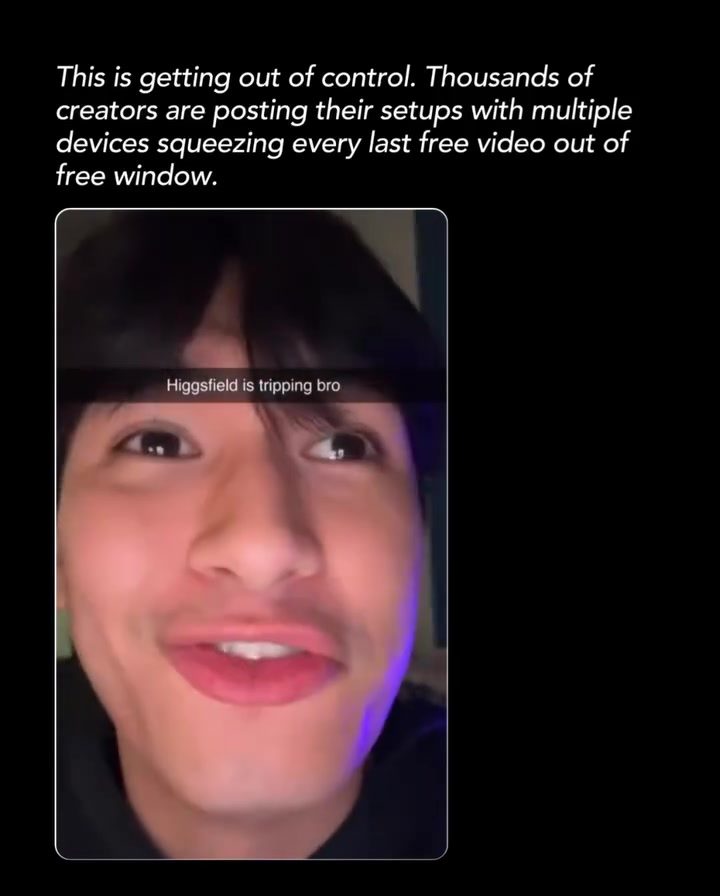
Multiple Device Setups in Video Creation
The rapid proliferation of multiple device setups among creators is a trend driven by the temporary removal of credit charges and usage limits on video creation platforms. One such platform, known as Higgsfield, implemented a strategy to test the limits of its server capacity and user engagement over a 48-hour window. This strategy, though risky, has yielded significant insights into the behavior of creators and the potential of leveraging multiple device setups for enhanced productivity.
Context / Why This Matters
With the advent of accessible video creation tools, the demand for high-quality content has skyrocketed. Creators are continually exploring new methods to maximize their output, and multiple device setups have emerged as a powerful solution. These setups allow creators to run multiple instances of video generation tasks simultaneously, significantly boosting their efficiency. This trend is particularly relevant for platforms like Higgsfield, which offer advanced video models such as Seedance 2.0, Kling 3.0, GPT Image 2, and Nano Banana Pro.
Main Discussion
The Free Model Experiment
Higgsfield’s decision to offer its top-tier models for free over a 48-hour period was met with overwhelming enthusiasm from the creator community. The removal of credit charges and usage limits led to an unprecedented surge in traffic. Creators rushed to take advantage of the free access, leading to a massive influx of video generation requests. This sudden spike in demand showcased the potential of multiple device setups in maximizing output during a limited-time opportunity.
The Impact on Creators
For many creators, the absence of usage limits meant an opportunity to produce a higher volume of content in a shorter span of time. By leveraging multiple devices, creators could generate hundreds of videos without incurring any costs. This led to a noticeable increase in the number of AI-generated videos being posted on platforms like TikTok. The ability to produce high-quality content quickly and efficiently has become a game-changer for many creators, allowing them to stay ahead of the curve in a competitive landscape.
The Technical Challenges
While the free access was a boon for creators, it also posed significant challenges for the platform. The sudden surge in traffic put immense pressure on Higgsfield’s servers, which were close to their capacity. The platform’s CEO, visibly affected, highlighted the unexpected magnitude of the traffic. This experience underscores the need for robust infrastructure and scalability in video creation platforms to handle such spikes effectively.
The Financial Repercussions
The financial implications of offering free access to high-end video models are substantial. A single video generation using Seedance 2.0, for example, can cost up to $2.80. During the 48-hour free period, creators were running hundreds of these tasks without paying a dime. This has financial consequences for the platform, particularly considering the limited time frame of the offer. By making the offer available for only 24 hours, Higgsfield's move was both a strategic decision to test the platform's limits and a financial calculation to mitigate potential losses.
The Future of Multiple Device Setups
The trend of using multiple devices for video creation is likely to continue growing. As platforms like Higgsfield and others innovate, creators will seek ways to maximize their output. This trend could lead to more efficient and scalable solutions in the future, potentially making high-quality video creation more accessible and affordable for a broader range of creators. The lessons learned from Higgsfield’s experiment will undoubtedly inform future strategies and offerings in the video creation space.
Practical Tips
For those looking to implement multiple device setups for video creation, here are some practical tips:
Invest in Compatible Devices
Ensure that the devices you plan to use are compatible with your video creation software. Compatibility issues can lead to significant delays and inefficiencies, negating the benefits of using multiple devices.
Optimize Network Connectivity
High-speed and stable internet connectivity is crucial for running multiple devices simultaneously. Ensure that your network can handle the increased bandwidth requirements to avoid interruptions.
Utilize Cloud-based Solutions
Cloud-based video creation tools offer scalability and accessibility, allowing you to manage multiple devices more effectively. Platforms that support cloud computing can provide a seamless experience for creators.
Monitor Performance and Costs
Keep a close eye on the performance and costs associated with using multiple devices. Monitor the server load, response times, and overall efficiency to make informed decisions about scaling your setup.
Plan for Server Management
If you are using your own servers, ensure they are well-maintained and capable of handling the increased load. Regularly update and upgrade your hardware to meet the demands of your video creation tasks.
Important Takeaways
Multiple device setups have emerged as a powerful tool for creators looking to maximize their video output. The recent experiment by Higgsfield highlighted the potential and challenges of this approach, offering valuable insights for both creators and platforms. As the demand for high-quality content continues to grow, the trend of using multiple devices is likely to become more prevalent, shaping the future of video creation.
Conclusion
The trend of using multiple device setups in video creation is driven by the need for increased efficiency and productivity. Platforms like Higgsfield are at the forefront of this trend, offering advanced models and tools to creators. The recent experiment by Higgsfield, while challenging, provided valuable insights into the potential of multiple device setups and the need for robust infrastructure. As creators continue to explore new methods to maximize their output, the trend of using multiple devices is likely to become a staple in the video creation landscape.
Watch the Reel
Questions readers ask
What is the Higgsfield free trial and how did it impact video creators?
The Higgsfield free trial was a 48-hour period where the platform removed credit charges and usage limits. This trial resulted in a significant increase in video creators using multiple devices to boost their content output and efficiency. It showcased the potential of multi-device setups in enhancing productivity.
How can using multiple devices boost video productivity?
Multi-device setups allow creators to handle different aspects of video production simultaneously, such as recording, editing, and rendering on separate devices. This parallel processing can significantly reduce the time spent on each video, leading to a higher output of content.
What are the benefits of using a multi-device setup for video creation?
A multi-device setup enables creators to streamline their workflow, manage tasks more efficiently, and reduce the time needed to complete videos. By using multiple devices, creators can work on various stages of production at the same time, resulting in a more productive and efficient process.
What types of devices can be used in a multi-device video creation setup?
Creators can use a combination of smartphones, tablets, computers, and other smart devices in their multi-device setups. Each device can be assigned specific tasks, such as recording footage on a smartphone, editing on a tablet, and rendering on a powerful computer.
How can creators optimize their video content output using multiple devices?
To optimize video content output, creators can plan their workflow to distribute tasks across multiple devices. For example, one device can be used for capturing footage, another for editing, and a third for uploading and managing content. This division of labor ensures that each device is used efficiently, maximizing overall productivity.
Are there any specific tools or apps recommended for managing a multi-device video creation setup?
While the article does not specify particular tools, creators often use cloud storage services like Google Drive or Dropbox to sync files across devices. Additionally, remote desktop applications can help manage tasks from a central device, and project management tools can organize the workflow effectively.
Can I use my existing devices for a multi-device video setup, or do I need to purchase new ones?
You can use your existing devices for a multi-device video setup, as long as they are capable of handling the tasks assigned to them. For example, a smartphone can be used for recording, a tablet for editing, and a computer for rendering. There is no need to purchase new devices unless your current ones are not sufficient for the tasks required.
Related deep dives
Similar reads based on topic and creator.

Recent articles
Fresh deep dives from the latest Reels we unpacked.




Comments
Be the first to comment.