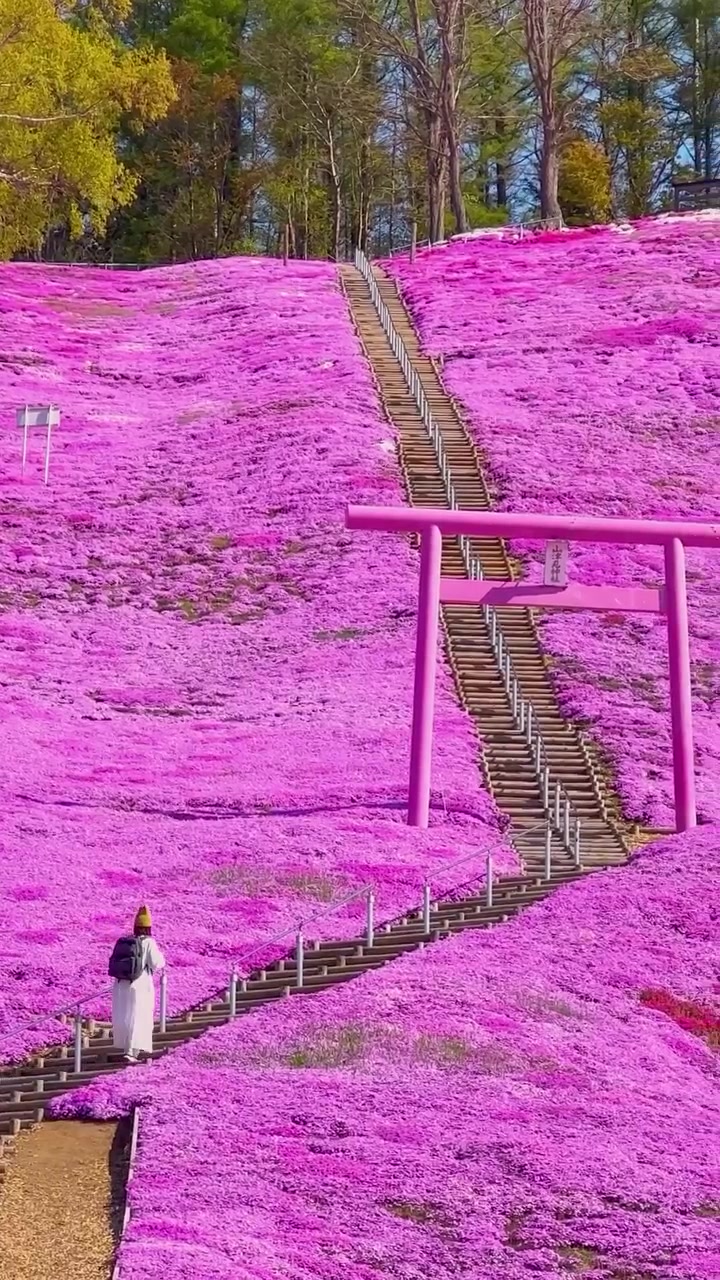
Higashimokoto Shibazakura Park
Tucked into the hills of Hokkaido, Higashimokoto Shibazakura Park bursts with vibrant pink. In May of each year, tens of thousands of Shibazakura, or moss phlox flowers, bloom in a carpet. This stunning floral display makes the park a symbol of the fleeting beauty of Japanese spring. The sight of the hillsides covered in pink flowers reminds visitors of the cherry blossoms found throughout Japan, but with a breath taking and unique aesthetic.
The Flourishing Splendor
Higashimokoto Shibazakura Park is known for its breathtaking floral display in the spring. Located in Hokkaido, the park features a long staircase that winds towards a traditional Japanese torii gate. This iconic gate symbolizes the entrance to a sacred space in Shinto, framing the scene with cultural significance. The park’s most striking feature, Shibazakura, is a type of moss phlox that blooms between May and June. The flowers blanket the hills in a vibrant pink, creating a spectacle of color. The contrast against the greenery of taller plants and the imposing torii gate is visually arresting. People frequently visit the park to take in the fresh air and bask in the flowers’ essence. The culture around Shibazakura in Japan is one of hospitality. For example, there are often tea ceremonies and snack stations.
Why Higashimokoto Shibazakura Park Matters
Flower-adorned vistas are standard in Japan. However, the Shibazakura Park stands out. Revered for its density of flowers and the contrast of colors, the park symbolizes the cultural reverence of nature. Plants and flowers kept pristine, and the quiet sanctity of cultural spaces are part of many Japanese gardens, parks, and trails. Some notable parks showcase cherry blossoms across the country. Shibazakura adds variety. The presence of the torii gate adds an air of mysticism and serenity. A deep blue sky accentuates the vibrant pink carpet surrounding the hike, making this a destination to see in person. The location also serves as a natural photography backdrop for visitors — and social media, especially Instagram. The surreal greenery and floral carpet are memorable. Photographers from all over crowd the park with models and families. The steep hilly space itself is an open invitation for adventure. The Park is eligible for nature-based tourism.
The Pink Blooms and Their Cultural Resonance
The Shibazakura flowers are a key visual element of the Park. Moss phlox flowers flourish in the spring and lose their color by June. At the park's peak, visitors are treated to a dense sea of pink that seems to stretch endlessly. Many find this carpet surprisingly powerful. It is hard to reconcile how the hills can house so much blooming. The Shibazakura flowers are small plants of only 2 to 6 inches. The plants create the dense carpet. The blooming period is only 3-6 weeks long. The flowers are a variety of light pink, almost cherry blossom-like. The flowers are the reason people visit the park, but seeing them requires moving their feet a bit. The flowers blanket the surrounding hills and make the whole space breath taking and unique. The park offers several winding paths, but the walk up the stairs is the most popular. Visitors often capture images mid-stair, with a high vantage point. Nearby, a torrential waterfall completes the natural haven of a scene. High placements allow an expansive view of the valley below. The park’s official website emphasizes visitors enjoy the view of the sea of flowers. The website also guides visitors to visit the nearby shrine with the striking torii gate.
The Iconic Torii Gate
The torii gate at the park’s peak adds a significant cultural element. As the viewer approaches the peak of the hill, the gate stands at the head of the trail. The distinctive red color serves as a focal point that frames the view and adds a sense of serenity to the scene. The gate invites the visitor to admire the floral carpeting, inviting you into the statement. He or she can stop, reflect, and deeply appreciate the hospitality of nature. The torii forms the threshold of the park. The torii gate is a portal to the sanctuary of the natural world, an area of respect and connection with the world, and the natural world.
Continuous Beauty
The park's beauty stretches beyond the shibazakura. Adjacent walking trails offer a variety of flowers, green trees, and vegetation as distinguished as the shibazakura. Nature's superlatives are tested in the fine balance of environments. The flowers offer a vibrant, surreal color. The natural terrain provides a calming and comforting tone. A sunbathed visitor takes in the majesty of a waterfall. A family of deer meanders past a stream. The difference in plant life at the height of summer is marked. Lush greenery replaces the pastels of the flowers — far fewer trees, but the natural environment remains. Some smaller flowers dot the landscape as the seasons change.
Reasons to See
The vibrant and surreal nature of the park is certainly a sight worth seeing in person. Visitors can experience the variety of flowers, hiking trails, and cultural landmarks. The Park, free of charge, is open from May to July.
Watch the Reel
Questions readers ask
What exactly are Shibazakura flowers, and why are they significant at Higashimokoto Shibazakura Park?
Shibazakura, also known as moss phlox, are small flowers that bloom in the spring, usually between May and June. They're significant at Higashimokoto Shibazakura Park because they create a stunning pink carpet that covers the hills, attracting visitors from all over. The flowers are small, typically 2 to 6 inches, but their collective impact is breathtaking, making the park a must-see destination during their brief blooming period.
How does the torii gate at Higashimokoto Shibazakura Park enhance the visitor experience?
The torii gate at the park serves as a symbolic entrance to a sacred space, adding a layer of cultural significance to the natural beauty. It frames the scene and creates a visual contrast. The gate serves as a focal point for photographs, enhancing the overall experience by providing a sense of serenity and mysticism.
Is it possible to visit Higashimokoto Shibazakura Park outside the blooming season, and if so, what can visitors expect?
While the park is most famous for its Shibazakura flowers, which bloom between May and June, it's still worth visiting outside this period. The park offers beautiful greenery and a peaceful atmosphere year-round. However, the stunning pink carpet of flowers will be absent, so the experience will be notably different.
What kind of activities can visitors enjoy at Higashimokoto Shibazakura Park besides admiring the flowers?
Visitors can enjoy a variety of activities, including hiking along the winding paths, participating in tea ceremonies and enjoying snack stations. The park's natural beauty also makes it a popular spot for photography, with many visitors capturing the surreal greenery and floral carpet. The steep hills offer a bit of adventure for those looking to explore.
How does the experience of visiting Higashimokoto Shibazakura Park compare to other famous flower parks in Japan, like those showcasing cherry blossoms?
While cherry blossom parks in Japan are renowned for their delicate beauty and cultural significance, Higashimokoto Shibazakura Park offers a unique and breathtaking experience with its dense carpet of pink moss phlox flowers. The contrast of colors and the serene atmosphere, enhanced by the torii gate, make it a distinct and memorable destination. The park's location in Hokkaido also provides a different backdrop compared to the more traditional cherry blossom parks.
Related deep dives
Similar reads based on topic and creator.




Recent articles
Fresh deep dives from the latest Reels we unpacked.




Comments
Be the first to comment.