Weather Control
Weather control has long been a subject of both scientific and conspiratorial interest. The idea that weather can be manipulated for military or strategic purposes has roots in historical events and documents. This topic has resurfaced in recent discussions, particularly with the declassification of certain documents and the revelation of past operations.
Context / Why this matters
The notion of weather control is not just a theoretical concept; it has been a topic of serious consideration within military and scientific communities. The ability to control weather patterns could have profound implications for military strategies, agriculture, and even climate mitigation. Understanding the historical context and current discussions surrounding weather control is crucial for anyone interested in geopolitics, military history, or the ethical implications of advanced technologies.
Main discussion
Historical Precedents
One of the most well-documented examples of weather control is Operation Popeye, a CIA program that took place during the Vietnam War. From 1967 to 1972, the U.S. military seeded clouds over Vietnam to extend the monsoon season, aiming to disrupt enemy supply lines along the Ho Chi Minh Trail. The unofficial motto of the operation, "make mud, not war," underscores the strategic intent behind this unconventional tactic. This operation was later declassified and revealed to the public, providing concrete evidence of weather manipulation for military purposes.
International Response
The revelation of Operation Popeye led to significant international concern and action. In 1977, the United Nations (UN) responded by banning the military use of weather modification through the ENMOD (Environmental Modification) Convention. This convention was a direct response to the U.S. activities in Vietnam and aimed to prevent the misuse of weather modification technologies in future conflicts. The existence of such a ban indicates that weather control is not a hypothetical concept but a real and regulated tool.
Modern Implications
The discussion of weather control did not end with the ENMOD Convention. In 1996, the U.S. Air Force published a paper titled "Owning the Weather in 2025," which outlined potential future applications of weather modification technologies. This paper, along with subsequent research by organizations like the High-Frequency Active Auroral Research Program (HAARP) and the Defense Advanced Research Projects Agency (DARPA), suggests that weather control remains a topic of interest within military and scientific circles. These modern discussions highlight the ongoing relevance of weather manipulation technologies and their potential future applications.
The Lyndon B. Johnson Quote
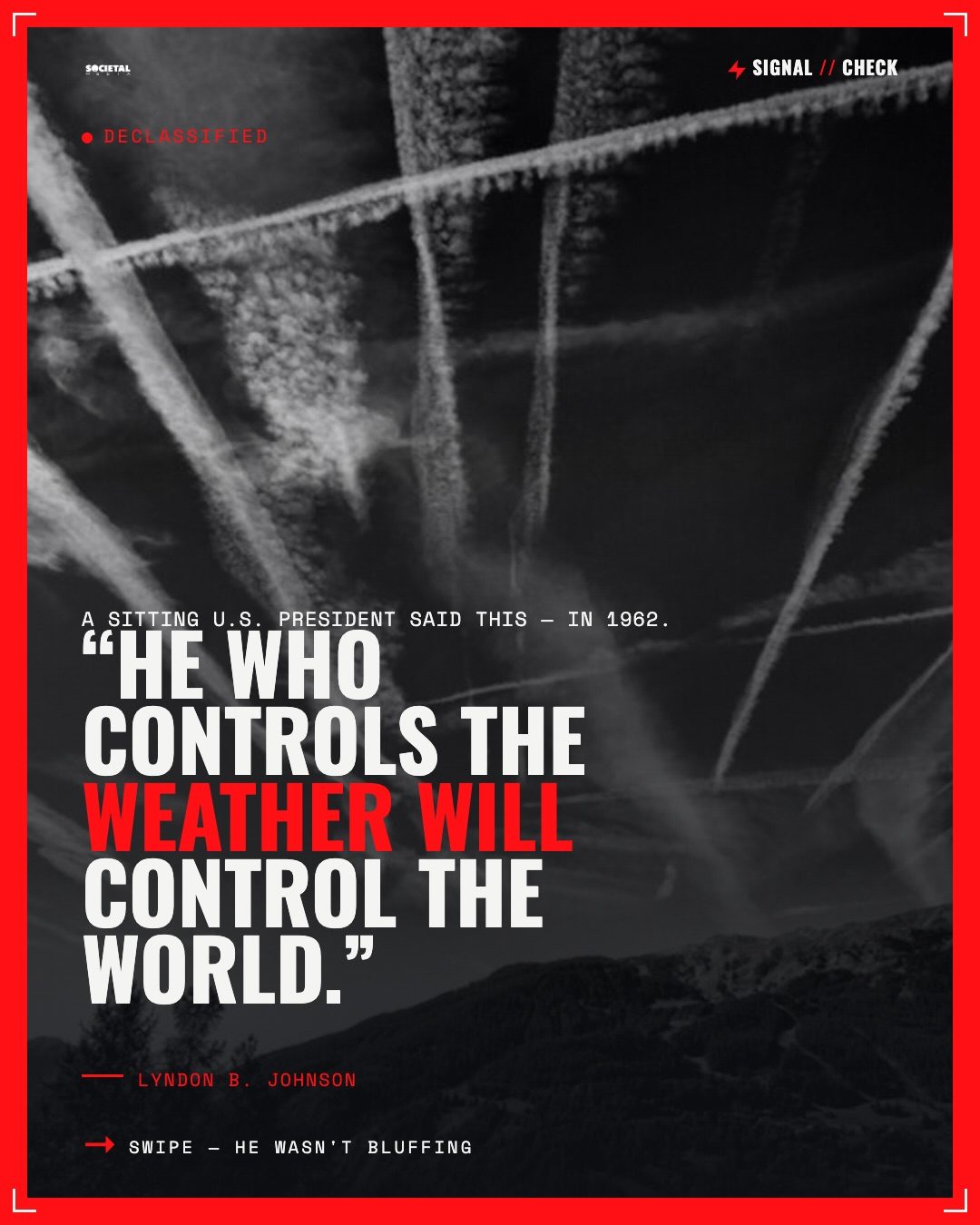
The discourse around weather control often invokes a quote attributed to Lyndon B. Johnson: "He who controls the weather will control the world." This quote, purportedly made in 1962, underscores the perceived power and significance of weather control. It suggests that those who can manipulate the weather hold a strategic advantage that extends far beyond military applications, encompassing broader geopolitical control.
Practical tips
Staying Informed
For those interested in the topic of weather control, staying informed about ongoing research, declassified documents, and international regulations is essential. Keeping up with current discussions and historical context can provide a comprehensive understanding of this complex and multifaceted issue.
Seeking Reliable Sources
Given the conspiratorial nature of some discussions around weather control, it is crucial to rely on credible sources and verified information. Historical documents, academic papers, and reputable news sources can provide reliable insights into the topic. Avoiding unverified claims and conspiracy theories can help maintain a balanced and informed perspective.
Engaging in Discussion
Weather control is a topic that lends itself to thoughtful debate and discussion. Engaging with others who have different viewpoints can provide a richer understanding of the issue. Whether through online forums, academic conferences, or personal conversations, sharing insights and perspectives can enhance your knowledge and deepen your appreciation for the complexities involved.
Important takeaways
Weather control has a history rooted in both military operations and international regulations. Historical examples like Operation Popeye and the ENMOD Convention provide valuable insights into the practical and ethical implications of weather manipulation. Modern discussions and ongoing research indicate that weather control remains a topic of interest, with potential applications extending beyond military strategies.
Conclusion
Weather control is a multifaceted and evolving topic with significant historical and contemporary relevance. Understanding the historical precedents, international responses, and modern implications of weather control can provide a comprehensive perspective on this intriguing and complex issue. Whether you are interested in military history, geopolitics, or the ethical implications of advanced technologies, the topic of weather control offers a wealth of information and thought-provoking discussions.
Watch the Reel
Questions readers ask
What was Operation Popeye and why is it significant in the history of weather control?
Operation Popeye was a covert operation during the Vietnam War where the U.S. military used cloud seeding to extend the monsoon season, aiming to hinder North Vietnamese supply chains. It is significant because it is one of the most well-known examples of weather manipulation for military purposes and has sparked ongoing debates about the ethics and consequences of such interventions.
Which president was involved in weather control initiatives?
Lyndon B. Johnson was involved in weather control initiatives. He authorized the project known as Operation Popeye with the intent to manipulate weather to gain a strategic advantage during the Vietnam War.
What are some of the global regulations on weather control?
Several international treaties and agreements have been established to regulate weather modification. For instance, the United Nations' Convention on the Prohibition of Military or Any Other Hostile Use of Environmental Modification Techniques (ENMOD) prohibits the use of weather control for hostile purposes. These regulations aim to prevent misuse and ensure responsible use of weather control technologies.
How has the declassification of weather control documents influenced public discourse?
The declassification of weather control documents has shed light on past operations and sparking conversations about the ethical implications and potential dangers of weather manipulation. These revelations have also fueled public interest and media coverage, making weather control a topic of ongoing debate and scrutiny.
What is cloud seeding and how was it used in military operations?
Cloud seeding is a weather modification technique that involves introducing substances like silver iodide into clouds to stimulate precipitation. In military operations, such as Operation Popeye, cloud seeding was used to enhance rainfall and affect the weather to hinder enemy movements and supply chains.
What are the potential societal impacts of weather control technologies?
Weather control technologies have the potential to significantly impact society, from influencing military strategies to affecting agriculture and climate mitigation. However, the ethical considerations and potential unintended consequences of these technologies must be carefully evaluated to ensure they are used responsibly and for the benefit of all.
Related deep dives
Similar reads based on topic and creator.



Recent articles
Fresh deep dives from the latest Reels we unpacked.




Comments
Be the first to comment.