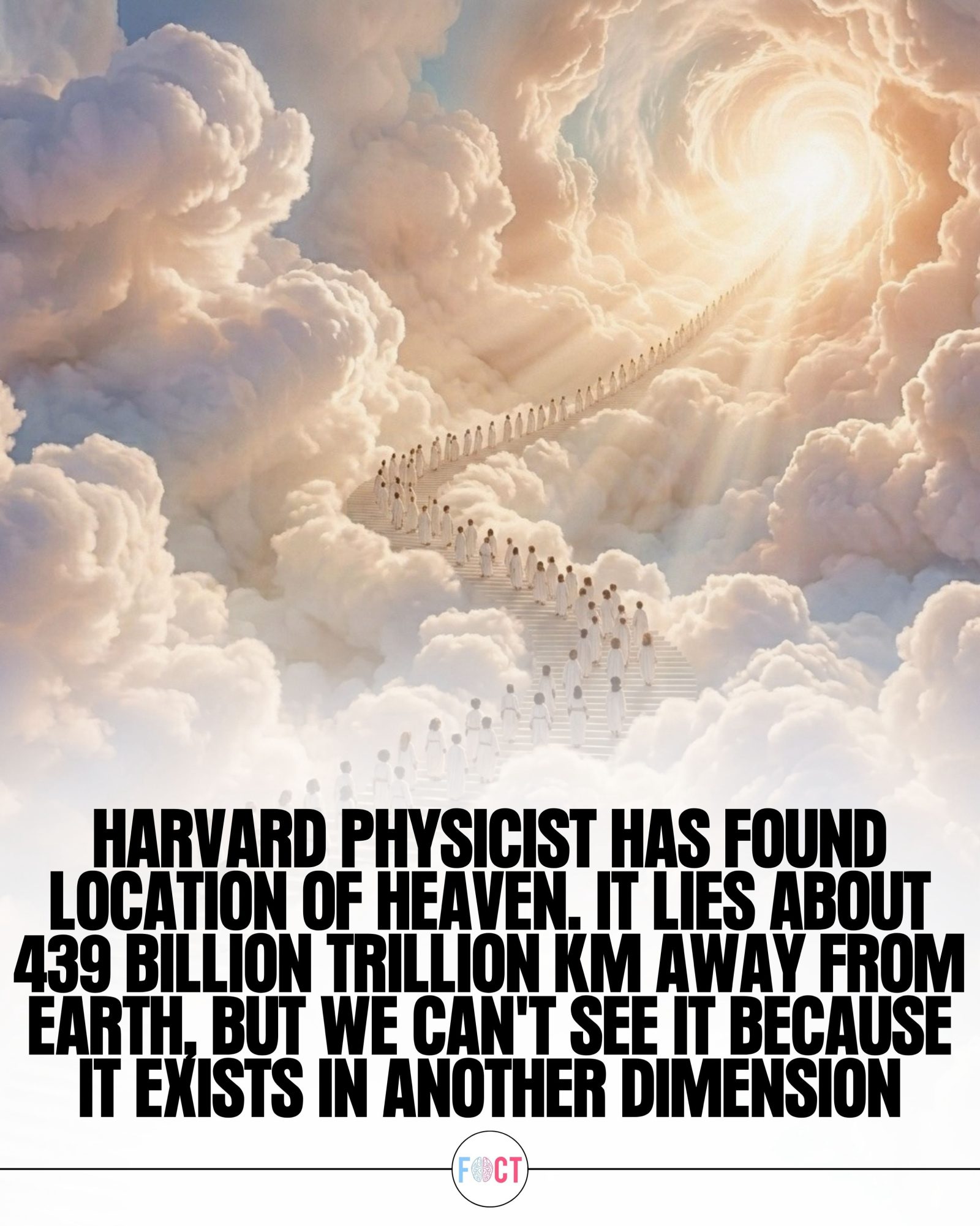
Heaven's Location
The cosmic horizon, about 439 billion trillion kilometers from Earth, has been proposed as a physical location for heaven by Harvard physicist Dr. Michael Guillen. This distant boundary of the observable universe, where the laws of space and time begin to break down profoundly, matches religious descriptions of a realm beyond human reach.
Heaven lies at the cosmic horizon, the farthest point we can see in the universe. This boundary, around 439 billion trillion kilometers from Earth, marks where the laws of physics as we know them start to unravel. It's a place where the fabric of spacetime itself may behave in ways that defy our current understanding. Dr. Michael Guillen, a Harvard physicist, has drawn a parallel between this cosmic limit and religious descriptions of heaven, suggesting that this distant, mysterious realm could be interpreted as a physical manifestation of heaven.
Why this matters
This intriguing perspective offers a unique blend of scientific curiosity and religious contemplation. By exploring the cosmic horizon, we can deepen our understanding of not only the physical universe but also the philosophical and spiritual concepts that have captivated humanity for millennia. The cosmos is an arena of discovery and wonder, and it challenges us to consider possibilities that could fundamentally change how we perceive our place in the universe.
The Cosmic Horizon
Beyond the Observable Universe
The cosmic horizon is the farthest point from which light has had time to reach us since the beginning of the universe. It represents the boundary of the observable universe, a region of space that we can theoretically see but not visit.
The Edge of Physics
The laws of physics, as we understand them, begin to break down at the cosmic horizon. General relativity, quantum mechanics, and even the fundamental constants of nature may behave differently in this distant realm. This breakdown makes the cosmic horizon a fascinating subject for physicists like Dr. Michael Guillen, who explore the limits of our current understanding.
A Physical Correlate for Heaven
The idea that the cosmic horizon could be a physical correlate for heaven draws on both scientific and religious concepts. Ancient texts, such as the Rigveda, describe higher planes of existence beyond the physical world. These descriptions resonate with the cosmic horizon, suggesting that the boundary of our observable universe could be a realm beyond human reach, much like religious depictions of heaven.
Ancient Texts and Modern Science
The Rigveda
The Rigveda, one of the oldest and most sacred texts in Hinduism, describes higher planes of existence beyond the physical world. These descriptions echo the concepts surrounding the cosmic horizon, suggesting a spiritual or metaphysical realm that transcends our everyday experience.
Religious Perspectives
Many religious traditions describe a realm beyond human comprehension, a place where the laws of nature as we know them do not apply. This concept aligns with the idea that the laws of physics break down at the cosmic horizon, suggesting a deeper connection between science and spirituality.
Bridging the Gap
The intersection of ancient texts and modern science offers a unique perspective on the nature of the universe. By exploring the cosmic horizon, we can bridge the gap between scientific inquiry and spiritual contemplation, offering a richer understanding of both realms.
Practical tips
Explore Scientific Concepts
Understanding the cosmic horizon requires a basic grasp of scientific concepts such as the observable universe, general relativity, and quantum mechanics. Exploring these topics can provide a foundation for appreciating the significance of the cosmic horizon in both scientific and spiritual contexts.
Reflect on Spiritual and Philosophical Questions
The idea that the cosmic horizon could be a physical correlate for heaven invites contemplation of broader philosophical and spiritual questions. Reflecting on these questions can deepen your understanding of the universe and your place within it. Understanding the import of concepts such as the cosmic horizon can enrich not only your scientific knowledge but also your spiritual and philosophical perspectives, fostering a more holistic view of existence.
Engage with Ancient Texts
Exploring ancient texts like the Rigveda can provide a deeper understanding of the spiritual and philosophical concepts that underlie the idea of the cosmic horizon as a correlate for heaven. Engaging with these texts can offer new insights into the nature of the universe and the relationship between science and spirituality.
Important takeaways
The cosmic horizon, about 439 billion trillion kilometers from Earth, serves as a physical boundary of the observable universe and a potential physical correlate for heaven. This distant realm, where the laws of physics break down, offers profound insights into the nature of the universe and its relationship to spiritual and philosophical concepts.
The cosmic horizon, the cosmic horizon, and the cosmic horizon represent not just a physical boundary but a profound intersection of scientific inquiry and spiritual contemplation. By exploring these concepts, we can deepen our understanding of the universe and our place within it, fostering a richer, more holistic view of existence.
Conclusion
The cosmic horizon, a boundary of the observable universe where the laws of physics break down, offers a fascinating intersection of scientific and spiritual concepts. By exploring this distant realm, we can deepen our understanding of the universe and our place within it. Whether through scientific inquiry or spiritual contemplation, the cosmic horizon invites us to consider the profound questions that lie at the heart of existence.
Watch the Reel
Questions readers ask
What is the cosmic horizon, and why is it significant?
The cosmic horizon is the farthest point in the observable universe, approximately 439 billion trillion kilometers from Earth. It's significant because it marks the boundary where the laws of physics as we understand them begin to break down, making it a point of interest for scientists and philosophers alike.
Who proposed the idea of heaven being located at the cosmic horizon?
Harvard physicist Dr. Michael Guillen proposed the idea of heaven being located at the cosmic horizon. He drew a parallel between this distant cosmic boundary and religious descriptions of a realm beyond human reach.
What makes the cosmic horizon a interesting candidate for the location of heaven?
The cosmic horizon is an interesting candidate for the location of heaven because it is incredibly distant, and the laws of physics begin to unravel at this point. This aligns with religious descriptions of heaven as a place that is beyond human reach and understanding.
How does the behavior of spacetime at the cosmic horizon challenge our understanding of the universe?
At the cosmic horizon, the fabric of spacetime itself may behave unpredictably, defying our current understanding of how the universe operates. This makes it a fascinating area for scientific exploration and speculation.
Why is the cosmic horizon so far away from Earth?
The cosmic horizon is approximately 439 billion trillion kilometers from Earth because it represents the boundary of the observable universe, the region of space we can see based on the age of the universe and the speed of light.
Related deep dives
Similar reads based on topic and creator.


Recent articles
Fresh deep dives from the latest Reels we unpacked.




Comments
Be the first to comment.