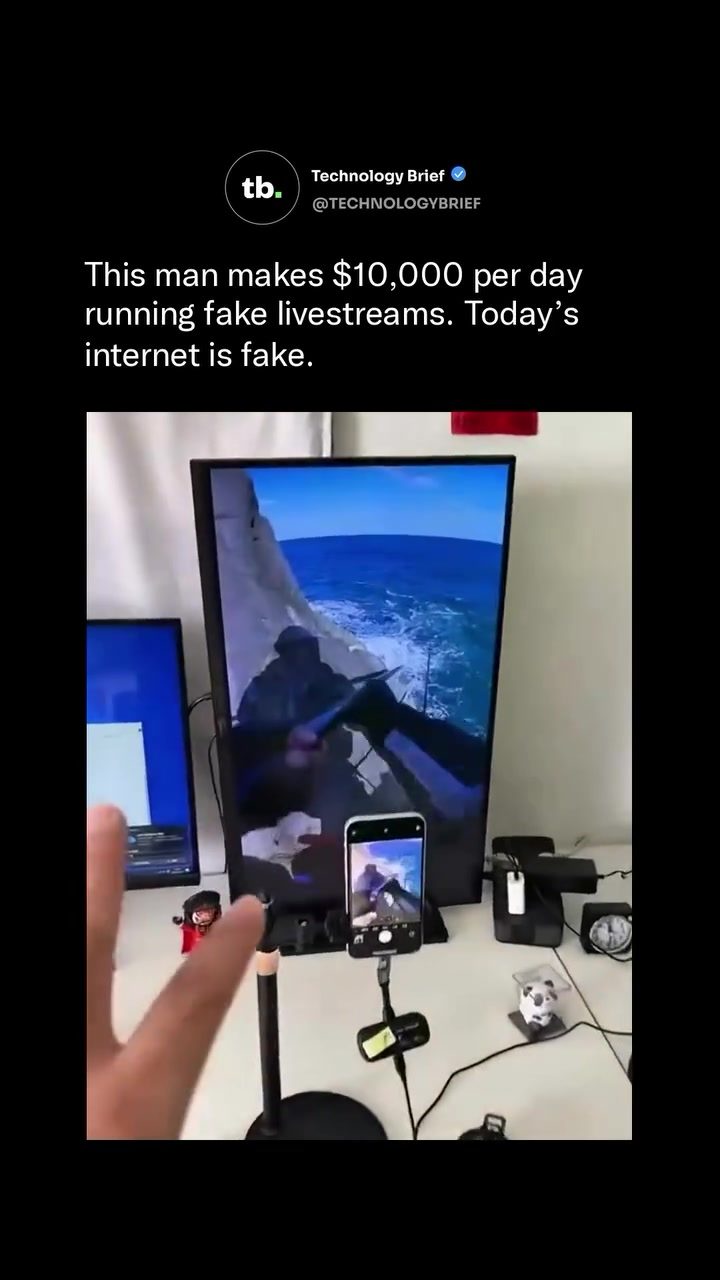
Fake Livestream Farms: The Growing Underground Industry
The world of livestreaming has seen a rise in fake livestream farms, particularly in China. These operations loop pre-recorded video footage and present it as a live broadcast to attract views, donations, and ad revenue. The setup is deceptively simple: a screen plays recorded footage, such as jet-skiing or fishing, while a phone mounted in front streams the screen with live-chat overlays to mimic a real-time broadcast.
Why This Matters
Fake livestreaming farms exploit the algorithms of livestreaming platforms, which often prioritize content that already appears popular. This creates a vicious cycle where fake streams attract real viewers and brand deals, making it a profitable, if not entirely legal, endeavor. The industry's growth underscores the need for greater transparency and accountability in the digital content landscape, something that is not easily achievable in a world where 10,000 views can be bought for a couple of yuan.
Main Discussion
The Mechanics of Fake Livestreams
Fake livestream farms rely on the illusion of authenticity. Operators use pre-recorded videos of engaging activities and stream them through a setup that includes multiple screens, phones, and other devices. The goal is to make the fake livestream look as real as possible, complete with chat overlays and other interactive elements. This setup is particularly common in China, where operators have been known to use thousands of phones to inflate view counts and generate substantial earnings before being shut down.
The Economic Incentives
The economic incentives for running a fake livestream farm are considerable. The claim that someone can make $10,000 per day through these operations highlights the potential profits. Livestreaming platforms reward high engagement, which means that even fake streams can attract paying viewers and lucrative brand deals. This financial allure drives the industry's growth and makes it a persistent problem.
The Role of Click Farms
An entire support industry has emerged around fake livestream farms, including click farms that sell fake views, likes, and comments. These services further inflate the perceived popularity of fake livestreams, making them even more attractive to unsuspecting viewers and brands. The use of click farms has been a significant factor in the success of these operations, allowing them to accumulate massive view counts quickly and cheaply.
The Case of the 4,600 Phones
In one notable case, an operator in China was found to have used over 4,600 phones to inflate fake livestream traffic. This massive operation generated the equivalent of $415,000 in just four months before the operator was eventually jailed. The scale of this operation underscores the sophistication and profitability of the fake livestreaming industry.
Practical Tips
Identifying Fake Livestreams
Recognizing a fake livestream requires a keen eye. Look for inconsistencies in the footage, such as unusual screen overlays or repetitive loops. Pay attention to the chat activity as well; fake livestreams often have disjointed or scripted interactions. Additionally, if the stream seems too good to be true (e.g., an unusually high number of viewers or comments for the content), it might be a fake.
Protecting Against Deception
To protect yourself from being misled by fake livestreams, it's crucial to engage with content from trusted sources. Look for verified badges and check the authenticity of the streamer's profile. Additionally, be cautious of streams that seem overly focused on generating donations or ad revenue without providing substantial, engaging content.
Reporting Fake Livestreams
If you suspect a livestream is fake, report it to the platform. Many livestreaming platforms have systems in place for users to flag suspicious activity. By reporting fake livestreams, you contribute to making the digital ecosystem more transparent and trustworthy.
Important Takeaways
Fake livestream farms are a growing problem, particularly in China, where operators have found ways to exploit the algorithms of livestreaming platforms. The profitability and sophistication of these operations underscore the need for greater vigilance and regulation. Viewers and brands must be cautious and discerning to avoid being misled by fake livestreams. Report suspicious activity to help create a more transparent and authentic digital environment.
Conclusion
The rise of fake livestream farms highlights the dark side of the digital content industry. Whether through pre-recorded footage, click farms, or massive phone operations, these entities exploit the system to generate substantial revenue. While the industry faces challenges, increased awareness and diligence can mitigate the impact of these deceptive practices.
Watch the Reel
Questions readers ask
What are fake livestream farms and where are they commonly found?
Fake livestream farms are operations that use pre-recorded videos to mimic live broadcasts, giving the appearance of real-time interaction. They are commonly found in China, where they have become a prevalent issue in the livestreaming industry.
How do fake livestream farms generate revenue?
These operations generate revenue through ad impressions and viewer donations. By mimicking live broadcasts, they attract real viewers, who may not realize they are watching recorded content, leading to increased profitability.
Why do livestreaming platforms prioritize content that appears popular?
Livestreaming platforms often prioritize content with higher view counts and engagement because it signals popularity and attracts more viewers. Fake livestream farms exploit this by using bots and fake views to make pre-recorded content appear more popular, thus increasing its visibility.
What are some signs that a livestream may be fake?
Signs of a fake livestream include inconsistent audio-visual quality, repetitive content, and unusual chat patterns. Viewers might also notice that the streamer does not respond to chat messages or interactions in real-time.
How can platforms and viewers work together to combat fake livestream farms?
Viewers can help by reporting suspicious streams and platform anomalies. Meanwhile, platforms can improve their fraud detection systems to identify and remove fake streams, as well as work on better transparency and accountability mechanisms. Collaborative efforts can help in curbing the rise of fake livestream farms.
What kind of impact do fake livestream farms have on the livestream industry?
Fake livestream farms distort the perception of genuine content and affect genuine creators by siphoning off ad revenue and genuine viewer engagement. They also undermine the trust viewers have in livestreaming platforms, creating a ripple effect that can harm the overall health of the industry.
Related deep dives
Similar reads based on topic and creator.




Recent articles
Fresh deep dives from the latest Reels we unpacked.




Comments
Be the first to comment.