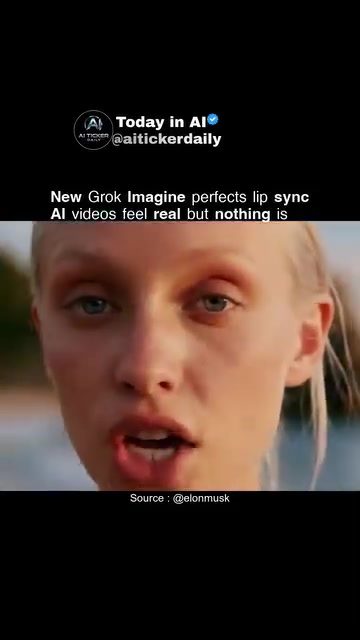
AI-generated lip-syncing technology is advancing rapidly, blurring the line between reality and artificiality. New advancements in this field are exemplified by the latest Grok Imagine model, which showcases improved lip-syncing capabilities. This technology allows AI to generate videos where characters appear to be speaking in sync with audio, even though the content is entirely artificial.
Context / Why this matters
The advancement of lip-syncing technology in AI is significant for several reasons. Firstly, it impacts the production of realistic and engaging content. Whether for entertainment, education, or marketing, the ability to create synthetic yet convincing videos can transform how media is produced and consumed. Secondly, it raises important ethical and practical questions about authenticity and trust in digital media. As AI-generated content becomes more lifelike, it becomes increasingly difficult to discern what is real and what is not, which can have implications for misinformation and deepfakes.
AI-generated text examples in the video such as "She sells seashells by the seashore" and "A proper copper coffee pot" demonstrate the AI's ability to synchronize lip movements with pre-recorded speech.
Main discussion
How AI lip-syncing works
AI lip-syncing involves several key components. Firstly, the system analyzes the audio to understand the phonemes—the smallest units of sound in a language. Then, it maps these phonemes to corresponding mouth shapes and movements. This process requires sophisticated algorithms that can accurately match sounds with visual cues. The AI must also consider factors like timing, emotion, and context to create a natural and believable performance. Advances in machine learning and neural networks have enabled the AI to learn from vast amounts of data, refining its ability to mimic human speech.
The role of Grok Imagine
The Grok Imagine model is at the forefront of this technology. It has significantly improved lip-syncing accuracy, making AI-generated videos more convincing. The examples shown in the video, such as "I can't focus. Perspicacious Polly Perkins purchased Peter's product," and "To produce a pretty prophet," illustrate the enhanced realism achieved by this model. The Grok Imagine model represents a leap forward in AI capabilities, pushing the boundaries of what is possible in synthetic media.
The importance of context and emotion
Context and emotion play a crucial role in the effectiveness of AI lip-syncing. Simple phrases like "A proper copper coffee pot" can be easily replicated, but more complex sentences with varying emotions and intonations pose a greater challenge. The Grok Imagine model excels in these areas, demonstrating an ability to convey nuanced expressions and emotions. This makes the AI-generated videos not only visually convincing but also emotionally resonant, enhancing their overall realism.
Ethical considerations
As AI lip-syncing technology advances, ethical considerations become increasingly important. The ability to create highly realistic AI-generated content raises concerns about deepfakes and misinformation. With improving AI lip-syncing technology, it is possible to produce convincing but false videos of public figures, leading to potential misinformation and manipulation. This underscores the need for rigorous ethical guidelines and transparency in the development and use of AI technology. Users and developers must be aware of the potential implications and work towards safeguarding the integrity of digital media.
Practical tips
Assessing the authenticity of AI-generated videos
To navigate the landscape of AI-generated media, it is essential to develop critical thinking skills. Here are some practical tips for assessing the authenticity of AI-generated videos:
-
Look for inconsistencies: Pay attention to any inconsistencies in the video, such as unnatural movements, awkward expressions, or mismatched lip movements. While AI has come a long way in replicating human behavior, these inconsistencies can still give away the synthetic nature of the content.
-
Check the source: Verify the source of the video to ensure it comes from a reputable and reliable outlet. Be cautious of videos from unknown or unverified sources, as they are more likely to contain AI-generated content with malicious intent.
-
Use verification tools: Utilize online tools and services designed to detect AI-generated content. These tools can help you analyze videos and identify potential deepfakes or synthetic media.
Staying informed about AI advancements
Given the rapid pace of AI advancements, staying informed is crucial. Here are some ways to keep up with the latest developments:
-
Follow industry leaders and experts: Keep an eye on leading AI researchers, tech companies, and industry experts who provide insights into the latest developments and trends. Following them on social media, reading their publications, and attending their talks can help you stay informed.
-
Join relevant communities and forums: Engage with communities and forums that discuss AI and technology. Platforms like Reddit, LinkedIn groups, and specialized forums can provide valuable insights and discussions about the latest advancements in AI technology.
-
Attend conferences and webinars: Participate in industry conferences, webinars, and workshops focused on AI and technology. These events offer opportunities to learn from experts, network with professionals, and stay updated on the latest research and innovations.
Important takeaways
The increasing realism of AI-generated videos
The increasing realism of AI-generated videos is a testament to the rapid advancements in AI technology. As seen in the examples showcased, AI can now produce highly convincing and emotionally resonant content, making it challenging to discern what is real and what is artificial.
The ethical challenges of synthetic media
The ethical challenges posed by synthetic media are significant, and they require careful consideration and action. As AI-generated content becomes more prevalent, it is essential to develop robust frameworks and guidelines to address the potential misuse and misinformation.
The need for critical thinking and verification
In the era of AI-generated content, critical thinking and verification skills are more important than ever. By developing these skills and utilizing available tools, we can better navigate the complexities of digital media and ensure the integrity of the information we consume.
Conclusion
AI lip-syncing technology is revolutionizing the way we create and consume media. While the advancements in this field are impressive, they also present significant challenges and ethical considerations. As AI continues to evolve, it is crucial to stay informed, develop critical thinking skills, and work towards ensuring the responsible use of this powerful technology. By doing so, we can harness the potential of AI for positive and ethical purposes, while also safeguarding the integrity of our digital world.
Watch the Reel
Questions readers ask
How does Grok Imagine's new AI lip-sync technology work?
Grok Imagine's AI lip-sync technology uses advanced algorithms to analyze audio and create corresponding lip movements for AI-generated characters. This process involves breaking down audio into phonemes, the smallest units of sound, and matching them with precise facial movements to ensure perfect synchronization. The technology is designed to handle various languages and accents, making it versatile for a wide range of applications.
What makes Grok Imagine's lip-sync technology unique compared to previous models?
Grok Imagine's new model stands out due to its enhanced realism and accuracy. Unlike earlier versions, it can generate more natural and nuanced lip movements, even in high-intensity scenarios, where a character is speaking rapidly or emotively. This makes synthetic videos more convincing and immersive, blurring the line between real and artificial content.
What are the potential uses of AI lip-sync technology in digital media?
AI lip-sync technology has numerous applications, including enhancing entertainment content, creating engaging marketing videos, or even revolutionizing the way online tutorials and news are presented. This technology can make videos more compelling and believable, which is crucial for maintaining viewer engagement. Additionally, it opens up new possibilities in filmmaking, gaming, and virtual reality experiences, allowing for highly realistic interactions and storytelling.
What ethical considerations should be taken into account with AI lip-sync technology?
The use of AI lip-sync technology raises several ethical concerns, such as the potential for deepfakes and the spread of misinformation. As the technology becomes more advanced, it becomes increasingly important to establish guidelines and regulations to ensure that synthetic media is used responsibly. Consumers and creators alike must be aware of the implications and work towards maintaining the authenticity and trustworthiness of digital media.
How does AI lip-sync technology impact the production of synthetic videos?
AI lip-sync technology streamlines the production process by automating the lip-syncing process, reducing the need for manual adjustments and making it easier to create convincing synthetic videos. This not only saves time and resources but also allows for more dynamic and realistic character interactions. As a result, content creators can focus more on the creative aspects of their projects, knowing that the technical aspects of lip-syncing are handled efficiently.
Can AI lip-sync technology be used for languages other than English?
Yes, Grok Imagine's AI lip-sync technology is designed to support multiple languages and accents. The advanced algorithms can analyze and replicate the nuances of different languages, ensuring that characters appear to speak naturally in various contexts. This makes the technology highly versatile and applicable to a global audience, enhancing its usefulness in an international context.
What are the challenges in developing AI lip-sync technology?
Developing AI lip-sync technology involves overcoming several challenges, such as accurately mapping audio to visual cues, handling different languages and accents, and ensuring the technology is scalable and efficient. Additionally, ethical considerations and the potential for misuse are significant hurdles that developers must address. Ensuring that the technology is used responsibly and that viewers can differentiate between real and synthetic content is crucial for maintaining trust in digital media.
Related deep dives
Similar reads based on topic and creator.




Recent articles
Fresh deep dives from the latest Reels we unpacked.




Comments
Be the first to comment.