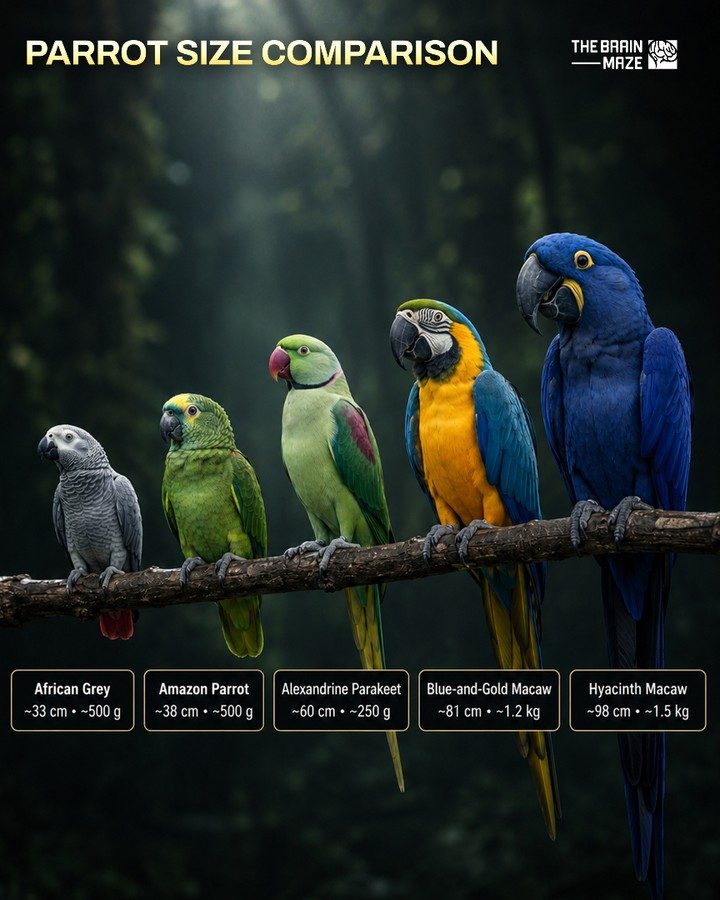
Parrot Size Comparison
Parrots are renowned for their vibrant plumage and impressive vocal abilities, but one of the most striking features among these birds is their varied sizes. From the diminutive African Grey Parrot to the colossal Hyacinth Macaw, the size range is vast and fascinating. Let’s explore the dimensions and weights of some of the most notable parrot species.
Context / Why this matters
Understanding the size variation among parrots is essential for several reasons. For bird enthusiasts and potential owners, knowing the size of a parrot can help determine if a species is suitable for their living situation. Larger parrots require more space and resources, while smaller species may be more adaptable to smaller homes or apartments.
Additionally, the size of a parrot can indicate its dietary and behavioral needs. Larger parrots often have different nutritional requirements and may exhibit more complex behaviors, which can affect their care and enrichment needs.
Main discussion
African Grey Parrot
The African Grey Parrot is one of the smaller species, typically ranging from 30 to 36 cm in length and weighing around 500 grams. Despite their smaller size, these parrots are highly intelligent and capable of mimicking a wide range of sounds and words. Their sleek grey feathers and distinctive red tail feathers make them easily recognizable.
Amazon Parrot
The Amazon Parrot is slightly larger than the African Grey, with a length ranging from 30 to 45 cm and a weight of approximately 500 grams. Known for their vibrant colors, which can include shades of green, blue, and yellow, these parrots are popular pets due to their friendly and outgoing nature. They are also known for their ability to speak clearly and mimic human voices.
Alexandrine Parakeet
The Alexandrine Parakeet is a bit of an anomaly in this comparison due to its long tail feathers, which add significant length to its overall size. These parakeets can reach lengths of 58 to 62 cm, but their body length is around 45 cm. Their weight is relatively light, around 250 grams. Despite their larger appearance, they are generally more compact and can be kept in smaller spaces compared to the larger macaws.
Blue-and-Gold Macaw
The Blue-and-Gold Macaw is significantly larger, with a length ranging from 76 to 86 cm and a weight of approximately 1.2 kg. These majestic birds are known for their vibrant blue and gold feathers, which make them a striking addition to any aviary. They are social birds and require plenty of interaction and mental stimulation to thrive.
Hyacinth Macaw
The Hyacinth Macaw is the largest flying parrot species in the world. They can reach lengths of 95 to 100 cm and weigh around 1.5 kg. These birds are incredibly impressive, with striking cobalt blue feathers and a powerful beak. Due to their size, they require a substantial amount of space and a diet rich in nutrients. Their intelligence and playful nature make them fascinating companions, but they also require a dedicated owner who can meet their extensive needs.
Practical tips
When considering a parrot as a pet, it’s important to match the species to your living situation and lifestyle. Here are some tips to help you make an informed decision:
-
Space Requirements: Larger parrots, such as the Blue-and-Gold and Hyacinth Macaws, need ample living space, including room to stretch their wings. Smaller species like the African Grey and Amazon Parrots can adapt to smaller homes but still require a spacious cage.
-
Dietary Needs: Ensure you can provide the appropriate diet for the parrot species you choose. Larger parrots may need a more varied and nutrient-rich diet compared to smaller species. Consult with an avian veterinarian for specific dietary recommendations.
-
Behavior and Enrichment: Parrots are intelligent and social creatures. Provide them with plenty of toys, puzzles, and interaction to keep them mentally stimulated. Regular social interaction is crucial for their emotional well-being, especially for larger, more social species like the Hyacinth Macaw.
-
Noise Levels: Parrots can be quite vocal, and some species, like the Amazon Parrot, are known for their loud calls. Consider your tolerance for noise and choose a species that fits your living situation.
Important takeaways
- Size matters: The size of a parrot directly influences its care requirements, including space, diet, and enrichment needs.
- Variation matters: There is a wide range of sizes among parrot species, from the small African Grey Parrot to the large Hyacinth Macaw.
- Research required: Potential parrot owners should thoroughly research each species to understand their specific needs and ensure they can provide a suitable environment.
Conclusion
Parrots offer a unique and rewarding experience as pets, but choosing the right species is crucial. By understanding the size variations and specific needs of different parrot species, you can make an informed decision that benefits both you and the bird. Whether you opt for a smaller species like the African Grey or a larger one like the Hyacinth Macaw, providing a loving and enriching environment will ensure your parrot thrives.
Watch the Reel
Questions readers ask
What is the size difference between an African Grey Parrot and a Hyacinth Macaw?
The African Grey Parrot typically measures about 12-14 inches in length and weighs around 12-16 ounces, while the Hyacinth Macaw is significantly larger, reaching up to 40 inches in length and weighing between 2.5 to 3.5 pounds. This dramatic size difference is important for planning cage size and living accommodations.
How much larger is a Blue and Gold Macaw compared to an Amazon Parrot?
A Blue and Gold Macaw can grow up to 30-33 inches in length and weigh between 2.5 to 3.5 pounds. In contrast, an Amazon Parrot is generally about 12-15 inches long and weighs about 12-17 ounces. This means the Blue and Gold Macaw is roughly 2-3 times larger in length and 3-4 times heavier.
What is the approximate size of an Alexandrine Parakeet?
The Alexandrine Parakeet is a medium-sized parrot, typically measuring around 16-17 inches in length and weighing between 4.5 to 5.8 ounces. These dimensions make them smaller than many macaw species but larger than smaller parrot varieties like the African Grey Parrot.
Which parrot species is considered the largest?
The Hyacinth Macaw is often considered one of the largest parrot species in the world. They can reach lengths of up to 40 inches and weigh between 2.5 to 3.5 pounds, making them impressive in both size and presence.
Why is it important to know the size of a parrot before owning one?
Knowing the size of a parrot is crucial for providing the right environment and care. Larger parrots require more extensive living spaces, specialized diets, and may have more significant behavioral needs compared to smaller species. Smaller parrots, on the other hand, might be more adaptable to smaller homes or apartments and require different types of enrichment.
What are the typical dimensions of an Amazon Parrot?
Amazon Parrots are medium-sized, usually measuring 12-15 inches in length. Their weight typically ranges from 12 to 17 ounces. These dimensions make them suitable for a variety of living situations, provided they have enough space for exercise and mental stimulation.
How does the size of a parrot impact its care requirements?
The size of a parrot directly impacts its care requirements. Larger parrots need bigger cages, more robust perches, and a more substantial diet to support their body mass. They also require more space for exercise and play. Smaller parrots, while needing less space, still require appropriate enclosures and enrichment to maintain their health and well-being.
Recent articles
Fresh deep dives from the latest Reels we unpacked.




Comments
Be the first to comment.