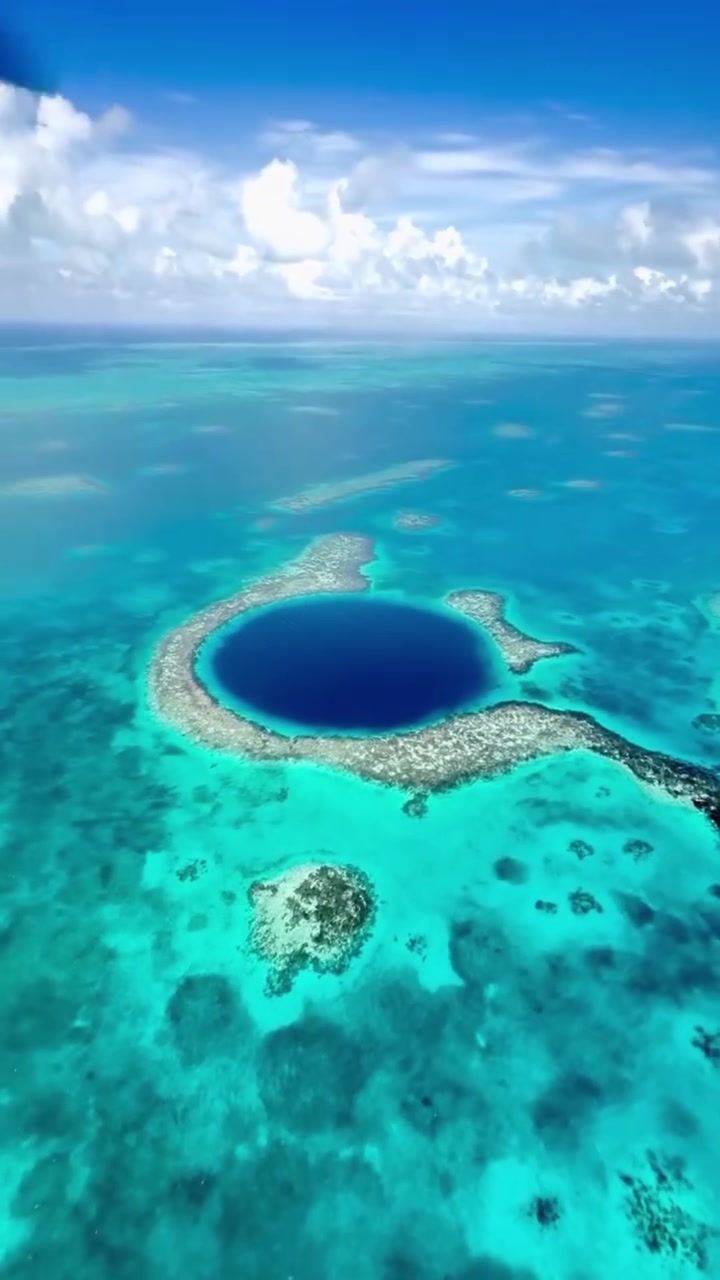
A circular chasm so blue and deep that the surface can't hold up against the diving undertones. It's more than 120 meters from the surface to the bottom. The Great Blue Hole's beauty is a signature attraction. This giant marine sinkhole is off the coast of Belize, and it's a curiosity that draws divers worldwide. The hole is over 300 feet deep, making it ideal for divers to dive deeper. The unique feature of the Blue Hole is its deep water. It's estimated to hold about 88 million cubic meters of water.
The ocean's blue sinkhole
To fully grasp the Great Blue Hole, you should know it was once a massive limestone cave network. That network formed when sea levels were much lower. As the oceans rose, the caves flooded, leaving this enormous underwater sinkhole, a marine phenomenon that is hidden under sea water. The Great Blue Hole lies 70 kilometers off the coast of Belize. Originally, it was probably formed during the last Ice Age. The cave system was exposed to the atmosphere, but when sea levels rose, it slowly flooded, eventually leading to the hole we know today. Once underwater, the hole hosts a variety of marine life. It is an essential gathering spot for divers and scientists. Divers frequently explore the underwater caves and marine life.
The blue hole in a diver's world
The Great Blue Hole, located within the Lighthouse Reef, is one of the most remarkable natural phenomena and is part of a unique, globally recognized ecosystem. It is 70 kilometers off the coast of Belize and is considered one of the finest dive destinations. Scuba divers come from all over the globe, attracted by the perfect blue circle and the unique opportunity to explore an immense underwater cave. The hole's massive size and depth make it a global magnet for divers and adventurers. But more than that, is its distinctive underwater landscape. The Blue Hole’s unique geology and its geological reputation make it a divers' favorite. The Great Blue Hole offers the only way down is a 100-meter dive to the bottom's sand-covered floor. Unsurprisingly, there's a lot more to what lies beneath. The Blue Hole offers something special to divers: the chance to enter a unique underwater world. Below the surface is a compete darkness world that provides a different experience for those who can dive and explore it. Divers also consider its geological features a full body of water to dive into.
Why it's more than a diving spot
The hole is more significant than just a diving site: it's a natural phenomenon in the world of diving. It's a site of scientific and environmental research. It contributes to a diverse variety of marine life. "The Great Blue Hole is one of the most unique sites in the Belize Barrier Reef Reserve System." The Great Blue Hole was designated as a UNESCO World Heritage Site.
The diver's dazzling descent
The diver's trip begins on the surface. Divers descend the 100 meters down to the bottom of the Blue Hole. Their journey is an expedition through a vertical underwater cliff. Divers descend through the deep blue waters of the Blue Hole. The entire length of the dive is a unique experience of diving deep underwater and "becoming a shadowy silhouette against the bright blue backdrop, swimming through vertical underwater cliffs of stalactites and stalagmites." Divers explore the complex cave system, marine life.
From the sky, water
From the sky, the Blue Hole appears as a close-to-circular shape and perfect circle, offering a unique perspective to pilots and sailors on the water surface. From above, it looks like a perfect circle. But beneath the surface, there's an endless world of water and darkness. This hole is an intrusion of water and sky, where the two meet.
How to experience the great blue hole
Time the visit
The best time to visit the Great Blue Hole is between June and August. These months offer the best diving conditions.
What to know
The Great Blue Hole is an advanced dive site for certified divers, not a beginner's adventure. There are no frequent dives from the Blue Hole itself. Divers "use the Blue Hole as a day trip" from nearby Ambergris Caye or Caye Caulker. To dive the Dark Zone of the Blue Hole, the preferred boat for diving this location uses an open-bottom boat. The divers descend into the water from the bottom of the boat. The divers descend to 130 feet (39 meters).
Booking a trip
Here's a rundown on booking a visit:
- Divers typically book a day trip from nearby Ambergris Caye or Caye Caulker.
- Guided tours are also available for visitors who aren't familiar with the specifics of diving and tourism and can go on a boat. Caveat: You'll need certifications to join a dive tour. The most common is the Tropical Fish Certification. The dive is only recommended for experienced divers.
Natural marvels of the world
The Great Blue Hole is as mysterious and alluring as it is vast. This enticing underwater chasm has fascinated scientists and divers worldwide. Even more, it is also part of the world’s greatest natural phenomena. The Great Blue Hole represents the marvels of natural happenings around the world. Not every place can boast of such a deep blue hole.
Watch the Reel
Questions readers ask
What makes the Great Blue Hole so special for divers?
The Great Blue Hole is special for divers because of its immense depth and unique geological features. At 300 feet deep, it offers a rare opportunity to explore an underwater cave system. The blue hole's distinctive underwater landscape, including vertical underwater cliffs and a sand-covered floor, provides a thrilling and unique diving experience.
What other marine life can be found in the Great Blue Hole?
The Great Blue Hole hosts a variety of marine life, making it an essential gathering spot for divers and scientists. While the article doesn't specify the types of marine life, divers frequently explore the underwater caves and marine life, suggesting a rich and diverse ecosystem.
How was the Great Blue Hole formed?
The Great Blue Hole was formed during the last Ice Age when sea levels were much lower. Originally, it was a massive limestone cave network. As the oceans rose, the caves flooded, leaving this enormous underwater sinkhole. The process of formation is one of the reasons for its unique geological features.
How deep is the Great Blue Hole and is it safe for divers?
The Great Blue Hole is over 300 feet (120 meters) deep, making it one of the deepest underwater sinkholes. While it's a thrilling dive, it's important to note that diving to such depths requires advanced training and certification. Divers must be prepared for the challenges of deep-water diving, including the risks of decompression sickness and the need for specialized equipment.
What is the significance of the Great Blue Hole beyond diving?
Beyond being a diving spot, the Great Blue Hole is a site of scientific and environmental research. It contributes to a diverse variety of marine life and is part of the Belize Barrier Reef Reserve System, a UNESCO World Heritage Site. Its unique geological features and environmental significance make it a valuable natural phenomenon.
How does the Great Blue Hole contribute to the Belize Barrier Reef Reserve System?
The Great Blue Hole is a key part of the Belize Barrier Reef Reserve System, which is a UNESCO World Heritage Site. It contributes to the diverse variety of marine life in the region and serves as a unique site for scientific and environmental research. Its geological features and environmental significance make it an important part of the Belize Barrier Reef Reserve System.
Related deep dives
Similar reads based on topic and creator.
Recent articles
Fresh deep dives from the latest Reels we unpacked.
Comments
Be the first to comment.