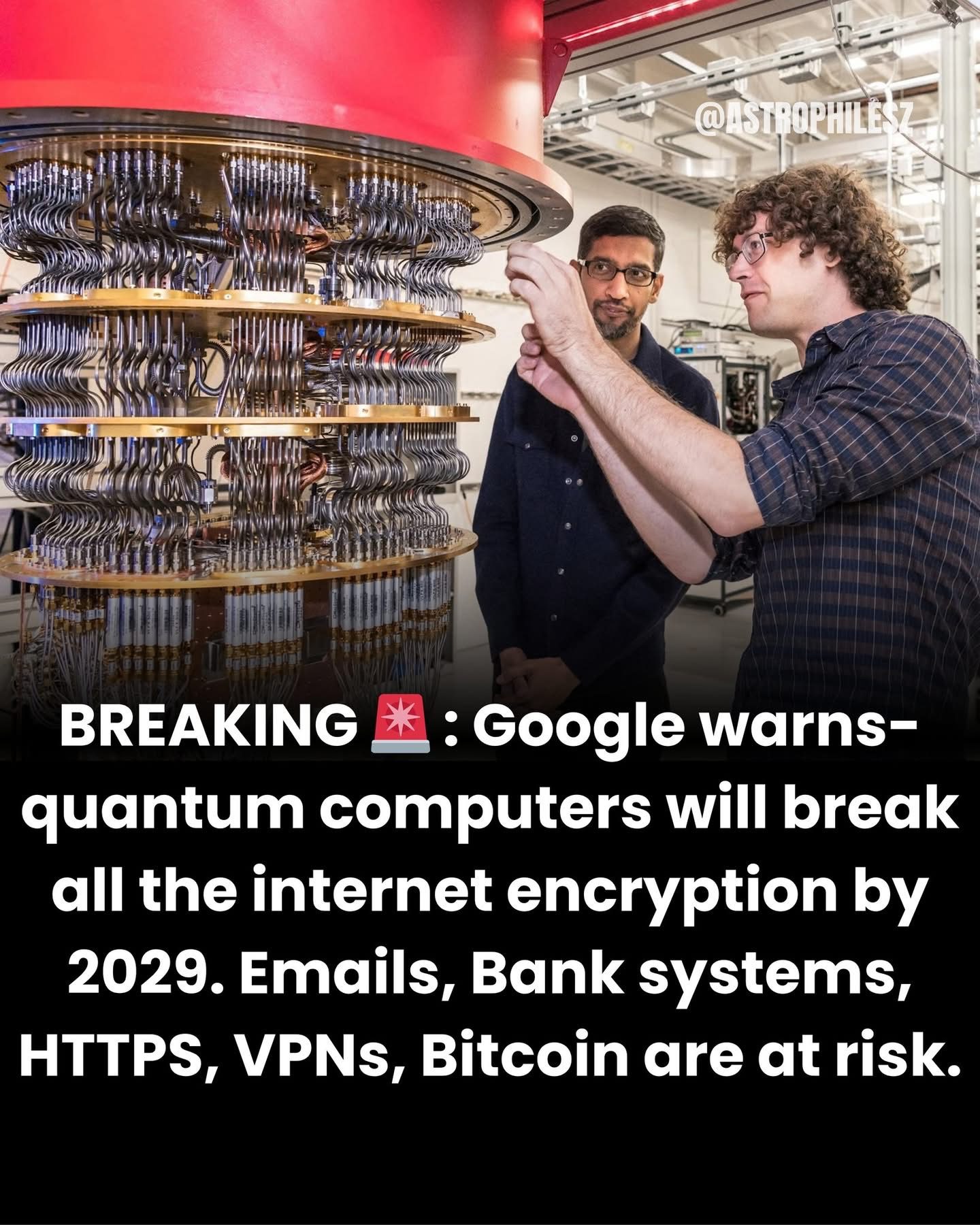
Quantum Computing and the 2029 Encryption Deadline
The internet as we know it relies heavily on encryption to secure our data. However, with the advent of quantum computing, that security is under threat. Google has issued a stark warning: by 2029, quantum computers could potentially break all internet encryption. This revelation has significant implications for various systems, including emails, banking, HTTPS, VPNs, and even Bitcoin.
Why This Matters
The warning from Google's security team, led by VP Heather Adkins and cryptologist Sophie Schmieg, is based on new research that suggests a quantum computer with around one million qubits could crack a standard 2048-bit RSA key. This is a massive shift from earlier estimates that required closer to a billion qubits to achieve the same result. The implications are clear: systems that rely on encryption must be prepared for a future where quantum computers can decrypt sensitive information.
The Threat of Quantum Computing
The Race to 2029
Google has taken a proactive stance by setting an internal deadline of 2029 to fully transition its systems to quantum-resistant encryption. This goal is more aggressive than other targets set by the NSA (2031) and the US government (2035). Google's urgency is driven by the mathematical advancements in quantum computing, not the immediate existence of such machines. This means that while no quantum computer capable of this feat exists today, the threat is imminent enough to warrant immediate action.
"Store Now, Decrypt Later" Threat
One of the most chilling aspects of this warning is the "store now, decrypt later" threat. Hackers can steal encrypted data today and decrypt it in the future when quantum computers become capable. This long-term threat emphasizes the need for immediate action. Systems that store sensitive information, such as banks, governments, and even Bitcoin, need to start migrating to post-quantum cryptography now rather than waiting for the arrival of a capable quantum machine.
The Current State of Quantum Computing
Qubits and Encryption
Quantum computers operate on the principle of qubits, which are vastly more powerful than classical bits. The research indicates that a quantum computer with around one million qubits could crack the 2048-bit RSA key in under a week. This is a significant reduction from earlier estimates that required nearly a billion qubits. The shift is due to advancements in quantum algorithms and the understanding of qubit capabilities.
Engineering Challenges
Despite the theoretical advancements, building a stable quantum computer with a million working qubits remains a significant challenge. Most experts in the field anticipate this milestone to be achieved sometime in the 2030s to 2050s. Google's 2029 deadline positions itself as an urgent outlier rather than the consensus view. This cautionary stance highlights the need for proactive measures to safeguard encryption systems.
Systems at Risk
Emails and Bank Systems
Encryption is the backbone of secure communication and financial transactions. Emails and banking systems rely heavily on encryption to protect sensitive information. With the threat of quantum computing looming, securing these systems becomes paramount. Transitioning to quantum-resistant encryption is essential to ensure that future data remains secure.
HTTPS, VPNs, and Bitcoin
Other systems at risk include HTTPS, VPNs, and Bitcoin. HTTPS secures data transmitted over the internet, while VPNs provide secure connections for remote access. Bitcoin, with its public keys, is also vulnerable to quantum attacks. The transition to post-quantum cryptography is critical for maintaining the security of these systems.
Practical Tips
Preparing for Quantum-Resistant Encryption
To prepare for the impending threat, organizations need to take several steps:
- Audit Current Encryption Systems: Identify which encryption methods are currently in use and assess their vulnerability to quantum attacks.
- Research Post-Quantum Cryptography: Stay updated on the latest developments in post-quantum cryptography and understand how they can be integrated into existing systems.
- Develop a Transition Plan: Create a phased plan to transition to quantum-resistant encryption over the next few years. This plan should include timelines, resource allocation, and training for staff.
- Collaborate with Experts: Work with cryptographers and cybersecurity experts to implement new encryption methods effectively.
- Regularly Update Systems: Ensure that all systems are regularly updated to incorporate the latest security measures and encryption standards.
Important Takeaways
Proactive Measures
The most important takeaway is the need for proactive measures. Organizations must start preparing for the transition to post-quantum cryptography now. Waiting until the threat is imminent could leave systems vulnerable to attacks.
Public and Private Sector Collaboration
Both the public and private sectors need to collaborate to develop and implement quantum-resistant encryption. This includes governments, financial institutions, and technology companies. The collective effort will ensure that the transition is smooth and effective.
Continuous Monitoring
Continuous monitoring of developments in quantum computing is essential. As the technology advances, so too will the methods used to protect against it. Staying informed and adaptable will be crucial in the coming years.
Future of Encryption
The future of encryption lies in post-quantum cryptography. This field is rapidly evolving, and new algorithms and methods are being developed to counter the threat posed by quantum computers. Organizations must stay informed and ready to adopt new encryption standards as they become available.
Conclusion
The warning from Google about the potential impact of quantum computing on internet encryption is a call to action. By setting a 2029 deadline for transitioning to quantum-resistant encryption, Google has taken a proactive stance to safeguard its systems. Organizations across various sectors must follow suit and take immediate steps to prepare for the future of encryption. The threat is real, and the time to act is now.
Watch the Reel
Questions readers ask
What exactly is the threat posed by quantum computers to internet security by 2029?
Quantum computers pose a significant threat to internet security by 2029 because they could potentially break the encryption methods currently used to secure data. This includes the encryption used in emails, banking, HTTPS, VPNs, and even cryptocurrencies like Bitcoin, making sensitive information vulnerable to decryption.
How does Google plan to address the quantum threat to internet security?
Google is proactively developing quantum-resistant encryption to protect against the potential future decryption threats posed by quantum computers. This involves creating new encryption algorithms that are designed to withstand attacks from quantum computers.
What specific encryption methods are at risk from quantum computers by 2029?
Quantum computers are expected to break standard encryption methods such as 2048-bit RSA keys, which are widely used for securing internet communications. This includes encryption used in HTTPS, VPNs, and other secure internet protocols.
Why is the year 2029 significant in the context of quantum computing and internet security?
Google has pinpointed 2029 as a crucial milestone because, by that year, quantum computers are anticipated to have the capability to crack widely-used encryption methods, which could lead to a significant breach in internet security.
How many qubits does a quantum computer need to break current encryption standards, according to Google's research?
Google's research suggests that a quantum computer with approximately one million qubits could potentially break a standard 2048-bit RSA key, which is commonly used for securing internet communications. This is a significant shift from earlier estimates, which required much higher qubit counts.
What measures can individuals and organizations take to protect their data from quantum threats?
To protect data from future quantum threats, individuals and organizations should start transitioning to quantum-resistant encryption methods. This involves using new encryption algorithms that are designed to be secure against quantum computer attacks. It's crucial to stay informed about the latest developments in quantum-resistant encryption and implement them as soon as possible.
How does the quantum threat impact the security of Bitcoin and other cryptocurrencies?
The quantum threat impacts the security of Bitcoin and other cryptocurrencies because they rely on encryption methods that quantum computers could potentially break. As a result, it's essential for the cryptocurrency industry to develop and implement quantum-resistant encryption to ensure the security of digital transactions and wallets.
Related deep dives
Similar reads based on topic and creator.




Recent articles
Fresh deep dives from the latest Reels we unpacked.




Comments
Be the first to comment.