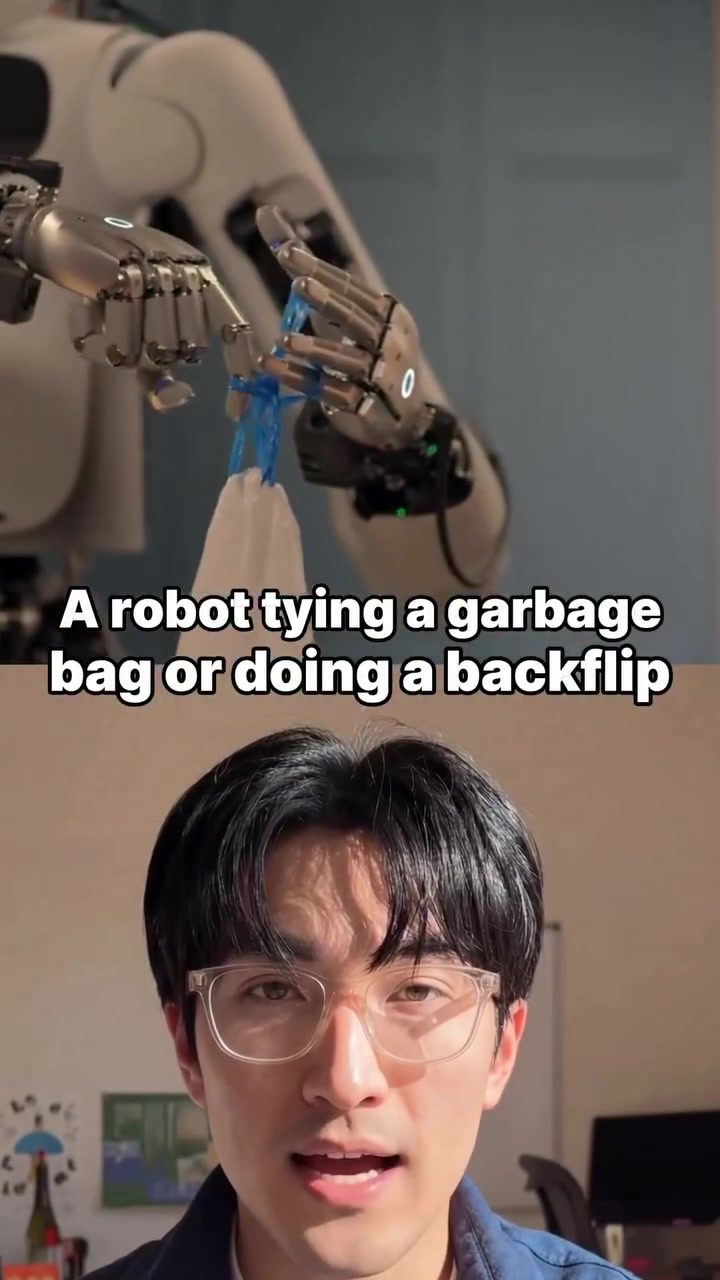
Robotics Breakthrough: Gemini Robotics 2 and the Art of Tying a Trash Bag
Tying a trash bag might seem like a mundane task, but for robots, it's a significant milestone. Google DeepMind's launch of Gemini Robotics 2 demonstrates this with a robot that can tie a trash bag knot, a feat that showcases advancements in AI and robotics far beyond simple, memorized motions.
Context / Why this matters
The ability of a robot to tie a trash bag knot is more than just a party trick. It represents a major leap forward in robotics and AI, particularly in the areas of embodied reasoning and vision-to-action control. This breakthrough is not just about the physical task but also about the underlying technology that makes it possible.
Main discussion
The Challenge of Tying a Trash Bag
Tying a trash bag knot is a complex task for a robot. Unlike tasks that involve repetitive, memorized sequences, a trash bag changes shape constantly. Every knot is unique, making it impossible for a robot to rely on pre-programmed movements. This dynamic nature requires advanced AI models that can adapt in real-time.
The Role of AI Models
Gemini Robotics 2 utilizes two AI models to achieve this feat:
-
Embodied Reasoning Model: This acts as the high-level brain, observing the environment and planning the steps required to complete the task. It's like a strategic planner, constantly assessing the situation and adjusting the plan as needed.
-
Vision-Language Action Model: This model turns visual data (camera pixels) directly into motor commands. It allows the robot to understand its surroundings and respond to them in real-time, making it capable of executing precise movements.
Full Humanoid Control
Another significant breakthrough is the control of a full humanoid robot, not just robotic arms. Previous systems often controlled only the arms on a tabletop, limiting their functionality. Gemini Robotics 2 can crouch, reach for items on shelves, and perform a wide range of movements, making it more versatile and useful in various environments.
Beyond the Trash Bag
While tying a trash bag is a standalone achievement, the implications are far-reaching. This technology can be applied to various real-world scenarios, from household tasks to more complex industrial operations. The ability to adapt to changing environments and perform tasks without pre-programmed routines makes these robots invaluable in unpredictable settings, such as disaster response or extraterrestrial exploration.
Practical tips
Understanding the Technology
To appreciate the full scope of this breakthrough, it's helpful to understand the underlying technology. Familiarize yourself with the concepts of embodied reasoning and vision-to-action control. These are the foundations that allow robots to perform tasks with a level of adaptability previously unseen.
Applications in Daily Life
Think about how this technology can be applied in your daily life. From assisting in household chores to aiding in more complex tasks, the potential is vast. Consider how robots equipped with these AI models can make your life easier and more efficient.
Future Possibilities
Look to the future of robotics. As technology advances, we can expect to see more sophisticated robots capable of performing a wide range of tasks. The ability to adapt to changing environments and perform tasks without pre-programmed routines will make these robots invaluable in unpredictable settings.
Important Takeaways
This breakthrough showcases the potential of AI in robotics, with applications that go far beyond simple tasks. The combination of embodied reasoning and vision-to-action control allows robots to adapt and perform in dynamic environments, making them invaluable in a wide range of scenarios.
Key Advancements
- Adaptability: The ability to adapt to changing environments and perform tasks without pre-programmed routines is a major leap forward.
- Full Humanoid Control: The control of a full humanoid robot, not just robotic arms, adds a new level of versatility.
- Real-World Applications: The potential for real-world applications is vast, from household tasks to complex industrial operations.
Future Directions
The future of robotics is exciting and full of possibilities. As technology continues to advance, we can expect to see more sophisticated robots capable of performing a wide range of tasks. The ability to adapt and perform in dynamic environments will make these robots invaluable in unpredictable settings, such as disaster response or extraterrestrial exploration.
Conclusion
The launch of Gemini Robotics 2 by Google DeepMind marks a significant milestone in the field of robotics. The ability of a robot to tie a trash bag knot demonstrates the power of AI and robotics, with potential applications that go far beyond simple tasks. As we look to the future, the possibilities are vast, and the impact of this technology on our daily lives will be profound.
Watch the Reel
Questions readers ask
What makes tying a trash bag knot such a significant achievement for robots?
Tying a trash bag knot requires advanced real-time decision-making and adaptability, which are crucial for robots to perform complex tasks in everyday environments. This milestone demonstrates that robots can handle dynamic tasks that require precise movements and adjustments, moving beyond simple, pre-programmed actions.
How does Gemini Robotics 2 differ from previous robotic systems?
Gemini Robotics 2 stands out due to its advanced capabilities in embodied reasoning and vision-to-action control. Unlike previous systems that relied on memorized motions, Gemini Robotics 2 can make real-time decisions and adapt to changing conditions, making it more versatile in handling a variety of tasks.
What are the real-world applications of a robot that can tie a trash bag knot?
While tying a trash bag might seem trivial, the underlying technology has broad applications. Robots with this capability can be used in environments where adaptability and real-time decision-making are crucial, such as in healthcare for assisting with tasks that require dexterity, or in manufacturing for handling dynamic and unpredictable tasks.
What role does AI play in the advancements of Gemini Robotics 2?
AI is the driving force behind Gemini Robotics 2's capabilities. The robot uses advanced AI algorithms to process real-time visual data and make precise movements. This integration of AI allows the robot to adapt to different situations and perform tasks that require complex decision-making processes, such as tying a knot.
How does the Gemini Robotics 2's approach to vision-to-action control work?
Vision-to-action control in Gemini Robotics 2 involves the robot using its visual sensors to gather real-time data about its environment. This data is then processed by advanced AI algorithms to make split-second decisions on how to move and manipulate objects, ensuring that the robot can handle tasks that require precision and adaptability, like tying a trash bag.
What are the next steps for AI and robotics following this breakthrough?
Following this breakthrough, the next steps involve further refining AI algorithms and robotic systems to handle even more complex and dynamic tasks. Researchers aim to improve the robot's ability to learn from its environment and adapt to new situations more efficiently, paving the way for more advanced applications in various industries.
Related deep dives
Similar reads based on topic and creator.




Recent articles
Fresh deep dives from the latest Reels we unpacked.




Comments
Be the first to comment.