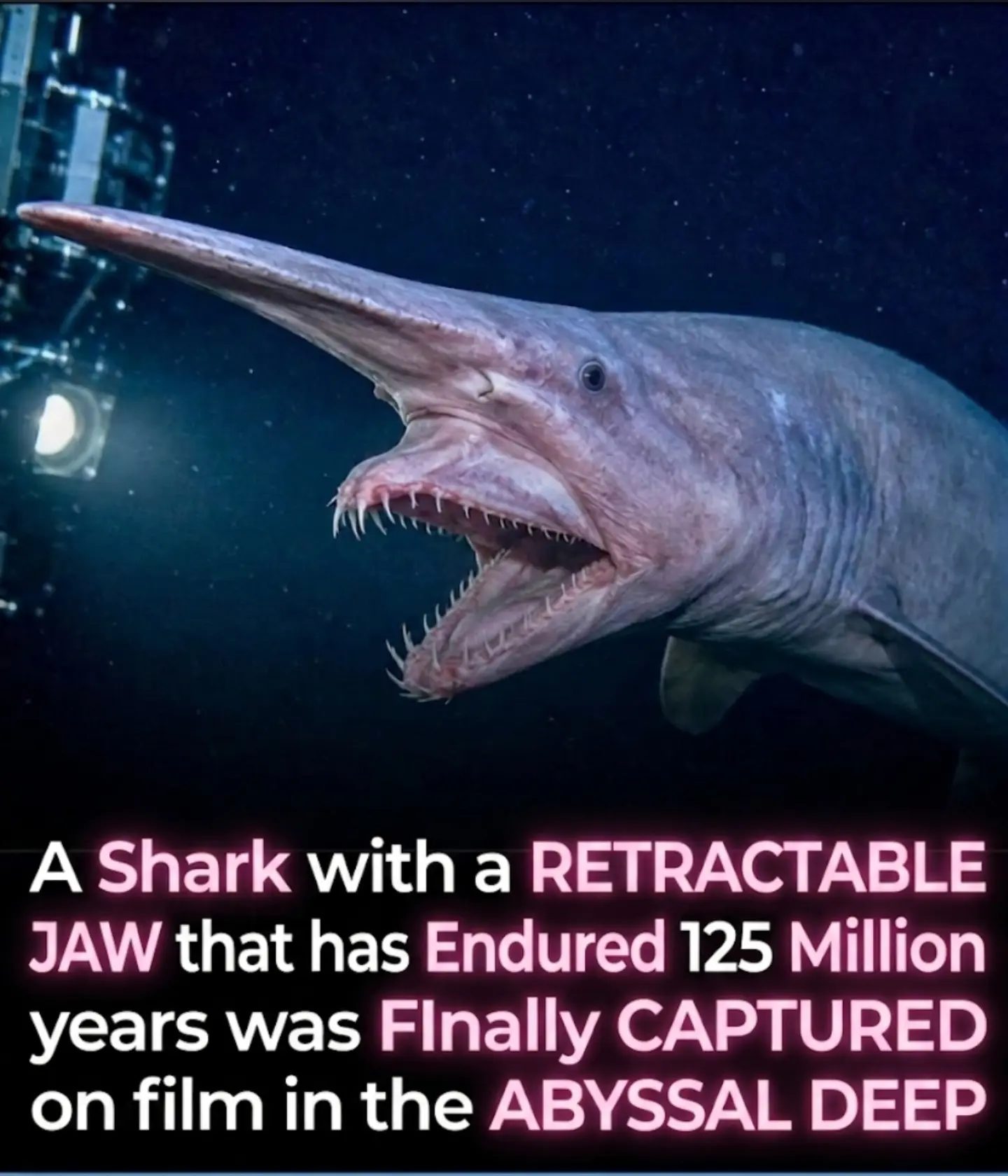
Goblin Shark: The Living Fossil of the Deep Sea
The Goblin Shark (Mitsukurina owstoni) is a fascinating and somewhat terrifying creature that inhabits the deep sea. Known for its unique retractable jaw and ancient lineage, this shark has captivated the imagination of marine enthusiasts and scientists alike.
Context / Why This Matters
The Goblin Shark is often referred to as a "living fossil" due to its remarkable evolutionary history. This species has remained relatively unchanged for over 125 million years, making it one of the oldest living shark species on Earth. Understanding the Goblin Shark and its adaptations can provide valuable insights into the evolution of marine life and the unique challenges of surviving in the deep sea.
The Goblin Shark: A Deep-Sea Specialist
An Ancient Lineage
The Goblin Shark's long snout and retractable jaw are key features that set it apart from other shark species. These adaptations have allowed it to thrive in the dark, high-pressure environment of the deep sea. The shark's snout is covered in electrical sensors that help it detect prey in the near-total darkness. This specialized sensory system allows the Goblin Shark to locate small fish and squid, which are its primary food sources.
Slingshot Feeding
One of the most intriguing aspects of the Goblin Shark is its unique feeding mechanism, known as "slingshot feeding." When the shark senses prey, it rapidly extends its retractable jaw, propelling its mouth forward to snatch the meal. This process happens faster than the blink of an eye, making it a highly efficient hunting strategy in the deep sea.
Adaptations for Deep-Sea Survival
Electrical Sensors
The Goblin Shark's long, pointed snout is equipped with electrical sensors called the ampullae of Lorenzini. These sensors detect the weak electrical fields generated by the muscle contractions of nearby prey. This adaptation is crucial in the deep sea, where visibility is extremely low.
Retractable Jaw
The shark's retractable jaw is another remarkable adaptation. When not in use, the jaw remains retracted inside the shark's head, reducing drag and conserving energy. When prey is detected, the jaws extend rapidly, allowing the shark to strike with precision and efficiency.
Nearly Blind
Unlike many other sharks, the Goblin Shark is nearly blind. Its eyes are small and poorly developed, making visual hunting nearly impossible. Instead, it relies heavily on its electrical sensors and a keen sense of smell to navigate and hunt in the dark depths.
Practical Tips for Observing Deep-Sea Creatures
Observing deep-sea creatures like the Goblin Shark can be challenging but rewarding. Here are some practical tips for those interested in exploring the mysteries of the deep:
Use Specialized Equipment
To observe deep-sea creatures, specialized equipment is often required. Remote-operated vehicles (ROVs) and remotely operated underwater vehicles (ROVs) are commonly used to explore the deep sea. These vehicles are equipped with cameras and sensors that allow scientists to capture high-quality images and videos of deep-sea life.
Deep-Sea Diving
For those interested in diving to deeper depths, specialized deep-sea diving equipment and training are necessary. Deep-sea diving requires advanced techniques and equipment to handle the extreme pressures and temperatures found in the deep sea. Training should be conducted by experienced professionals and should include extensive preparation and safety protocols.
Understand the Environment
Before attempting to observe deep-sea creatures, it's essential to understand the unique environment in which they live. The deep sea is characterized by extreme pressures, near-freezing temperatures, and complete darkness. This environment poses significant challenges for any organism that calls it home, and understanding these challenges can provide valuable context for observing deep-sea life.
Important Takeaways
The Goblin Shark is a remarkable example of adaptation and survival in one of the harshest environments on Earth. Its long snout, electrical sensors, and retractable jaw are all critical adaptations that allow it to thrive in the deep sea. Understanding the Goblin Shark and its unique characteristics can provide valuable insights into the evolution of marine life and the challenges of surviving in extreme environments.
Conclusion
The Goblin Shark is a fascinating and enigmatic creature that has captivated the interest of marine scientists and enthusiasts for generations. Its unique adaptations and ancient lineage make it a valuable subject of study, offering insights into the evolution of marine life and the challenges of surviving in the deep sea. As technology advances and our understanding of the deep sea grows, the Goblin Shark continues to be a source of wonder and inspiration, reminding us of the boundless mysteries that lie hidden beneath the waves.
Watch the Reel
Questions readers ask
How does the Goblin Shark's retractable jaw work?
The Goblin Shark's retractable jaw is a unique adaptation that allows it to quickly extend and retract its jaw to catch prey. This mechanism enables the shark to slingshot its jaws out to grab prey and quickly retract it, making it an efficient predator in the deep sea.
What is the significance of the Goblin Shark being a 'living fossil'?
The term 'living fossil' refers to the fact that the Goblin Shark has remained relatively unchanged for over 125 million years. This makes it one of the oldest living shark species, offering a rare glimpse into the ancient past and providing insights into how marine life has evolved over time.
How does the Goblin Shark detect prey in the deep sea?
Goblin Sharks use specialized electrical sensors called ampullae of Lorenzini to detect the electrical fields generated by the muscle contractions of their prey. This unique sensory ability is crucial for hunting in the dark, high-pressure environment of the deep sea.
Why is the Goblin Shark's habitat considered one of the harshest on Earth?
The deep sea, where Goblin Sharks reside, is characterized by extreme conditions such as low temperatures, high pressure, and complete darkness. These conditions make it challenging for most organisms to survive, but the Goblin Shark has adapted to thrive in this harsh environment.
Can the Goblin Shark's feeding mechanism be compared to any other marine animals?
Yes, the Goblin Shark's slingshot-like feeding mechanism is quite unique. Unlike many other sharks, it can extend its jaw to capture prey and retract it quickly. This mechanism is distinct and not seen in other marine animals, making it a specialized hunter in the deep sea.
What makes the Goblin Shark a deep-sea specialist?
The Goblin Shark's unique adaptations, such as its retractable jaw, slingshot feeding mechanism, and electrical sensors, make it well-suited for life in the deep sea. These features allow it to effectively hunt and survive in the harsh, low-visibility conditions of the deep ocean.
Related deep dives
Similar reads based on topic and creator.


Recent articles
Fresh deep dives from the latest Reels we unpacked.



Comments
Be the first to comment.