Mammalian Biomass
One of the most intriguing yet under-acknowledged aspects of our planet is the distribution and scale of life, particularly mammals. How do wild and domesticated mammals compare in terms of biomass? What role do humans play in this global ecosystem? A groundbreaking report, "The Global Biomass of Wild Mammals," provides unprecedented insights into these questions by estimating the biomass of all mammals on Earth, including humans.
Context: Why This Matters
Understanding the biomass distribution of mammals is crucial for several reasons. It helps in assessing the environmental impact of human activities, conserving biodiversity, and managing wildlife populations. Additionally, knowing the proportions of wild versus domesticated mammals can inform policies on agriculture, land use, and natural resource management. This data highlights the intricate balance between human activities and the natural world, thereby guiding sustainable practices.
Main Discussion
Global Distribution of Mammalian Biomass
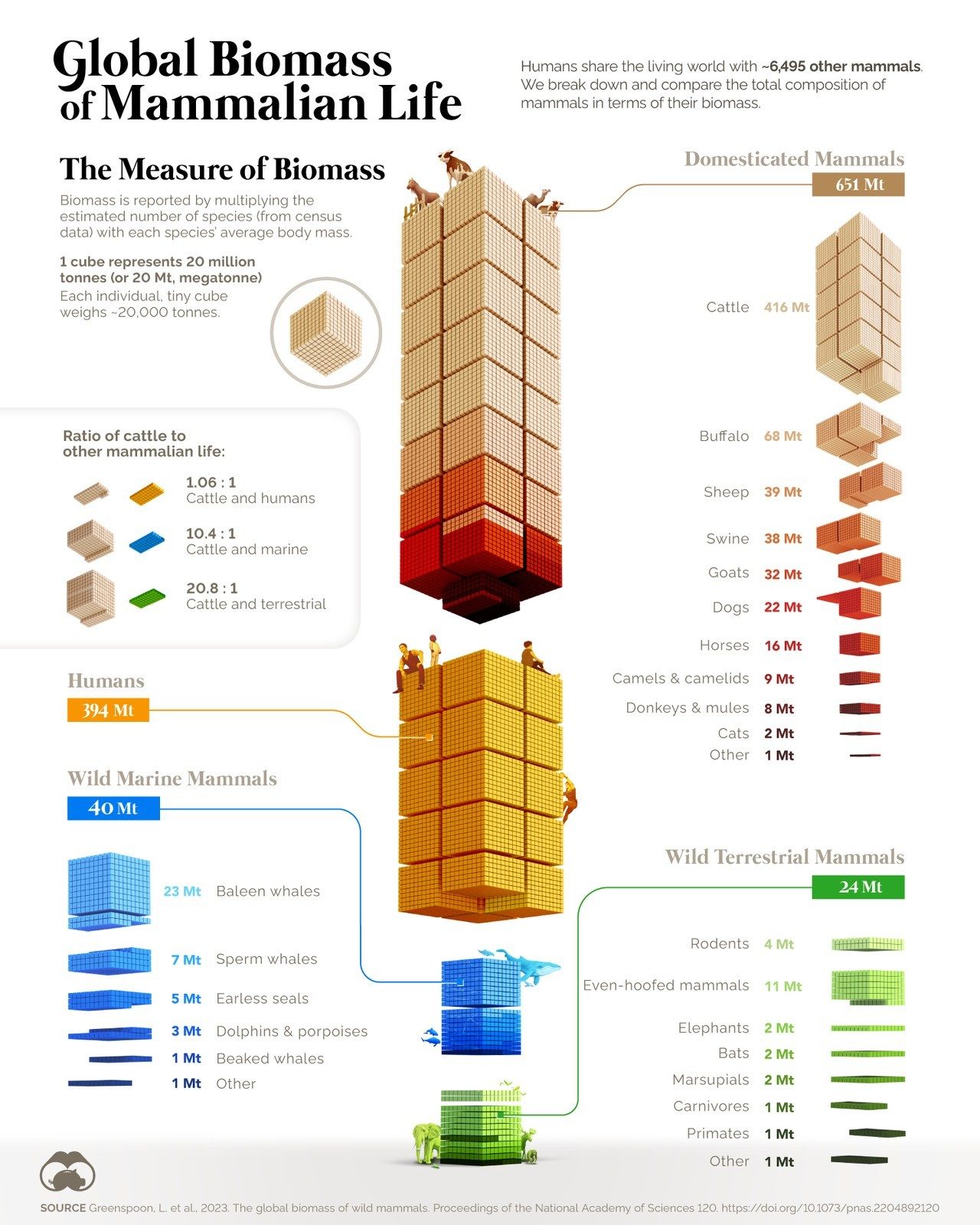
The earth is home to a vast array of mammals, each contributing to the overall biomass in unique ways. According to the report, humans alone account for 394 million metric tonnes (Mt) of mammalian biomass. This staggering figure underscores the significant impact humans have on the planet's ecosystem.
Domesticated vs. Wild Mammals
Domesticated mammals, particularly cattle, play a substantial role in the global biomass. Cattle contribute 416 Mt, making up a significant portion of the total mammal biomass. The ratio of cattle to other mammalian life is approximately 1.06:1. This ratio changes to 20.8:1 when comparing cattle to terrestrial mammals alone, illustrating the dominance of domesticated animals in terrestrial ecosystems.
Wild Marine and Terrestrial Mammals
Wild marine mammals contribute 40 Mt to the total biomass, with sperm whales being the most significant contributors at 7 Mt. Other notable marine mammals include beaked whales at 1 Mt. Wild terrestrial mammals account for 23 Mt, with even-footed mammals (like deer and antelopes) making up 11 Mt, followed by elephants at 2 Mt. Marsupials, carnivores, and primates each contribute 1 Mt.
The Significance of Cube Representations
The infographic uses cube representations to visualize the scale of biomass. Each cube represents 20 million tonnes, with each tiny individual cube weighing approximately 20,000 tonnes. This visual aid helps in comprehending the vast differences in biomass contributions across various mammal groups.
The Measure of Biomass
Biomass is calculated by multiplying the estimated number of species (based on census data) with each species' average body mass. This method provides a comprehensive understanding of the global distribution of mammalian biomass and helps in identifying the key contributors to this ecological measure.
Species Breakdown
The report breaks down the biomass contributions of various species to provide a detailed view. The even-footed mammals, such as deer, antelopes, and cows, make up a significant portion of the biomass, contributing 11 Mt. Elephants, with their massive size, account for 2 Mt. Marsupials, carnivores, and primates each contribute 1 Mt. This detailed breakdown highlights the diversity and complexity of the mammalian ecosystem.
Practical Tips
Understanding mammalian biomass can lead to more informed decision-making in various fields. For instance, conservationists can use this data to develop strategies for protecting endangered species and preserving biodiversity. Farmers and agricultural policymakers can consider the impact of livestock on the environment and explore sustainable practices. The insights from the report can also guide urban planners and environmentalists in creating more balanced ecosystems that support both human activities and wildlife.
Important Takeaways
- Humans represent 394 Mt of mammalian biomass, highlighting our significant impact on the ecosystem.
- Cattle contribute 416 Mt, making them a dominant species in terms of biomass.
- Wild marine mammals contribute 40 Mt, with sperm whales being the most significant.
- Wild terrestrial mammals account for 23 Mt, with even-footed mammals, elephants, marsupials, carnivores, and primates each contributing varying amounts.
- The cube representation in the infographic aids in visualizing the scale of biomass, making it easier to comprehend the vast differences in contributions.
Conclusion
The global biomass of wild mammals provides a fascinating and essential perspective on our planet's ecological makeup. By understanding the distribution and scale of mammalian biomass, we can make more informed decisions about conservation, agriculture, and sustainable practices. This knowledge is invaluable for preserving biodiversity and ensuring a balanced, healthy ecosystem for all forms of life.
Watch the Reel
Questions readers ask
What is the global mammal biomass and why is it important to study?
Global mammal biomass refers to the total mass of all mammals on Earth. Studying this provides a comprehensive understanding of the distribution and scale of mammalian life, which is essential for evaluating human impact on the environment, preserving biodiversity, and managing wildlife populations.
How do wild mammals compare to domesticated mammals in terms of biomass?
Wild mammals make up a significantly smaller portion of the global mammal biomass compared to domesticated mammals. Domesticated mammals, such as cattle, pigs, and sheep, have a much higher biomass due to their extensive use in agriculture and livestock farming.
What is the role of humans in the global mammal biomass?
Humans contribute significantly to the global mammal biomass, primarily because of our large population and high average body mass. Additionally, our activities, such as livestock farming and land use, influence the biomass of both wild and domesticated mammals globally.
What are the differences in biomass between terrestrial and marine mammals?
Terrestrial mammals generally have a higher biomass compared to marine mammals. This is due to the vast numbers of domesticated mammals on land, as well as the sheer size and population of large terrestrial animals like elephants and deer. However, marine mammals, including whales and seals, contribute significantly to the overall biomass.
How does understanding mammal biomass ratios help in conservation efforts?
Knowing the ratios of wild versus domesticated mammals helps in prioritizing conservation efforts. It identifies areas where wildlife populations are at risk due to human activities and informs strategies to protect and restore these populations. This data can guide policies on land use, resource management, and sustainable agriculture.
What insights does the report 'The Global Biomass of Wild Mammals' provide?
The report offers unprecedented insights into the biomass of all mammals on Earth, including humans. It highlights the vast difference in biomass between wild and domesticated mammals and how humans impact the global ecosystem. This information is crucial for assessing environmental impacts and managing resources effectively.
Why is it important to consider both terrestrial and marine mammal biomass?
Considering both terrestrial and marine mammal biomass is essential for a holistic view of the global ecosystem. While terrestrial mammals are more numerous and have a higher overall biomass, marine mammals play critical roles in ocean ecosystems. Understanding both provides a complete picture of mammal life composition and their interactions on a global scale.
Related deep dives
Similar reads based on topic and creator.


Recent articles
Fresh deep dives from the latest Reels we unpacked.




Comments
Be the first to comment.