Student AI Use in Global Classrooms
The adoption of AI tools by students is on the rise in classrooms around the world. This trend is particularly evident in major economies, where AI integration varies significantly. Understanding these global trends can provide valuable insights into how students are leveraging AI in their educational journeys.
Context: Why This Matters
AI is transforming education by offering personalized learning experiences, automated grading, and advanced analytics. Students are increasingly using AI tools to enhance their study habits, manage coursework, and prepare for exams. This shift towards AI-powered learning is not uniform, however. Different regions are adopting these technologies at different paces, influenced by factors such as infrastructure, educational policies, and cultural attitudes towards technology.
Global Trends in Student AI Adoption
Regional Variations
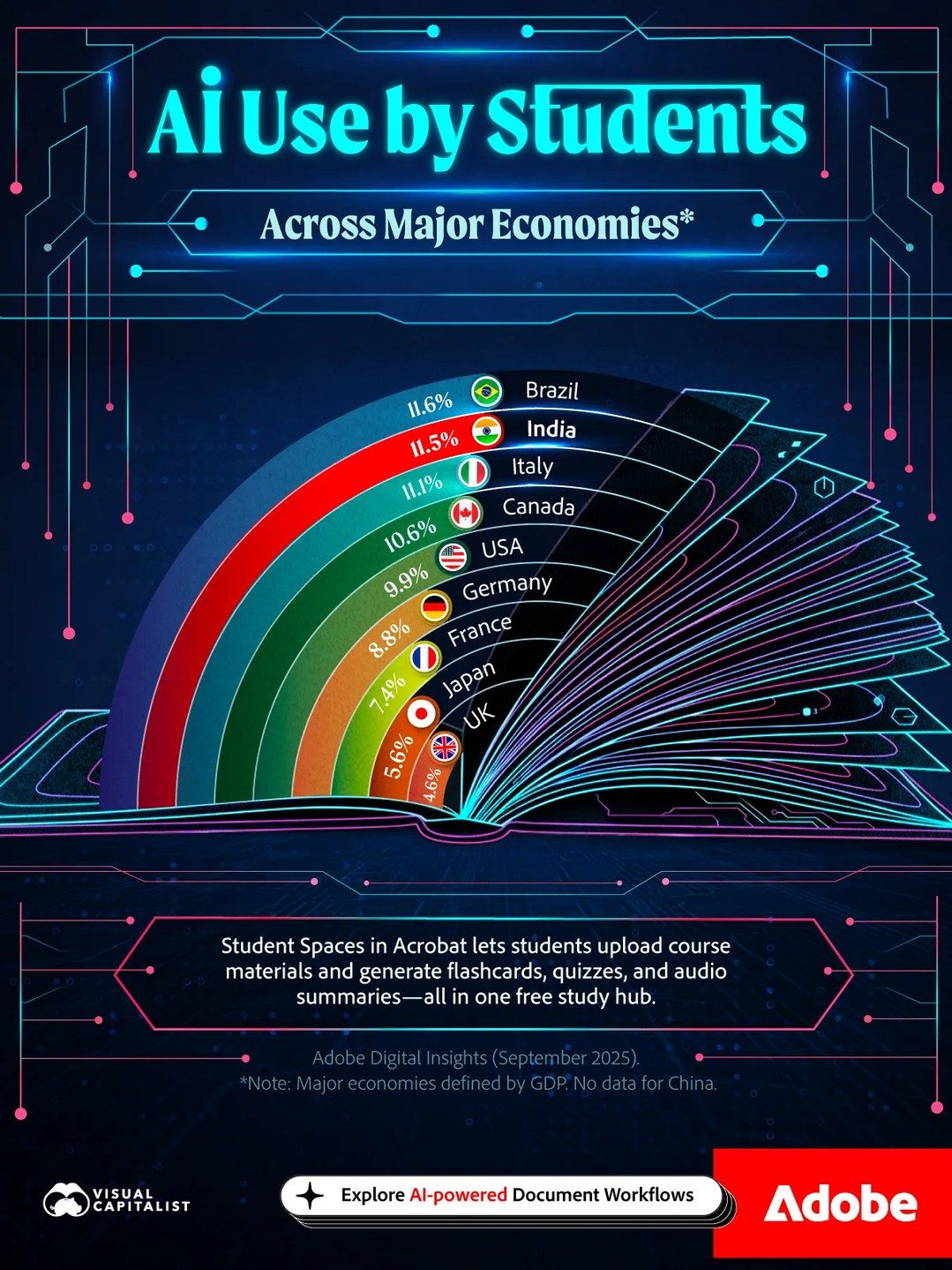
The adoption rates of AI tools by students differ markedly across major economies. According to recent data, Brazil, India, and Canada lead with the highest percentages of student AI use. Brazil tops the list at 11.6%, closely followed by India at 11.5%, and Canada at 10.6%.
The United States trails slightly behind with 8.8%, while Germany and France follow with 7.4% and 5.6%, respectively. Japan and the UK have the lowest adoption rates among the countries surveyed, with 4.6% and 4.5% respectively.
Factors Influencing Adoption
Several factors contribute to these regional disparities. One key factor is the availability of reliable internet access and advanced digital infrastructure. Countries with robust digital ecosystems tend to have higher AI adoption rates. For example, Brazil and India, despite their economic challenges, have seen significant growth in digital literacy and internet penetration, which has facilitated AI adoption in education.
Cultural attitudes towards technology also play a role. In some countries, there is a greater acceptance of AI in education, driven by a vision of modernizing traditional educational methods. Conversely, regions with more traditional educational systems may be slower to embrace AI, viewing it as a disruptive force rather than a beneficial tool.
The Role of Educational Policies
Government policies and educational frameworks significantly influence AI adoption in classrooms. Countries with supportive educational policies that encourage the integration of AI in teaching and learning are likely to see higher adoption rates. For instance, educational initiatives in Canada and the United States that promote the use of AI in curriculum development and student assessments have contributed to higher adoption rates in these regions.
Adobe Acrobat: A Tool for Student Success
Document workflow software like Adobe Acrobat is increasingly being used by students to streamline their study processes. Adobe Acrobat offers a range of features designed specifically for students, making it a valuable tool in the AI-powered learning ecosystem.
Features for Students
Adobe Acrobat allows students to upload course materials, generate flashcards, and create quizzes and audio summaries. These features are integrated into a single, free study hub, making it easier for students to manage their coursework and review materials efficiently. The ability to generate study aids automatically can save students significant time and effort, allowing them to focus more on understanding the material.
Enhancing the Learning Experience
By integrating AI, Adobe Acrobat can provide personalized learning experiences. For example, the software can analyze a student’s study habits and suggest areas where they need more practice. This tailored approach can help students identify their weaknesses and work on improving them, leading to better academic performance.
Practical Tips for Students
-
Upload Course Materials: Organize your digital course materials in one place. Adobe Acrobat allows you to upload PDFs, documents, and other files, making it easy to access them anytime, anywhere.
-
Generate Flashcards and Quizzes: Use the flashcard and quiz generation features to create study tools tailored to your needs. These tools can help you review and reinforce key concepts.
-
Create Audio Summaries: Convert your study materials into audio summaries. This can be particularly useful for auditory learners who prefer to listen to information rather than read it.
-
Customize Your Study Plan: Use the software’s analytics to create a personalized study plan. This can help you focus on areas where you need the most improvement, making your study time more effective.
Important Takeaways
AI adoption in education is a global phenomenon, but the pace and extent of this adoption vary significantly across different countries. Understanding these regional differences can help educators and policymakers tailor their approaches to better integrate AI into the learning process. For students, leveraging tools like Adobe Acrobat can enhance their study experience and academic performance by providing personalized and efficient study aids.
Conclusion
AI is becoming an integral part of education, with students worldwide adopting these technologies to enhance their learning experiences. The variations in adoption rates across major economies highlight the need for tailored strategies that consider regional factors such as infrastructure, cultural attitudes, and educational policies. For students, tools like Adobe Acrobat offer practical solutions for managing coursework and improving study habits. As AI continues to evolve, its role in education will likely become even more pronounced, driving innovation and transformation in the way we learn.
Watch the Reel
Questions readers ask
Which countries are leading in student AI use?
Countries leading in student AI use include Brazil, India, and Canada. These nations are at the forefront of integrating AI tools into student learning environments, driven by factors like robust digital infrastructure and supportive regulatory environments.
Why are countries like Japan and the UK lagging behind in AI adoption?
Japan and the UK are lagging in AI adoption due to a combination of factors, including slower digital infrastructure development and varying cultural attitudes towards AI integration in learning. Additionally, regulatory and policy hurdles may influence the pace of AI adoption in these regions.
How does digital infrastructure impact AI use in student learning?
Digital infrastructure plays a crucial role in AI adoption. Countries with advanced digital infrastructure can more easily implement and maintain AI tools, enabling students to access and utilize these technologies effectively. Conversely, regions with limited infrastructure may face challenges in integrating AI into classrooms.
What are some ways students are using AI in their coursework?
Students are leveraging AI to personalize their learning experiences, automate grading tasks, and gain advanced analytics insights. AI tools help students manage their coursework, improve study habits, and prepare for exams, leading to more efficient and effective learning processes.
How do cultural attitudes influence the adoption of AI in student learning?
Cultural attitudes significantly impact AI adoption. In regions where there is a strong acceptance and enthusiasm for new technologies, AI tools are more readily embraced. Conversely, in areas with more conservative attitudes or concerns about privacy and job displacement, AI adoption may be slower.
Why is understanding global AI adoption trends important for students?
Understanding global AI adoption trends is important for students as it highlights the varying levels of AI integration across different regions. This knowledge can help students adapt to different learning environments, leverage available AI tools effectively, and stay informed about the latest advancements in their field.
What are the key factors influencing AI adoption in student learning?
Key factors influencing AI adoption in student learning include digital infrastructure, regulatory policies, cultural attitudes, and the availability of AI tools. These elements collectively determine how quickly and effectively AI technologies are integrated into student learning environments, shaping the future of global AI adoption trends.
Related deep dives
Similar reads based on topic and creator.


Recent articles
Fresh deep dives from the latest Reels we unpacked.




Comments
Be the first to comment.