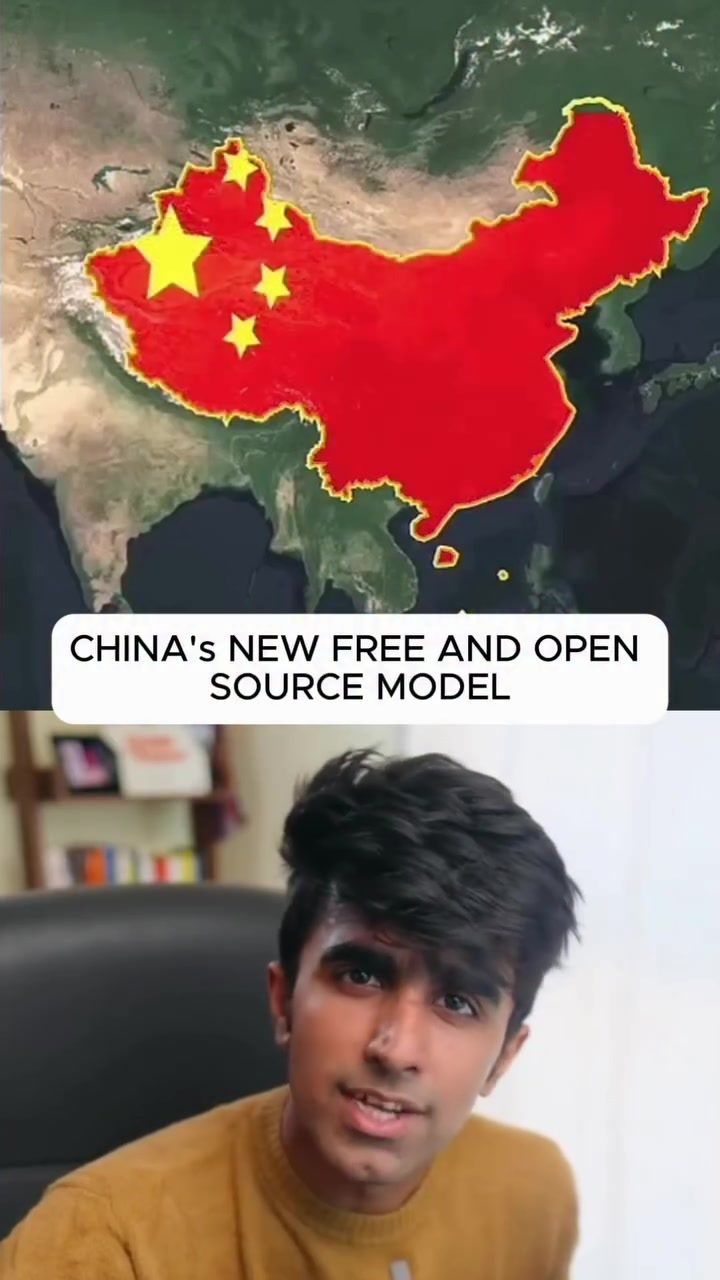
GLM 5.2: China's New Open-Source AI Model for Coding and Complex Tasks
China has just released a groundbreaking AI model called GLM 5.2, developed by Jippoo AI. This new flagship model is designed specifically for coding and long-horizon agent tasks, and it has already made significant waves in the AI community by outperforming top competitors in benchmark tests.
Why This Matters
The release of GLM 5.2 is a significant development in the field of AI, particularly for those involved in coding and tasks that require long-term planning and execution. The model's open-source nature and impressive capabilities make it a valuable tool for developers, researchers, and organizations looking to leverage advanced AI technologies.
Key Features of GLM 5.2
Context Window and License
One of the standout features of GLM 5.2 is its massive 1 million token context window. This means the model can process and understand a vast amount of information in a single context, making it highly effective for complex tasks that require a deep understanding of large datasets. The model is released under the permissive MIT license, which allows anyone to download, run, modify, and build upon it for free. This openness fosters innovation and collaboration within the AI community.
Benchmark Performance
GLM 5.2 has already demonstrated its prowess by topping the SWE Bench Pro, a benchmark that tests the performance of AI models in software engineering tasks. It has edged out other top models like GPT 5.4 and Claude Opus 4.6, showcasing its superior capabilities in coding and long-horizon tasks. The ingBench 3 leaderboard highlights its performance, where it scores better than many established models.
Comparison with Other Models
The ingBench 3 leaderboard provides a clear comparison of GLM 5.2 with other leading AI models. Models like Mimo V2.5 Pro, Epseek V4 Pro, emini 3.5 Flash, Minimax M3, GPT-5.5, and Opus 4.7 are all listed with their respective scores, but GLM-5.2 stands out with a notable score on the ingBench 3. This comparison underscores the competitive advantage that GLM 5.2 offers in terms of performance and efficiency.
Practical Applications
GLM 5.2's purpose-built design for coding and long-horizon agent tasks makes it particularly useful for a wide range of applications. Developers can use it to automate complex coding tasks, while organizations can leverage it for long-term planning and decision-making. The model's ability to handle large context windows makes it ideal for tasks that require deep understanding and analysis of extensive datasets.
Getting Started with GLM 5.2
To get started with GLM 5.2, you can download the model and start experimenting with it. The open-source nature of the model means that you have the freedom to modify and build upon it according to your specific needs. If you want to integrate GLM 5.2 into your existing projects, you can learn how to switch models in Claude code by following the guidelines provided.
Practical Tips for Using GLM 5.2
Exploring the Model
Start by downloading the model and familiarizing yourself with its features and capabilities. Experiment with different coding tasks and long-horizon agent tasks to understand its strengths and limitations. The open-source nature of the model allows you to customize it to fit your specific needs.
Integrating with Existing Systems
If you are already using other AI models or systems, you can integrate GLM 5.2 to enhance their capabilities. The model's compatibility with a wide range of systems makes it a versatile tool for various applications. Learn how to switch models in Claude code to seamlessly integrate GLM 5.2 into your existing workflows.
Community and Support
Join the AI community to share your experiences and insights with GLM 5.2. Engage with other developers and researchers to learn from their experiments and contribute to the collective knowledge base. The open-source nature of the model fosters a collaborative environment where everyone can benefit from shared knowledge and resources.
Important Takeaways
The release of GLM 5.2 by Jippoo AI marks a significant milestone in the field of AI, particularly for coding and long-horizon agent tasks. Its impressive performance in benchmark tests, massive context window, and open-source nature make it a valuable tool for developers, researchers, and organizations. The model's compatibility with a wide range of systems and its ability to handle complex tasks make it a versatile and powerful addition to the AI landscape.
Conclusion
GLM 5.2 represents a major advancement in AI technology, particularly for those involved in coding and long-term planning. Its open-source nature, impressive benchmark performance, and practical applications make it a valuable tool for developers and organizations alike. As the AI community continues to innovate and collaborate, GLM 5.2 is poised to play a significant role in shaping the future of AI-driven technologies.
Watch the Reel
Questions readers ask
What makes GLM 5.2 stand out among other AI models?
GLM 5.2 stands out due to its exceptional performance in coding and complex tasks, a massive 1 million token context window, and its open-source nature, which allows developers to customize and improve it. It has also surpassed top competitors like GPT-5.4 and Claude Opus 4.6 in benchmark tests.
How does GLM 5.2 benefit developers and organizations?
GLM 5.2 offers developers and organizations a powerful tool for coding and tasks that require long-term planning. Its advanced capabilities and open-source license enable users to integrate, customize, and enhance the model to fit their specific needs, providing a competitive edge in the AI field.
What is the significance of GLM 5.2's large context window?
GLM 5.2's 1 million token context window allows it to process and understand vast amounts of information at once. This is particularly beneficial for long-horizon tasks, where the AI needs to maintain context over extended periods, enabling more coherent and effective decision-making and task execution.
How does GLM 5.2 compare to GPT-5.4 and Claude Opus 4.6?
In benchmark tests, GLM 5.2 has outperformed both GPT-5.4 and Claude Opus 4.6. This is due to its advanced architecture, larger context window, and optimized performance for coding and complex tasks, making it a leading choice among the best AI models of 2024.
What kinds of tasks is GLM 5.2 designed to handle?
GLM 5.2 is specifically designed for coding tasks and long-horizon agent tasks. These include complex problem-solving, long-term planning, and tasks that require maintaining context over extended periods, such as advanced software development and AI-driven projects.
Who developed the GLM 5.2 model?
GLM 5.2 was developed by Jippoo AI, a prominent player in the AI industry. The model is part of China's growing contributions to the global AI landscape, showcasing the country's advancements in AI model development and performance.
What advantages does the open-source nature of GLM 5.2 offer?
The open-source nature of GLM 5.2 allows developers to access, modify, and enhance the model's code, fostering a collaborative environment and accelerating innovation. Additionally, it ensures transparency and encourages community-driven improvements, benefiting both individual developers and organizations alike.
Related deep dives
Similar reads based on topic and creator.


Recent articles
Fresh deep dives from the latest Reels we unpacked.




Comments
Be the first to comment.