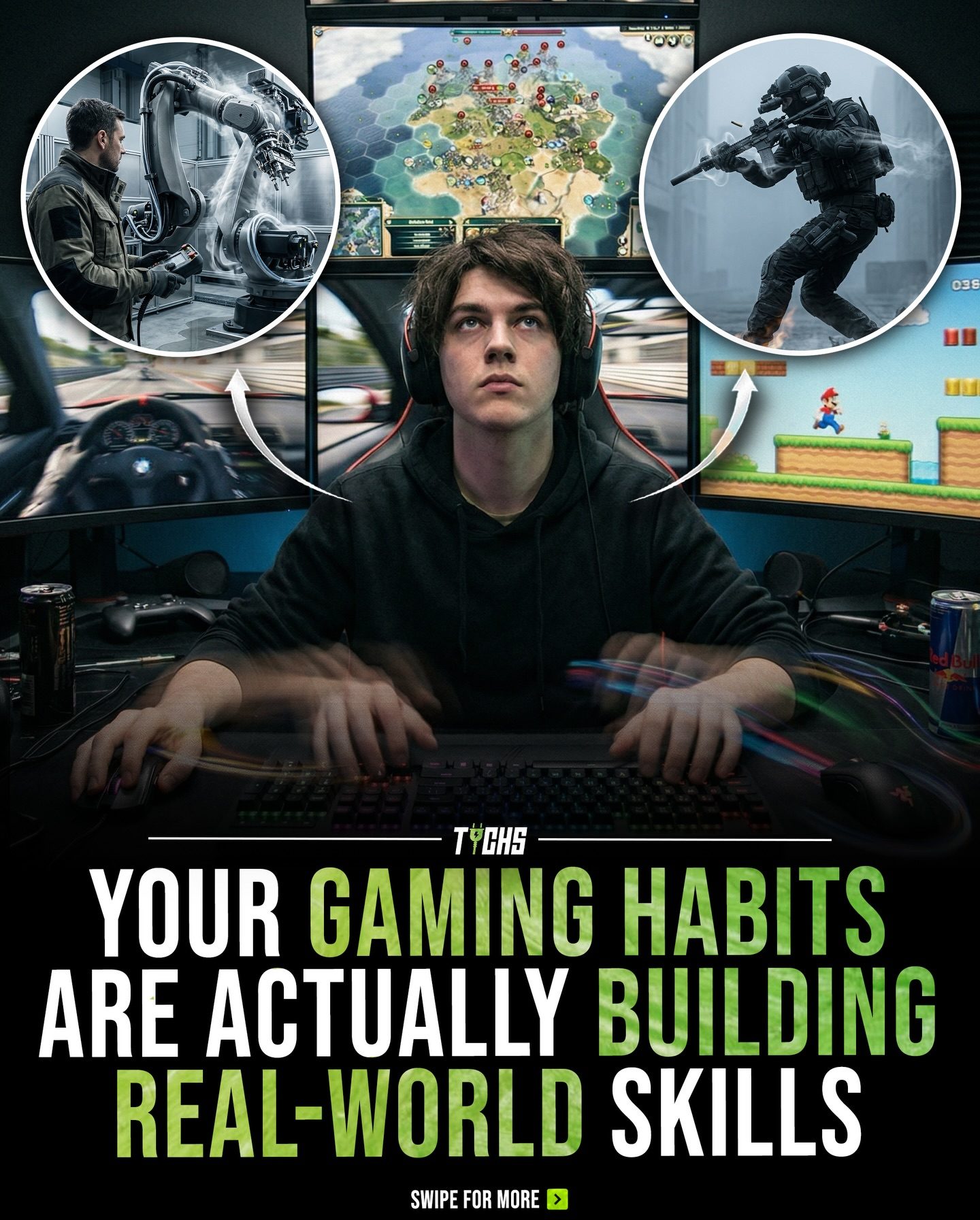
Gaming Skills Transfer to Real Life
Gaming is more than just a pastime; it actively trains the brain to develop real-world cognitive and motor skills. Through fast-paced decision-making and constant problem-solving, gamers enhance various abilities that translate into practical skills useful in everyday life, work, and high-performance environments.
Context / Why This Matters
Whether you're a casual gamer or a hardcore enthusiast, the skills you develop while gaming can have a significant impact on your day-to-day activities. Gaming isn't just about entertainment; it's about training your brain to handle complex situations with ease. This is particularly relevant in today's fast-paced world, where the ability to process information quickly and make split-second decisions can be crucial.
Main Discussion
Cognitive Benefits
Gaming can significantly improve cognitive abilities. Fast-paced decision-making and constant problem-solving are essential in many games, and these skills translate well into real-life situations. For instance, gamers tend to learn new systems faster, which can be beneficial in various professional settings. This means that the next time you pick up a new software tool or learn a new procedure, your gaming experience might give you an edge.
Spatial Awareness
One of the key cognitive benefits of gaming is improved spatial awareness. Many games, especially first-person shooters and platformers, require players to navigate 3D environments efficiently. This skill can be invaluable in real life, whether you're trying to find your way in a new city or planning the layout of a room. Gamers often have a better understanding of spatial relationships, which can enhance their performance in tasks that require precise movements and accurate judgment.
Reaction Times
Gaming also sharpens reaction times. Quick reflexes are crucial in many genres, from racing games to first-person shooters. Regular gaming can help you develop quicker reaction times without compromising accuracy. This can be particularly useful in high-pressure situations, such as emergency responses or competitive sports, where split-second decisions can make a significant difference.
Motor Skills
In addition to cognitive benefits, gaming can also enhance motor skills. Consistent gameplay significantly improves hand-eye coordination, a skill that is valuable in various activities, from driving to playing musical instruments. The precise movements required in many games translate into better motor control and fine-tuning of hand movements, which can be beneficial in tasks that require dexterity and precision.
Multitasking and Information Processing
Gamers are often required to handle multiple streams of information simultaneously. This can improve multitasking abilities and the efficiency of processing information. In real-life scenarios, such as managing multiple tasks at work or handling complex projects, this skill can be a game-changer. For example, someone who regularly plays strategy games might find it easier to juggle multiple deadlines and tasks, thanks to their enhanced ability to process and prioritize information.
High-Pressure Decision-Making
High-performance environments, such as military operations, piloting a fighter jet, and operating complex machinery, often require split-second, high-pressure decisions. Many games mimic these high-pressure scenarios, training players to make better decisions under time-sensitive situations. This skill is invaluable in professions that demand quick thinking and accurate decision-making, such as healthcare, law enforcement, and emergency services.
Practical Tips
To maximize the benefits of gaming for real-world skills, consider the following tips:
Choose the Right Games
Not all games are created equal when it comes to skill development. Opt for games that require strategic thinking, quick decision-making, and precise motor skills. Games like first-person shooters, racing simulations, and strategy games can be particularly beneficial.
Set Goals
Set specific goals for your gaming sessions. Whether it's improving your reaction time, enhancing spatial awareness, or developing better multitasking skills, having clear objectives can help you focus and make the most of your gaming time.
Take Breaks
While gaming can be beneficial, it's essential to take regular breaks. Short breaks can help prevent fatigue and ensure that you stay alert and focused during your gaming sessions.
Monitor Your Performance
Pay attention to your performance both in-game and in real life. If you notice improvements in your real-world skills, such as better hand-eye coordination or quicker reaction times, you'll be motivated to continue your gaming journey.
Balance Gaming with Other Activities
While gaming can offer numerous benefits, it's important to balance it with other activities. Engage in physical exercise, social interactions, and other hobbies to maintain a well-rounded lifestyle.
Important Takeaways
Gaming is more than just a form of entertainment; it actively trains your brain to develop real-world skills. Consistent gameplay can improve cognitive abilities, enhance motor skills, and prepare you for high-pressure situations. By choosing the right games, setting goals, and monitoring your performance, you can maximize the benefits of gaming and translate your in-game skills into practical, real-world abilities.
Conclusion
The next time you sit down to play a game, remember that you're not just having fun—you're also training your brain to handle complex situations with ease. Whether you're looking to improve your decision-making skills, enhance your spatial awareness, or develop quicker reaction times, gaming can be a valuable tool. So, pick up that controller, and get ready to sharpen your skills both on and off the screen.
Watch the Reel
Questions readers ask
How does gaming improve decision-making skills in real-world situations?
Gaming often presents players with complex scenarios that require quick decision-making. This constant practice translates into enhanced ability to make informed decisions under pressure in real life. Whether it's navigating a busy city or managing a project at work, gamers are equipped to handle high-pressure situations more effectively.
Can gaming really enhance spatial awareness?
Absolutely. Many games, especially those with 3D environments, require players to navigate complex landscapes and understand the spatial relationships between objects. This practice can significantly improve a player's spatial awareness, which is useful in activities like driving, interior design, or even packing a suitcase efficiently.
In what ways does gaming improve reaction times and motor skills?
Fast-paced games often demand quick reflexes and precise motor control. Regular gaming can lead to improved hand-eye coordination, faster reaction times, and better fine motor skills. This can be beneficial in various real-life scenarios, from sports to operating machinery, and can even aid in learning to play musical instruments.
How does gaming help in learning new systems or processes?
Games frequently introduce new systems, rules, and processes that players must quickly learn to succeed. This process of learning and adapting can enhance a player’s ability to grasp new information and systems in real life. Whether it's a new software at work or a new hobby, gamers are often better equipped to learn and adapt to new challenges.
Can the benefits of gaming extend to high-pressure environments, such as public speaking or performing arts?
Yes, the training and practice in handling high-pressure situations in gaming can translate well to real-world scenarios. Games often require players to make quick decisions under stress, which can enhance confidence and performance in similar high-pressure situations, such as public speaking, performing, or competing in sports.
Does gaming actually 'train the brain' to process information more efficiently?
Gaming can significantly improve cognitive functions. The constant exposure to problem-solving, pattern recognition, and strategic thinking in games trains the brain to process information more efficiently. This can lead to better multitasking, improved memory, and enhanced problem-solving skills that are valuable in both personal and professional settings.
How do the motor skills developed through gaming apply to real-world tasks?
The precise and coordinated movements required in many games, such as first-person shooters or driving simulators, can improve fine motor skills and hand-eye coordination. These skills can be particularly useful in activities like cooking, crafts, and even in certain professions that require manual dexterity and precision, such as surgery.
Related deep dives
Similar reads based on topic and creator.

Recent articles
Fresh deep dives from the latest Reels we unpacked.




Comments
Be the first to comment.