Understanding Smartphone Durability: A Burn Test Comparison
Smartphones are integral to modern life, but how durable are they? A recent burn test pitted the Galaxy S26 Ultra against the iPhone 17 Pro Max to see how they handle extreme heat. This comparison offers insights into the materials and design choices of these high-end devices.
Why This Matters
Durability is a critical aspect of smartphone design. While most users won't intentionally expose their phones to extreme conditions, understanding how these devices react to heat can provide valuable insights. This is particularly important for consumers who prioritize resilience and those who live in regions with extreme climates.
Main Discussion
The Test Setup
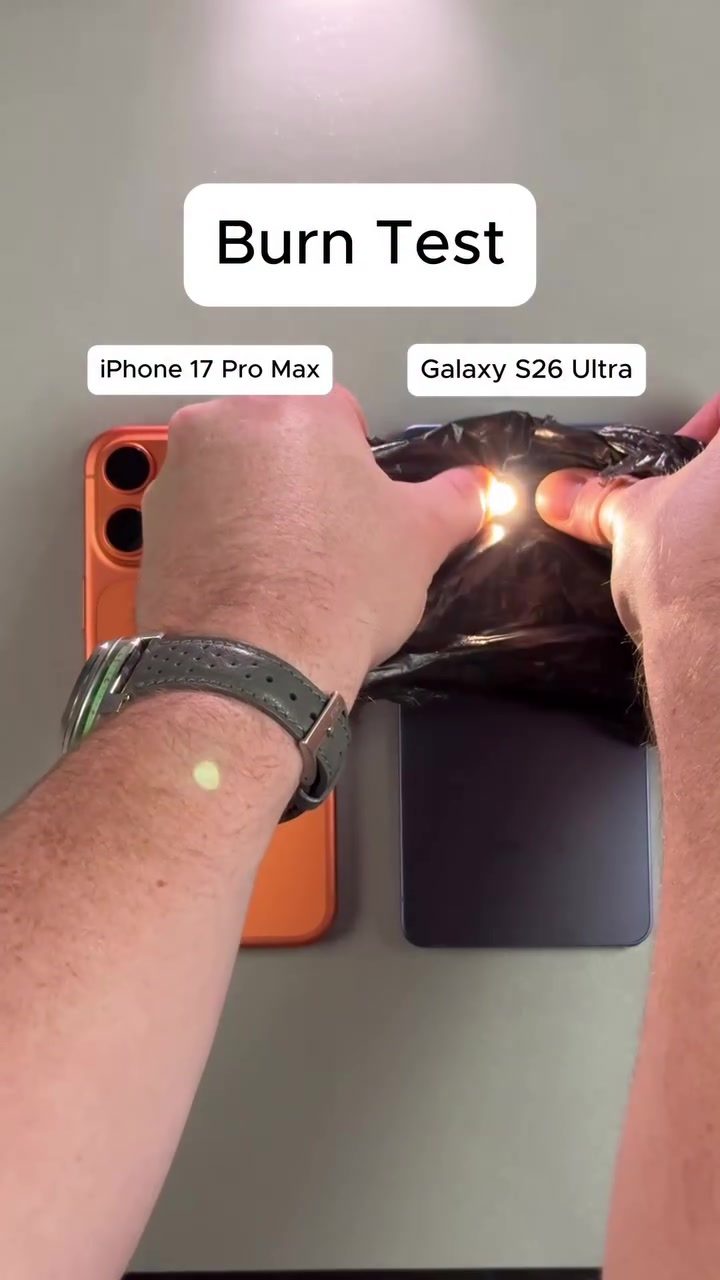
The burn test involved placing a plastic bag over each smartphone and applying a flame. This method allows for a visual comparison of how each phone reacts to extreme heat. The iPhone 17 Pro Max and the Galaxy S26 Ultra were chosen for this test, representing two of the most advanced smartphones on the market.
Observations
When the flame was applied, the plastic bag over the smartphones reacted differently. The Samsung Galaxy S26 Ultra seemed to have a more pronounced reaction, indicating a higher sensitivity to heat. This could be due to differences in the materials used in the phone's construction, such as the type of plastic or the internal components.
Material Considerations
Smartphones are made from a variety of materials, including metals, plastics, and glass. The choice of materials can significantly impact how a phone responds to heat. For example, some plastics may melt more easily than others, and certain metals may conduct heat more efficiently.
Design Choices
The design of a smartphone also plays a role in its durability. Features like heat sinks, thermal management systems, and the layout of internal components can affect how well a phone dissipates heat. These factors are crucial for ensuring that the phone remains functional under extreme conditions.
Battery Safety
Batteries are a critical component of smartphones, and their safety is paramount. Lithium-ion batteries, commonly used in smartphones, can be sensitive to heat. Overheating can cause the battery to swell, leak, or even catch fire. Manufacturers implement various safety features to prevent these issues, such as thermal management systems and battery protection circuits.
Practical Tips
Avoiding Extreme Heat
While smartphones are designed to handle a range of temperatures, it's best to avoid exposing them to extreme heat. Keep your phone away from direct sunlight, hot surfaces, and other heat sources.
Using a Protective Case
A protective case can provide an additional layer of protection against heat and other environmental factors. Choosing a case made from heat-resistant materials can help dissipate heat more effectively.
Regular Maintenance
Regularly cleaning your phone and ensuring that it is free from dust and debris can help improve its thermal performance. Dust and debris can block vents and other heat dissipation pathways, leading to overheating.
Appropriate Storage
When not in use, store your phone in a cool, dry place. Avoid leaving it in a hot car or near a heat source, as this can cause the battery to degrade faster.
Update Software
Software updates often include improvements to thermal management. Keeping your phone's software up to date can help ensure that it runs more efficiently and safely.
Important Takeaways
Smartphone durability is influenced by a combination of materials, design, and safety features. While extreme tests like the burn test can provide insights, it's essential to remember that real-world usage scenarios are generally less extreme. However, the test highlights the importance of choosing a phone with robust thermal management features.
Conclusion
Regular maintenance and careful use can significantly extend the life of your smartphone. Understanding how different phones handle extreme conditions can help you make an informed decision when choosing a new device. Whether you prioritize aesthetics, performance, or durability, ensuring your phone remains functional and safe under various conditions is crucial.
Watch the Reel
Questions readers ask
What is a burn test and why is it relevant for smartphone comparison?
A burn test is an extreme durability test where a smartphone is exposed to high temperatures to evaluate its resistance and performance under such conditions. It is relevant for comparing smartphones like the Galaxy S26 Ultra and iPhone 17 Pro Max because it highlights how well these devices can withstand extreme heat, which is crucial for users in hot climates or those who want a resilient device.
How were the Galaxy S26 Ultra and iPhone 17 Pro Max tested for heat resistance?
The burn test involved placing a plastic bag over each smartphone and exposing them to intense heat. The results were analyzed to understand how the materials and design features of each phone affected their durability under extreme conditions.
Which smartphone, the Galaxy S26 Ultra or iPhone 17 Pro Max, performed better in the burn test?
The article does not explicitly state which smartphone performed better. To find out the results, it is recommended to read the full article for a detailed comparison of how each phone handled the burn test.
What design features of the Galaxy S26 Ultra and iPhone 17 Pro Max were evaluated in the burn test?
The burn test evaluated various design features, including material choices and overall construction. These factors play a significant role in how well the smartphones withstand extreme heat, making them key points of comparison in the article.
Why is it important to consider a smartphone's performance in extreme heat?
Considering a smartphone's performance in extreme heat is important because it can affect the device's longevity and reliability in various environments. Users in regions with high temperatures or those who engage in activities that expose their phones to heat will benefit from knowing how well their devices can handle such conditions.
What are the key takeaways from the Galaxy S26 Ultra vs. iPhone 17 Pro Max burn test comparison?
The key takeaways from the comparison include insights into the durability of flagship devices under extreme heat. Understanding these results can help consumers make informed decisions based on their specific needs and the environments in which they will be using their smartphones.
Related deep dives
Similar reads based on topic and creator.




Recent articles
Fresh deep dives from the latest Reels we unpacked.




Comments
Be the first to comment.