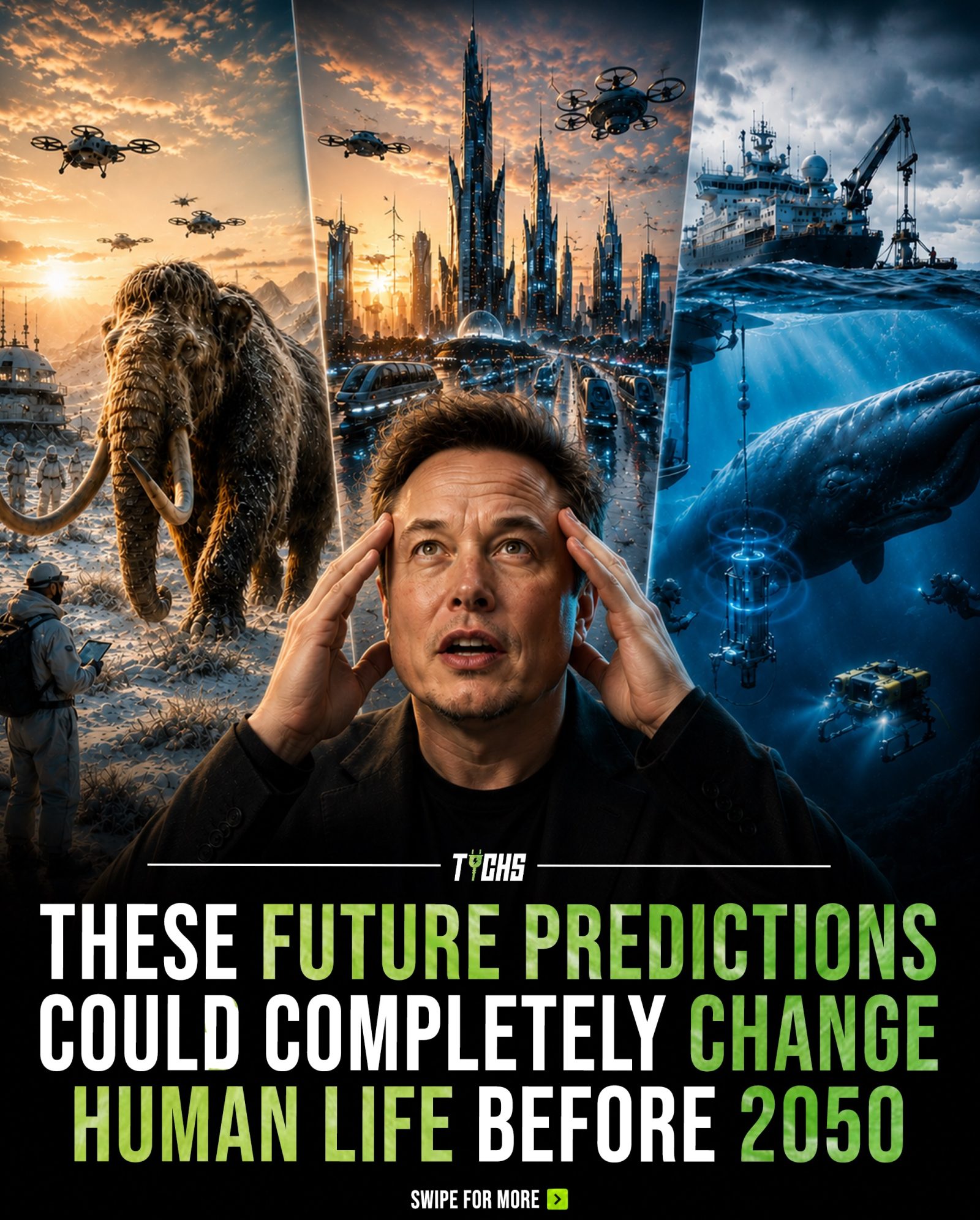
Future Technologies: Revolutionizing Life Before 2050
Futuristic technologies already in development today are poised to dramatically change human life before 2050, impacting everything from communication and travel to how people work, live, and interact with their environment. These advancements not only inspire a sense of awe and wonder but also present challenging possibilities for solving global issues like climate change, energy needs, and population growth.
Context / Why This Matters
The rapid pace of technological progress means that many of the futuristic scenarios envisioned for 2050 and beyond could become reality sooner than expected. Understanding these developments is crucial for individuals, communities, and nations to prepare for the transformative changes ahead. From AI systems that decode animal communication to floating cities and space-based solar power, these innovations aim to address global challenges and enhance daily life. This overview delves into some of the most promising and impactful future technologies, highlighting their potential benefits and implications.
Main Discussion
Autonomous Floating Cities
One of the most ambitious and innovative concepts is the development of autonomous floating cities. These self-sustaining urban environments are designed to help nations cope with rising sea levels and the effects of climate change. By constructing these cities on the ocean, countries can mitigate the impacts of coastal flooding and create new, resilient habitats. Floating cities could also serve as hubs for renewable energy research and sustainable living practices, driving innovation in green technologies and environmental stewardship.
Hyperloop Transport
Another groundbreaking technology is the Hyperloop, a high-speed transport system proposed by visionaries like Elon Musk. The Hyperloop aims to revolutionize land-based travel by using magnetic levitation and vacuum-sealed tubes to propel passengers and cargo at speeds exceeding 700 miles per hour. This mode of transportation could dramatically reduce travel times between major cities, making long-distance commuting and global connectivity more efficient and accessible. The Hyperloop's impact extends beyond convenience, potentially transforming urban planning, logistics, and even the way people work and live.
Human-Like Robots
The development of human-like robots represents a significant stride toward integrating advanced AI into everyday life. These robots are being designed to assist in various settings, including homes, hospitals, and factories. In healthcare, for example, robots could provide round-the-clock care for the elderly and disabled, offering companionship, monitoring health metrics, and even administering medication. In industrial settings, robots could handle hazardous tasks, increasing workplace safety and efficiency. As these robots become more sophisticated, they could fundamentally alter the nature of work and social interactions, raising important questions about ethics, privacy, and human-robot collaboration.
Decoding Animal Communication
Artificial Intelligence is being employed to decode animal communication, unlocking new ways for humans to interact with and understand the natural world. By analyzing patterns in animal vocalizations and behaviors, AI systems could help scientists and researchers interpret the complex languages of various species. This breakthrough could foster deeper connections between humans and animals, promote conservation efforts, and provide valuable insights into the intricacies of ecosystems.
Extinction Prevention
Colossal Biosciences is at the forefront of DNA editing research, aiming to prevent extinction by resurrecting lost species. Through genetic engineering, scientists can replicate the DNA of extinct animals, bringing them back to life and reintroducing them into their natural habitats. This technology has the potential to restore biodiversity, rebuild ecosystems, and provide new opportunities for scientific research and conservation.
Practical Tips
Engaging with and staying informed about these emerging technologies is essential for individuals and communities to navigate the coming changes. Here are a few practical steps to stay ahead of the curve:
Stay Informed
Follow the latest news and research on future technologies through reputable sources. Subscribe to journals, attend conferences, and join online communities focused on innovation and technology. Platforms like TYCHS provide valuable insights and predictions about the future, helping you stay informed and prepared.
Embrace Continuous Learning
Technology is evolving rapidly, and continuous learning is key to staying relevant. Enroll in online courses, workshops, and training programs that focus on emerging technologies. This not only enhances your skill set but also positions you for new opportunities in a rapidly changing job market.
Invest in Sustainable Practices
As technologies like floating cities and space-based solar power gain traction, investing in sustainable practices can create a better future. Support initiatives that promote renewable energy, climate change mitigation, and environmental conservation. Small steps, like reducing energy consumption or adopting eco-friendly products, can make a significant difference.
Important Takeaways
The future holds immense potential, driven by cutting-edge technologies that promise to transform human life in profound ways. From autonomous floating cities and Hyperloop transport to human-like robots and the decoding of animal communication, these innovations are poised to revolutionize how we live, work, and interact with the world. Understanding and embracing these technologies can help individuals and communities prepare for a future that is both exciting and challenging.
Conclusion
This exploration of future technologies underscores the transformative power of innovation. As we approach 2050, the advancements in AI, robotics, sustainable living, and transportation are set to redefine human experience. Staying informed, embracing continuous learning, and investing in sustainable practices will be crucial in navigating the changes ahead. The future is not just a distant vision; it is already unfolding, and being an active participant in this transformation ensures a brighter, more resilient world.
Watch the Reel
Questions readers ask
What are autonomous floating cities and when can we expect them?
Autonomous floating cities are self-sustaining urban developments designed to withstand rising sea levels and provide housing for growing populations. Although prototypes are in early stages, some experts predict that these cities could become a reality within the next couple of decades, significantly impacting the future of urban living.
How might the Hyperloop transport system change daily life?
The Hyperloop transport system aims to revolutionize travel by moving passengers and goods at high speeds through vacuum-sealed tubes. If successful, it could drastically reduce travel times between cities, making long-distance commuting more feasible and potentially transforming where and how people choose to live and work.
Which future technologies are being developed to combat climate change?
Several technologies in development aim to address climate change, including advanced carbon capture systems, vertical farming for efficient food production, and floating cities designed to adapt to rising sea levels. These innovations focus on reducing carbon footprints, conserving resources, and adapting to environmental changes.
What role might robotics play in daily life by 2050?
Robotics is expected to play a significant role in daily life by 2050, with advancements in artificial intelligence and automation. Robots could assist in various sectors, from healthcare and elderly care to manufacturing and service industries, making tasks more efficient and enabling new possibilities for human interaction with technology.
How will the future of communication evolve by 2050?
The future of communication is likely to be shaped by technologies such as augmented reality (AR) and virtual reality (VR), which could make interactions more immersive. Additionally, advancements in AI and machine learning could enable more natural and seamless communication experiences, potentially blurring the line between physical and digital interactions.
What are some of the challenges associated with implementing futuristic cities?
Implementing futuristic cities like autonomous floating cities involves several challenges, including regulatory hurdles, technological limitations, and cost. Ensuring that these cities are sustainable, secure, and adaptable to various environmental conditions is also a significant challenge that developers and planners must address.
How can individuals prepare for the transformative changes ahead?
To prepare for the transformative changes ahead, individuals can stay informed about emerging technologies, adapt to new communication and work environments, and develop skills that are in demand in the future job market. Building resilience and flexibility will be key to navigating the rapid pace of technological progress.
Related deep dives
Similar reads based on topic and creator.




Recent articles
Fresh deep dives from the latest Reels we unpacked.




Comments
Be the first to comment.