Frozen Geometries
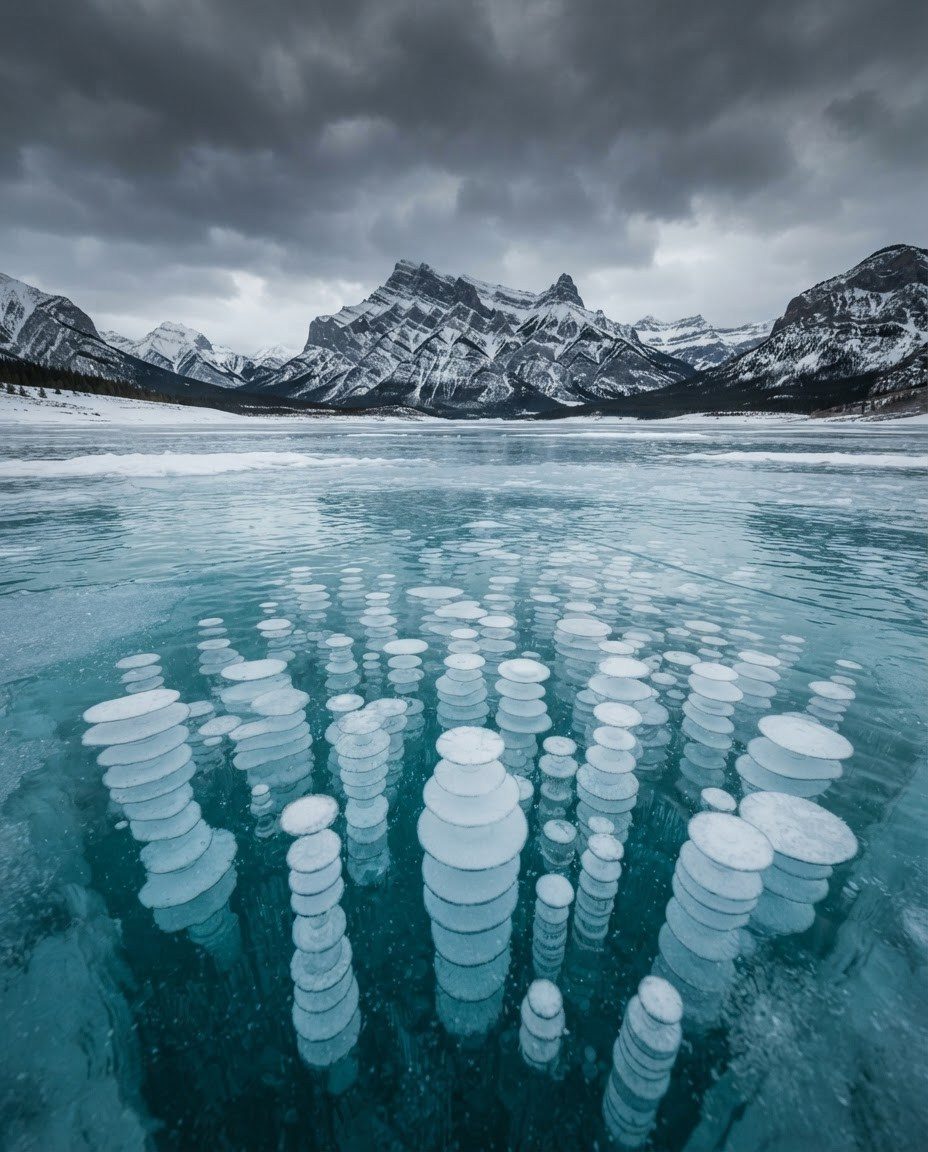
Ice formations, like these cylindrical structures rising from a frozen lake, are nature's own sculptures. The lake itself acts as the canvas, with the rugged mountains and the sweeping sky framing the scene. This combination of elements creates a stunning visual intrusion into the peaceful, desolate landscape. The ice formations stand out against the serene white background of snow and the sky. They do not mimic the curves of the environment, rather piercing through the smooth surface of the lake. Each one is a testament to the unique juxtaposition between the below-zero water and the frozen air. The cylindrical ice structures, which are scattered across the lake surface, are captivating in their symmetry. The icy pins jut out, standing tall and thin, rising from the lake like soldiers on a frozen battlefield. They reflect the natural light, creating an immense playful effect on the vast expanse of the frozen lake. The ice formations vary in size, extending from minute cylindrical stalagmites to larger, imposing pillars. This stark contrast of the ice formations amidst the serenity of a cloudy sky affects the viewer in a multitude of ways. They draw the eye’s attention towards their uniqueness. Holding firm against the cold wind, the ice formations rear up from the lake at oddly regular intervals noticeable in terms of form and function. Visually, too, the variations of texture and color of the ice formations are distinguished against the backdrop of the snow-capped mountains and the clear sky. The lake surface's ice formations form a striking foreground, a captivating intrusion into the serene lake scene.
Strength in Isolation
There are few things more striking than isolation. The way the cylindrical ice formations loom against the frozen lake scene is eerily beautiful. They stand alone, spaced apart at intervals that don’t provide a definite pattern but aren’t chaotic. At the same time, the ice formations are rightfully juxtaposed against the snow-covered mountains that back them. The ice formations rise from the lake surface and provide the visuals with a sense of a thermal separation between the sky and the lake. The mood of the photograph is tranquil, with the sky showing off and the clouds providing a perfect backdrop to the scene. The mountains are not merely part of the scene but a defining character behind the ice formations. The ice formations are a testament to the fact that big things can come from small and concentrated aspects. The formations make an impact on the scene by virtue of their positions and their shapes. The whole scene the ice formations are part of is a delightful unit. The viewer’s eye instinctively follows the formations, despite their lack of connectivity with any other elements. It does a fantastic job of isolating the object or subject matter. Their role is prominent, no matter how still the lake is. In isolation, the ice formations come off as strong, dominating figures. They're not contrived or eccentric in their individuality. Instead, they hold their own, looking magnificent. They're connected together through an unspoken bond, rising from the surface at regular intervals, creating a sense of belonging. This sense of uniqueness can be attributed to the way the ice formations stand out from the lake surface. The viewer's gaze is drawn to them, and they become the focal point. The isolation of the ice formations makes them stand out all the more. Standing tall and proud against the backdrop of a serene lake, their distinctiveness is also amplified through their interaction with the surrounding environment. Of course, this is not the only way of looking at them. The ice formations can also be viewed as individuals. Each one is a unique, tiny world of its own. The way they rise from the surface of the lake, their shapes, sizes, and positions all contribute to their individuality. The lone structure of each formation becomes a captivating sight.
Watch the Reel
Related deep dives
Similar reads based on topic and creator.
Recent articles
Fresh deep dives from the latest Reels we unpacked.


Comments
Be the first to comment.