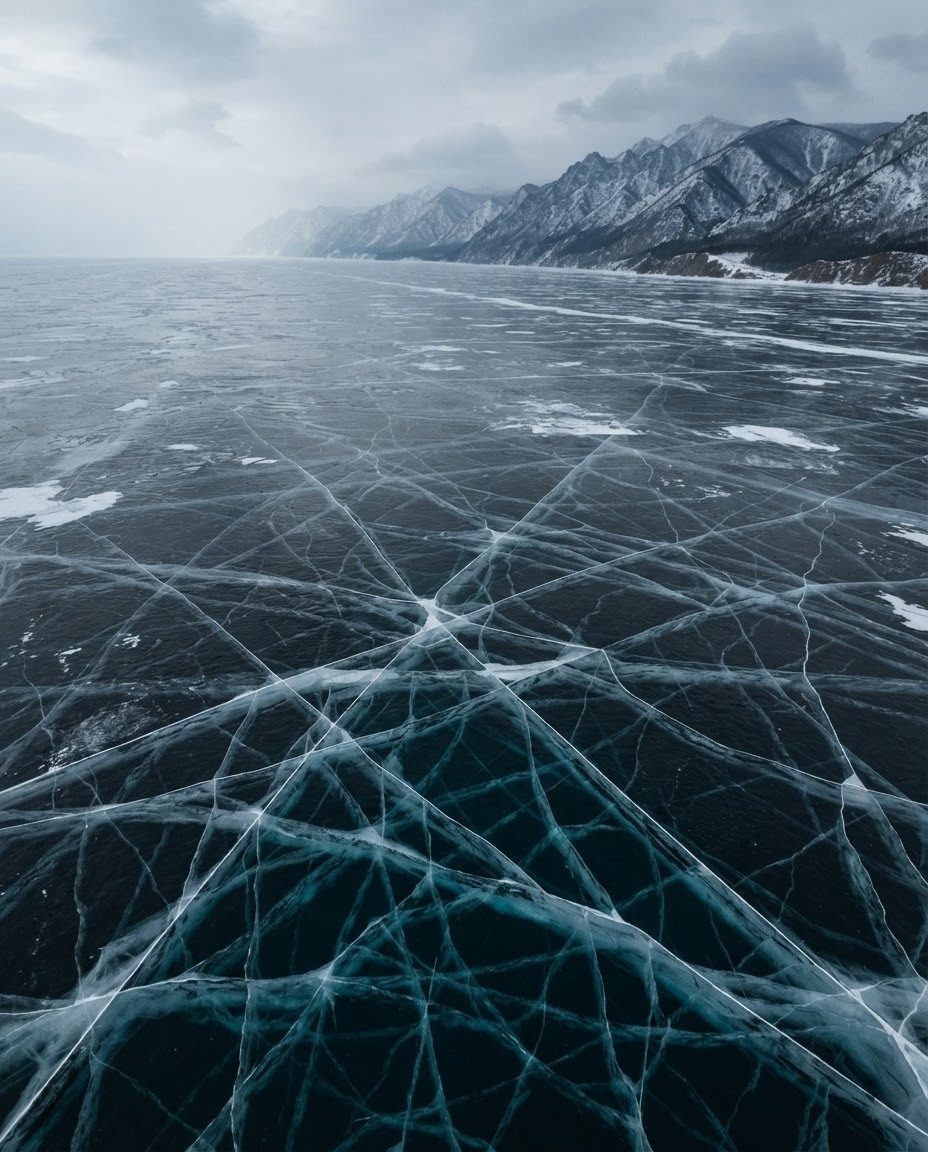
Ice-bound beauty
Baikal Lake, nestled in southern Siberia, is the world's deepest freshwater lake. Its vast, frozen expanse forms intricate patterns and cracks during the winter, a symphony of ice crystal formations. The lake is snow-capped mountainous backdrop creates a dramatic, serene atmosphere. This breathtaking frozen landscape is more than just a seasonal curiosity; it holds clues to the region's history and the ever-changing climate. Lake Baikal's ice formations crest like a crazy paving of a fairy tale. Some ice formations reach as deep as 100 feet. Some resemble unique patterns. These patterns vary due to weather patterns, temperatures, and seasons. The resulting images are nature's art, offering a rare glimpse into a delicate microcosm. Each crack and crevasse tells a story of the lake's ebb and flow, seasonal transitions, and response to climatic shifts. The mountainous backdrop adds a layer of grandeur. These snow-capped giants, likely the Baikal Range, provide a stunning contrast to the icy lake. Together, they create a tableau of raw, untouched wilderness. This contrast is heightened by the overcast sky, which casts a soft, diffuse light on the icy landscape.
The lake's ecological importance
Baikal Lake is a UNESCO World Heritage site, renowned for its unique ecosystems. Native fish species, endemic sponges, and bacteria thrive in the lake's cold waters. The lake's ice formations serve as a protective layer, shielding these delicate ecosystems from harsh winter winds and maintaining stable water temperatures. The lake's freezing process is also a testament to its purity. Freshwater lakes freeze from the top down. Any impurities or pollutants present in the water are pushed downwards. Baikal's ice, therefore, provides a snapshot of the lake's health. Scientists can analyze ice cores to track pollution levels, water temperature changes, and other environmental indicators.
Climate change as silent witness
Baikal Lake's winter ice cover is a reliable indicator of the region's climate patterns. Over the past decades, the lake has been freezing later and thawing earlier, reflecting broader changes in the region's temperature and precipitation. Lake Baikal’s ice has shown an intriguing characteristic — it acts as an auditory mirror. Whereas this is not a perfect metaphor, it draws a parallel with the anthropocene phenomenon of climate change. The lake’s frozen surface echoes the ecological pressures the world is facing. This parallel serves to create a reflective canvas that serves as a silent witness to the changing climate.
The lake's cultural significance
Baikal Lake holds immense cultural significance for the indigenous peoples, including the Buryats. To them, the lake is more than a water body. It is a sacred entity, a living goddess known as the "Pearl of Siberia." The lake's frozen beauty in winter is a reminder of nature's resilience and the cyclical patterns of life. Their traditional practices, such as ice fishing and winter gatherings, are intertwined with the lake's seasonal changes. The ice formations are not just a physical phenomenon. They're part of a cultural narrative. Winter is the time for storytelling and spiritual practices honoring the lake. The lake also holds a significance that extends beyond visual aesthetics. Each new winter, Indigenous peoples worldwide gather to share their wisdom. These gatherings are more than just a social gathering. They are a testament to the shared cultural heritage of the world's Indigenous peoples, particularly those residing around Lake Baikal.
Watch the Reel
Related deep dives
Similar reads based on topic and creator.



Recent articles
Fresh deep dives from the latest Reels we unpacked.




Comments
Be the first to comment.