The Whale's Undersea Charm
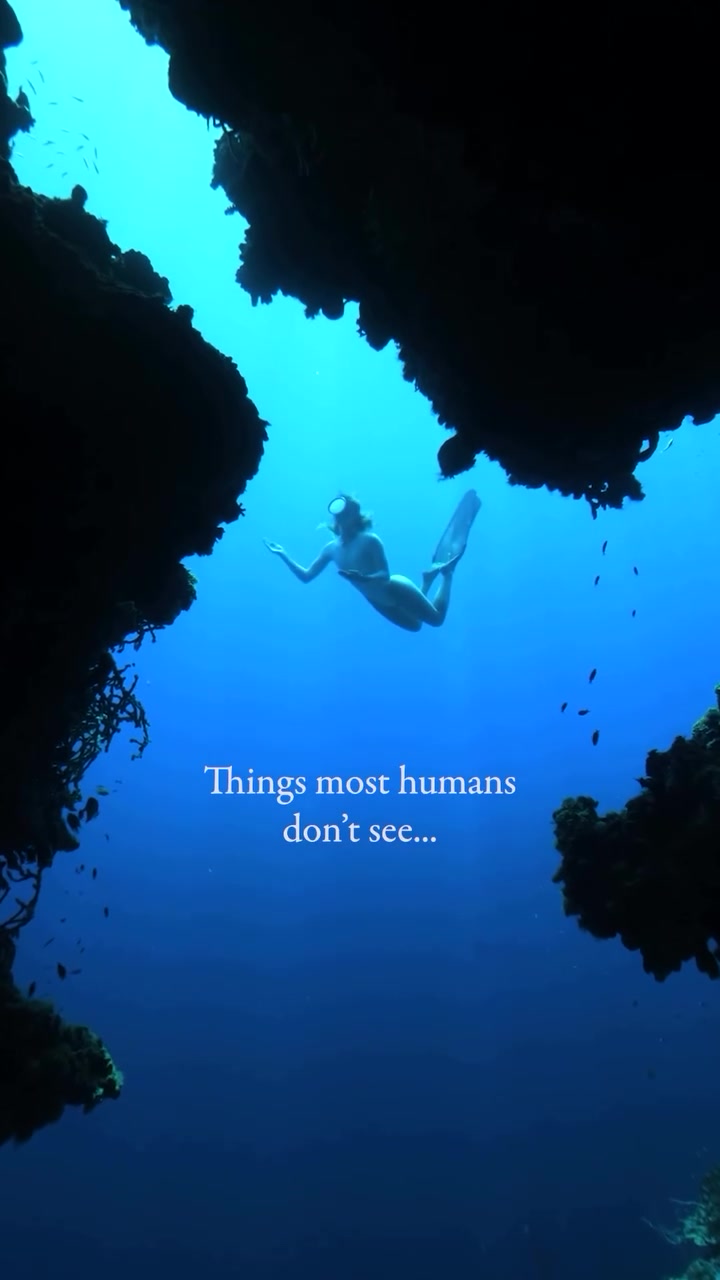
Beneath the ocean's surface, a freediver floats in the deep blue, where most humans never venture. A large silhouette emerges— a whale. The two creatures share the water. Both are sizable, but only the diver is small in the expanse of the ocean. Neither flees, giving the freediver an up-close view of the massive animal. The freediver becomes a firsthand observer of a marine marvel, then watcher to one of the ocean’s most wisened creatures, a whale. Differently than others who know the ocean on a surface-level, this freediver knows the intimate deepness, while their ocean friend is likely accustomed to other marine life spotting the diver. The encounter elegantly portrays the beauty of the underwater realm with a message: the deep blue is something wondrous, if humble — even when the freediver stands face-to-face with a mighty whale.
Deciphering Whale Encounters
A freediver's ocean encounter is a personal experience with an elemental force. In this case, it is a whale. Unlike other diving experiences where the diver may be exploring coral reefs or shipwrecks, the encounter's main target can direct and in this case, share its environment. To halve this up: The diver had to be prepared for the encounter. All it would have taken is one wrong move by the diver, and the previously calm whale would have deemed the diver a threat, leaving the diver in danger. To maintain respect is a tall or even impossible order. In the ocean, freedivers are guests to the ocean's inhabitants. The whale is a wild animal who is probably accustomed to other marine life’s presence and has no problem with their presence. In the diver's discipline of freediving, the diver has to have exact control on each step. In freediving, divers often operate with little to no equipment, which gives an instantaneous connection to the environment. This is especially important in an encounter with a whale, due to the nature of their interaction. The diver must focus on staying as calm as possible and keep in mind that they are in the whale’s habitat and not the other way around.
The Emotional Connection
A freediver floating in the depths of the ocean, as well as the animal, are enmeshed in a jungle of coral, and both face challenges that could potentially derail their mental state. The diver mentioned that whales represent “things most humans don't see” — an acknowledgment of the rarity and exclusivity of the experience. This phrase gives further weight to the freediver's experience. It was clear by the diver's reaction that they knew they were in a moment filled with beauty and amazement, but they also were understanding of the danger. With the whale being as large as it was, it was clear that one wrong move could end badly for the diver. Even if the diver prepared beforehand, there was likely a risk involved that the animal’s primal instincts could take over once the diver entered its space. The diver still felt a magic and charm connected to the whale The magic of the moment could’ve been amplified by the flowery words of other divers who have told their stories. Stories of wonder and majesty being experienced at an unknowable depth.
With Goggles
Freedivers
Freedivers dive without the use of tanks and scuba gear. This provides an intimate experience by allowing them to connect directly with the ocean. Once the diver is underwater, a new world emerges with new challenges and distractions. The diver is able to confront these distractions and challenges with ease. In the deepest parts of the ocean, other divers are not there to hold onto. It is the freediver, diving alone, and feeling the pressure of the water on their body and mind. Their ears may pop, as well as their eyes, while they are floating in the emptiness encompassing themselves. They are forced to make a decision to either retreat back to the surface or continue on. They can’t just stop to either rest or assess the situation, they must dive deeper and deeper into the depths
Hungry for Oxygen
Freediving is a sport that challenges the human body to its limits. Divers are able to dive to depths of up to 650+ feet (about 200 meters) deep. Humans are able to dive this deep by loading up on oxygen before dipping underwater, but this is still difficult. However, freedivers must undergo a rigorous training program to prepare their bodies for these depths. This includes learning techniques to control breathing, the ability to overcome the fear, hunger, and of course, the sophisticated coordination needed to execute a dive.
The Glass Half Full
About 60% of the Earth’s surface is water, giving humans a vast area to explore underwater. There are not enough divers to cover all this water at once, but, the freediver’s experience is a unique one. The diver's experience gives an insight into an underwater world, where the freediver is part of the environment and not isolated from it. With knowing how to respect the animals one finds, the experience becomes significantly deeper.
How to Prepare for Your Freediving
Scout the waters: Before trying for a big dive, do a few shallow runs in warmer waters. This way, freedivers are able to improve their skills without the stress of a colder environment. Be comfortable in the depth: There is nothing worse than a diver not being comfortable with the amount of water they are surrounded by. Breathe: Freediving requires a great deal of oxygen, so be sure to have a nice, strong lung capacity. Keep practicing: Freedivers have told stories of how their first few dives were not as good as their later dives. It’s important for divers to practice, so they are able to get a better experience. Get advice: The diver was able to have a great experience with their encounter with the whale, but it is also important for divers to listen to advice from other divers.
Watch the Reel
Questions readers ask
What kind of whale did the freediver encounter?
The article doesn't specify the type of whale the freediver encountered. It focuses more on the experience and the emotions evoked by the encounter rather than the specific species of the whale.
How did the freediver prepare for such an encounter?
The freediver likely prepared by honing their freediving skills and understanding the behavior of whales. The article mentions the importance of staying calm and respectful, as well as maintaining control over each movement, especially in the whale's habitat, to avoid being perceived as a threat.
What kind of equipment did the freediver use?
Freedivers typically use minimal equipment, which allows for a more intimate connection with the environment. This is particularly important when encountering a whale, as it helps the diver stay calm and aware of the whale's presence. However, the article does not specify the exact equipment used.
What should a freediver do if a whale approaches?
The diver should stay calm and avoid any sudden movements. The diver must remember they are in the whale's habitat and respect its presence. Sudden movements or perceived threats could cause the whale to react defensively, potentially putting the diver in danger.
How common are these types of encounters?
Encounters between freedivers and whales are relatively rare. Most people experience the ocean from the surface, so seeing a whale up close while freediving is a unique and exclusive experience. The diver in the article acknowledged the rarity of the experience, highlighting its significance.
Are there any risks involved in such encounters?
Yes, there are risks involved. The diver must be aware that they are in the whale's territory and that the whale is a wild animal with primal instincts. One wrong move could potentially endanger the diver, even if they have prepared beforehand.
Related deep dives
Similar reads based on topic and creator.




Recent articles
Fresh deep dives from the latest Reels we unpacked.


Comments
Be the first to comment.