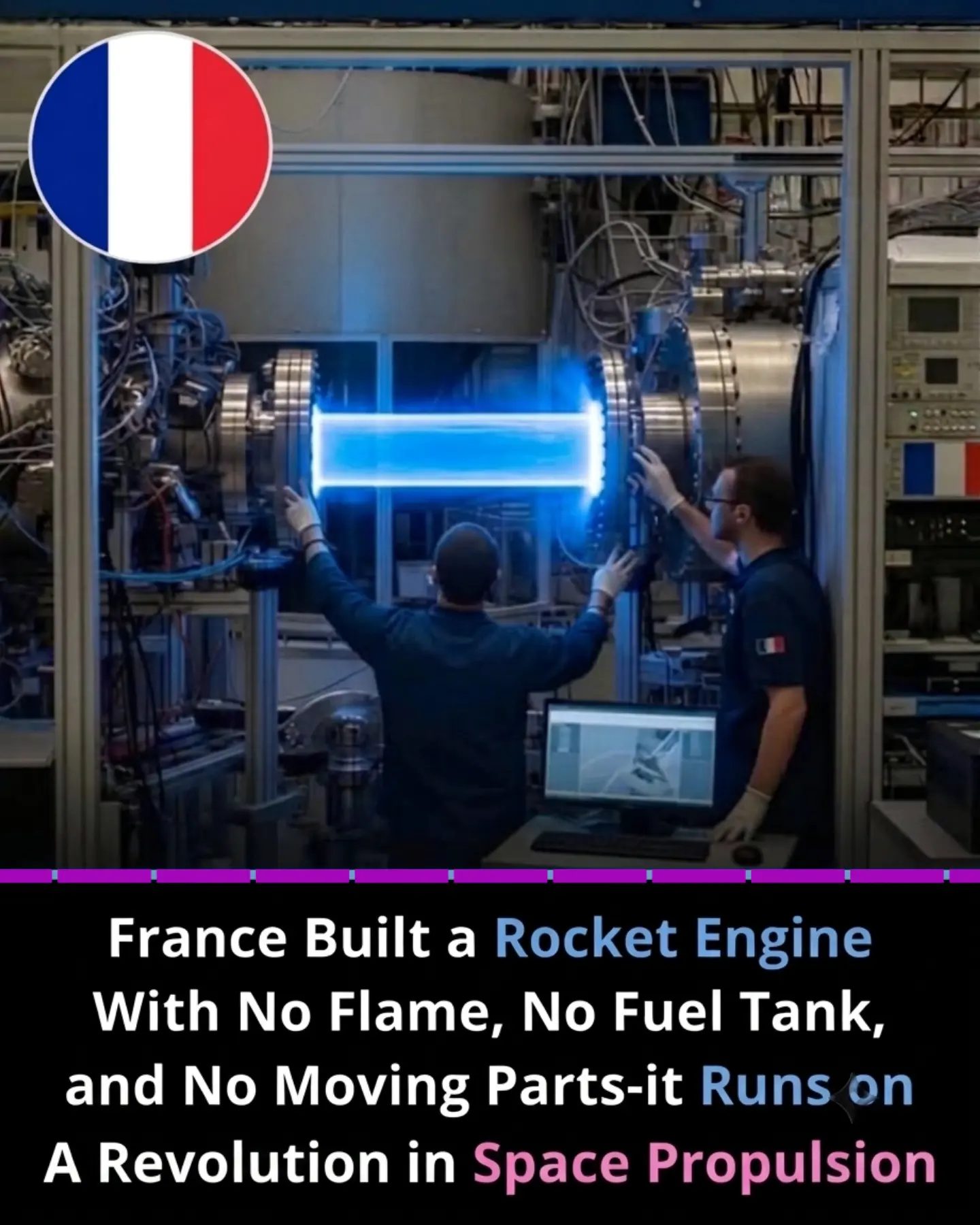
Rocket Engine Innovation
France has recently made a significant stride in the realm of space propulsion with the development of an ultra-efficient air-breathing plasma thruster. This innovation, a collaboration between French researchers at CNRS and Safran, promises to transform satellite propulsion by addressing some of the most significant challenges in the field. The key to this groundbreaking engine lies in its unique design and operational principles, which set it apart from traditional rocket engines.
Why This Matters
The advancements in rocket engine technology are pivotal for future space missions. Traditional rocket engines rely on heavy propellants, which limit the operational range and lifespan of satellites. The new air-breathing plasma thruster addresses these issues, offering a more sustainable and efficient solution for space propulsion.
The Innovative Design
The innovative rocket engine developed by French researchers operates on principles that are fundamentally different from conventional engines. Here are the key aspects that make this engine so remarkable:
Zero Chemical Fuel
One of the most striking features of this engine is its lack of chemical fuel. Instead of relying on heavy propellants, the engine ionizes air molecules into high-energy plasma using microwave energy. This process eliminates the need for bulky fuel tanks, reducing the overall weight and complexity of the satellite.
Infinite Range in Low Orbit
Another groundbreaking aspect is the engine's ability to operate in Very Low Earth Orbit (VLEO). By collecting gases directly from the upper atmosphere, satellites equipped with this engine can stay in orbit virtually indefinitely. This capability is crucial for long-term missions that require sustained operation, such as environmental monitoring and communication relays.
No Moving Parts or Flames
The absence of moving parts and flames is another significant innovation. Traditional rocket engines often suffer from mechanical wear and tear due to the presence of moving components and the high temperatures generated by combustion. In contrast, this engine creates thrust purely through electromagnetic fields, making it practically immune to mechanical failures. This design not only enhances reliability but also reduces maintenance requirements.
Main Discussion
Plasma Propulsion
Plasma propulsion is not a new concept in aerospace engineering, but the air-breathing plasma thruster represents a significant leap forward. Traditional plasma engines, such as ion drives, use electrical fields to accelerate ions to generate thrust. However, these engines require a source of propellant, typically a gas like xenon. The air-breathing plasma thruster takes a different approach by using the atmosphere around the satellite as its fuel source. This eliminates the need for on-board propellant, making the engine highly efficient and sustainable.
Microwave Ionization
The engine’s innovative design utilizes microwave energy to ionize air molecules into high-energy plasma. This process involves applying high-frequency electromagnetic waves to air particles, causing them to gain energy and become ionized. The resulting plasma is then accelerated through electromagnetic fields to generate thrust. This method not only reduces the weight of the satellite by eliminating the need for heavy propellants but also makes the engine more versatile and adaptable to different mission requirements.
Electromagnetic Fields for Thrust
The use of electromagnetic fields for thrust generation is another key innovation. Traditional rocket engines rely on combustion to produce thrust, which involves the rapid expansion of hot gases. In contrast, the air-breathing plasma thruster generates thrust through the interaction of electromagnetic fields and ionized plasma. This approach eliminates the need for moving parts and significantly reduces mechanical wear and tear, making the engine more reliable and durable.
Implications for Satellite Design
The elimination of heavy fuel tanks and moving parts has significant implications for satellite design. With more room available, satellites can accommodate high-tech sensors, cameras, and communication payloads. This increased payload capacity allows for more advanced and capable satellites that can perform a wider range of missions. Additionally, the reduced weight and complexity of the engine make satellites easier and cheaper to launch, further enhancing their cost-effectiveness.
Practical Tips
Applying the Technology
For aerospace engineers and researchers, the air-breathing plasma thruster represents a new frontier in space propulsion. Here are some practical tips for applying this technology:
- Integrate with Existing Systems: The engine can be integrated with existing satellite systems to enhance their capabilities. Researchers should focus on compatibility and integration to ensure seamless operation.
- Optimize for Orbital Conditions: Given the engine's reliance on atmospheric gases, it is crucial to optimize its performance for specific orbital conditions. This may involve adjusting the microwave energy and electromagnetic fields to maximize efficiency.
- Conduct Extensive Testing: Before deploying the engine in actual missions, extensive testing is necessary to validate its performance and reliability. This includes ground-based tests and in-orbit demonstrations to ensure the engine meets mission requirements.
- Explore New Applications: The unique capabilities of the air-breathing plasma thruster open up new possibilities for space missions. Researchers should explore innovative applications, such as long-term environmental monitoring and advanced communication systems.
Important Takeaways
The air-breathing plasma thruster developed by French researchers at CNRS and Safran represents a significant advancement in space propulsion. Its unique design, which eliminates the need for chemical fuel and moving parts, offers numerous benefits for satellite operations. Key takeaways include:
- Sustainability: The engine's reliance on atmospheric gases makes it highly sustainable and reduces the environmental impact of space missions.
- Efficiency: By eliminating the need for heavy propellants, the engine enhances the efficiency and operational range of satellites.
- Reliability: The absence of moving parts and flames makes the engine more reliable and durable, reducing mechanical wear and tear.
- Versatility: The engine's design allows for greater payload capacity, enabling more advanced and capable satellites.
Conclusion
The air-breathing plasma thruster is a game-changer in the field of space propulsion. Its innovative design and operational principles address some of the most significant challenges in satellite propulsion, offering a more sustainable, efficient, and reliable solution. As researchers continue to develop and refine this technology, it has the potential to revolutionize space exploration and open up new possibilities for future missions. The future of space propulsion is here, and it is powered by plasma.
Watch the Reel
Questions readers ask
What is an air-breathing plasma thruster and how does it work?
An air-breathing plasma thruster is a type of engine that uses the surrounding air as a propellant, eliminating the need for heavy onboard fuel. It works by ionizing the incoming air to create plasma, which is then accelerated to generate thrust. This makes it particularly suitable for low orbit satellites where air is abundant.
How does the air-breathing plasma thruster improve satellite propulsion?
This thruster improves satellite propulsion by significantly reducing the weight of the satellite. Traditional engines require large fuel tanks, which can make up a considerable portion of a satellite's mass. By using air as propellant, the new plasma thruster allows for more compact and lighter satellites, extending their operational lifespan and range.
What makes France's air-breathing plasma thruster unique?
France's air-breathing plasma thruster stands out due to its innovative design and operational principles. Developed by French researchers at CNRS and Safran, it represents a significant advancement in space propulsion technology, offering a more fuel-efficient and high-energy propulsion solution for satellites.
Can this technology be used for all types of satellites?
While the air-breathing plasma thruster is highly beneficial, it is primarily suited for low orbit satellites where air is still present. For satellites operating in higher orbits or deep space, traditional propulsion methods that rely on onboard propellants would still be necessary.
What are the potential benefits of using this technology for future space missions?
The benefits of using this technology for future space missions are substantial. By reducing the need for heavy propellants, this thruster allows for more efficient and cost-effective satellite launches. Additionally, it opens new possibilities for satellite design and mission planning by providing extended operational capabilities.
How does the air-breathing plasma thruster compare to traditional rocket engines?
Unlike traditional rocket engines that require heavy propellants, the air-breathing plasma thruster uses the surrounding air, making it much lighter and more efficient. This is a game-changer for satellite propulsion, as it allows for more compact designs and longer operational lifespans, reducing costs associated with fuel and launch.
Related deep dives
Similar reads based on topic and creator.




Recent articles
Fresh deep dives from the latest Reels we unpacked.




Comments
Be the first to comment.