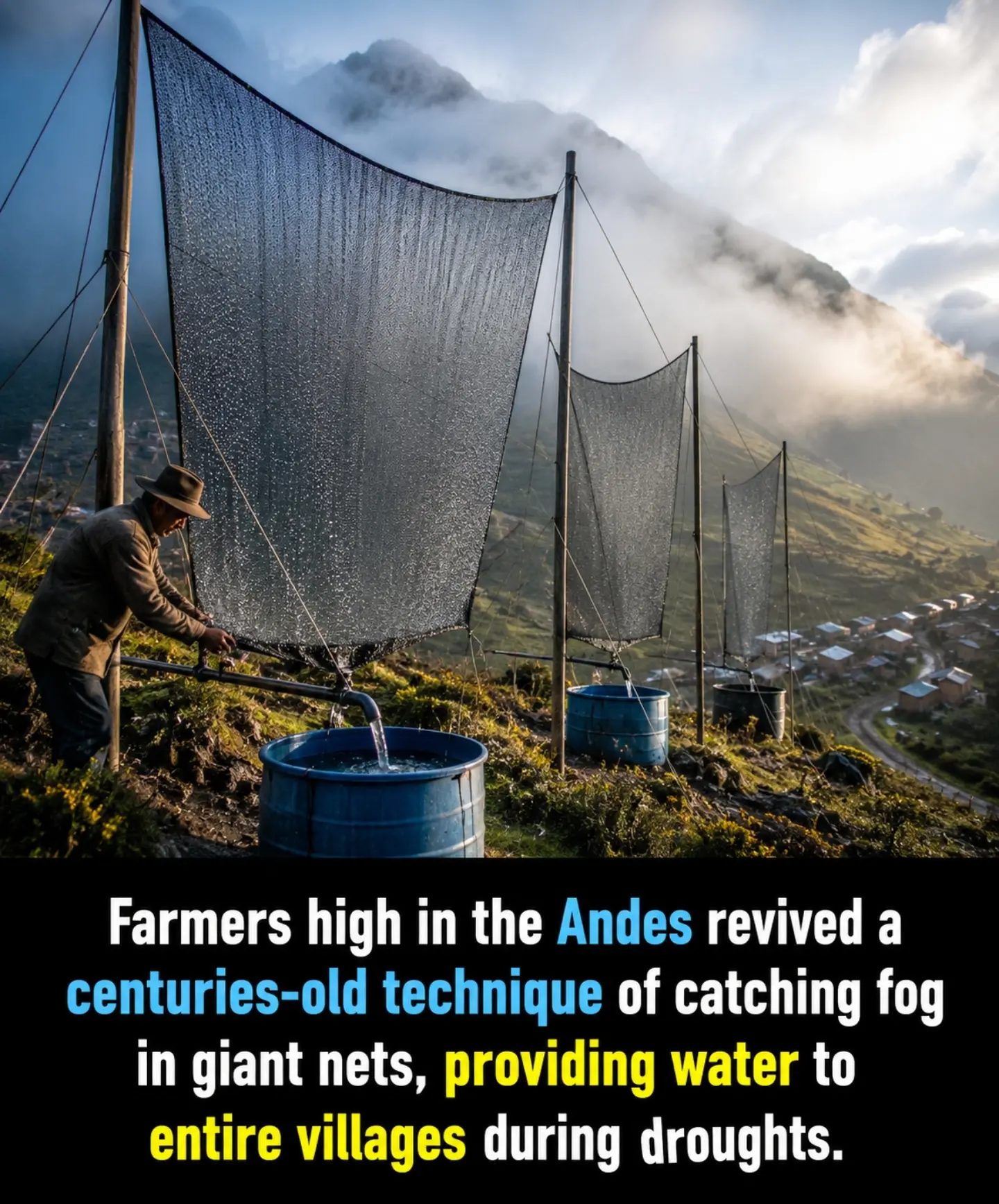
Fog catching is a traditional technique used in the Andes mountains to collect water from fog using giant nets. This method, revived by farmers, provides a crucial water source for entire villages, especially during droughts. The technique involves setting up large nets that capture moisture from the fog, which then drips into collection containers.
Context / Why this matters
Water scarcity is a significant challenge in many parts of the world, including the Andes mountains. Traditional methods like fog catching offer sustainable solutions to ensure water access during dry periods. These methods not only help local communities but also provide insights into sustainable water management practices that can be adapted in other regions facing similar challenges.
Main discussion
The Technique of Fog Catching
Fog catching in the Andes is a centuries-old practice that has been revived to meet modern water needs. The process involves setting up large, vertical nets that capture the tiny water droplets suspended in the fog. These nets are typically made of a durable, mesh-like material that allows the fog to pass through while collecting the water droplets. The collected water then drips into containers placed at the base of the nets.
Importance During Droughts
Fog catching is particularly crucial during droughts when traditional water sources like rivers and wells may run dry. During these periods, fog nets provide a reliable source of water for drinking, agriculture, and other daily needs. The collected water can be used to sustain crops, livestock, and human consumption, ensuring the survival and well-being of entire communities.
Community Involvement
Farmers in the Andes play a vital role in the fog-catching process. They are responsible for setting up and maintaining the nets, as well as collecting the water. This community-based approach not only ensures the sustainability of the practice but also fosters a sense of collective responsibility and cooperation among villagers.
Environmental Benefits
Fog catching offers several environmental benefits. It is a passive method that does not require significant energy input, making it an eco-friendly water collection technique. Additionally, it helps in conserving natural water sources by reducing the demand for groundwater and surface water, thereby promoting sustainable water management.
Challenges and Limitations
While fog catching is an effective method, it also has its challenges. The nets can be damaged by strong winds or heavy rainfall, requiring frequent maintenance and repair. Additionally, the amount of water collected can be limited by the frequency and density of the fog, making it less reliable in regions with inconsistent fog patterns.
Adaptation and Innovation
Despite its challenges, fog catching has inspired innovations and adaptations in other parts of the world. Scientists and engineers are exploring ways to improve the efficiency and durability of fog nets, as well as developing new materials and designs that can enhance water collection.
Practical tips
Implementing fog-catching techniques in your area can be a practical solution to water scarcity. Here are some tips to help you get started:
Assess Local Conditions
First, assess the local climate and fog patterns in your area. Fog catching is most effective in regions with consistent fog during the dry season. Measure the frequency and density of fog to determine if it is a viable water source.
Choose the Right Material
Select a durable, UV-resistant, and corrosion-resistant material for your fog nets. The mesh size should be appropriate for capturing water droplets while allowing air to pass through. Common materials include polypropylene, nylon, and stainless steel.
Optimal Placement
Place the fog nets in areas with maximum fog exposure, such as hilltops or elevated areas. Ensure the nets are securely anchored and positioned perpendicular to the prevailing wind direction to maximize water collection.
Maintenance and Repairs
Regularly inspect and maintain the fog nets to ensure optimal performance. Repair any tears or damages promptly to prevent further deterioration. Clean the nets periodically to remove any debris or dirt that may obstruct water collection.
Water Storage
Set up a reliable water storage system to collect the water from the fog nets. Use clean, food-grade containers to store the collected water, and ensure proper sanitation practices to maintain water quality.
Community Engagement
Engage your community in the fog-catching project. Educate them about the benefits and importance of the technique, and involve them in the setup, maintenance, and monitoring of the fog nets. Community participation is key to the success and sustainability of the project.
Important takeaways
- Fog catching is a traditional technique used in the Andes to collect water from fog, providing a crucial water source during droughts.
- The process involves setting up large nets that capture water droplets from the fog, which then drip into collection containers.
- Farmers play a vital role in maintaining the nets and collecting the water, ensuring the sustainability of the practice.
- Fog catching offers environmental benefits by promoting sustainable water management and conserving natural water sources.
- The technique has inspired innovations and adaptations in other parts of the world, highlighting its potential as a global solution to water scarcity.
- Practical tips include assessing local conditions, choosing the right material, optimal placement, maintenance, water storage, and community engagement.
Conclusion
Fog catching in the Andes is a testament to the ingenuity and resilience of traditional water management practices. By reviving this centuries-old technique, farmers in the Andes have ensured a sustainable water source for their communities, especially during droughts. The practice highlights the importance of community involvement, environmental sustainability, and continuous innovation in addressing water scarcity challenges. As global water scarcity issues continue to rise, understanding and adapting traditional methods like fog catching can provide valuable solutions for a more water-secure future.
Watch the Reel
Questions readers ask
How does fog catching work in the Andes Mountains?
Fog catching in the Andes involves setting up large nets to capture moisture from the fog. The collected water drips down into containers, providing a vital water source for farmers and villages, especially during dry periods.
What are the benefits of using fog catching nets for Andean farmers?
Fog catching nets offer Andean farmers a sustainable way to access water during droughts. This traditional method helps entire villages by providing a consistent water source, which can be used for drinking, agriculture, and other daily needs.
Can fog catching be implemented in other regions?
Yes, fog catching can be adapted to other regions with similar climatic conditions. Areas with frequent fog and water scarcity can benefit from this sustainable farming method, which requires minimal resources and has a significant impact on water management.
What materials are used to make fog catching nets?
Fog catching nets are typically made from sturdy, lightweight materials that allow for easy setup and durability. Common materials include synthetic fibers or mesh that are designed to capture moisture efficiently from the fog.
How does fog catching contribute to sustainable farming in the Andes?
Fog catching contributes to sustainable farming by providing a reliable water source without relying on traditional irrigation methods. This technique helps farmers maintain their crops and livestock during droughts, promoting long-term resilience and reducing dependency on external water supplies.
What role do Andean farmers play in modernizing fog catching?
Andean farmers have revived and modernized fog catching by integrating it with contemporary farming techniques. They have improved the efficiency of fog water collection, making it a more effective solution for water management during droughts, benefiting their communities and inspiring similar practices in other regions.
How does fog catching help in water management during droughts?
Fog catching helps in water management during droughts by providing an independent water source. This reduces the dependence on rainwater or other unreliable sources, ensuring that communities have access to water for daily use and agriculture, thus promoting resilience in water-scarce conditions.
Recent articles
Fresh deep dives from the latest Reels we unpacked.




Comments
Be the first to comment.