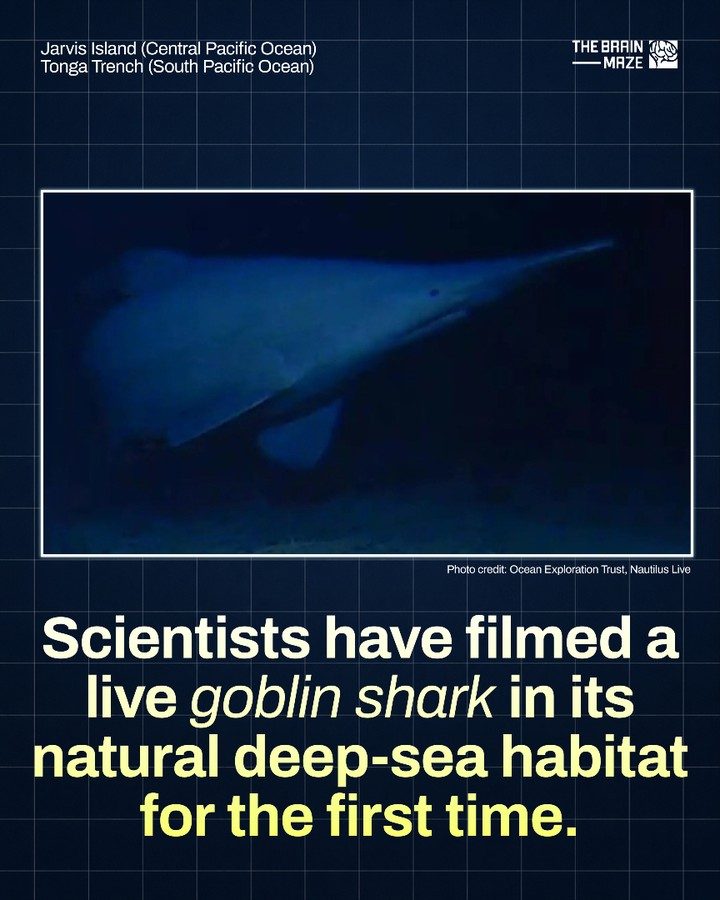
Goblin Shark Filming
The recent successful filming of a live goblin shark in its natural deep-sea habitat marks a groundbreaking milestone in marine biology and ocean exploration. This achievement, documented in the Tonga Trench of the South Pacific Ocean, is the first of its kind and provides unparalleled insights into the behavior and habitat of these elusive creatures.
Context: Why This Matters
The goblin shark, renowned for its distinctive elongated snout and protruding, fang-like teeth, has long captivated scientists and ocean enthusiasts alike. Believed to be a "living fossil," this species has changed little in its 125 million years of existence, making it a valuable subject for studying the evolution of marine life. The filming of a live specimen in its natural habitat challenges previous assumptions about its habitat and range.
The deep sea, encompassing more than 60% of Earth's surface, remains one of the least explored environments on the planet. This discovery emphasizes the vastness and mystery of the ocean depths, underscoring the importance of continued exploration and research.
Main Discussion
The Elusive Nature of the Goblin Shark
Previous encounters with goblin sharks have primarily occurred through fishing nets or accidental catches, providing limited data on their behavior and habitat. This lack of information has made the goblin shark one of the ocean's most mysterious creatures. Until recently, scientists knew little about their behavior, migration patterns, or habitat preferences.
The new footage, captured by researchers at the University of Hawaiʻi at Mānoa, offers unprecedented insight into the goblin shark's natural environment. The footage reveals these sharks thriving far deeper and across a wider range than previously thought.
The Filming Expedition
The expedition took place in the Tonga Trench, one of the deepest points in the world's oceans. The team utilized advanced underwater filming technology to capture clear, detailed footage of the goblin shark in its deep-sea habitat. The success of this mission is attributed to the innovative technology and the collaborative efforts of marine biologists, oceanographers, and engineers.
Insights from the Tonga Trench
The Tonga Trench, located in the South Pacific Ocean, is a critical deep-sea habitat. This trench, part of the Ring of Fire, is known for its dramatic topography and active volcanic and seismic activity. The deep-sea environment of the trench is characterized by extreme conditions, including high pressure, near-freezing temperatures, and complete darkness. The footage from the Tonga Trench highlights the resilience of the goblin shark, showcasing its adaptation to these harsh conditions.
The Role of Science in Deep-Sea Exploration
Deep-sea exploration is a challenging and complex endeavor. Advanced technologies, such as remotely operated vehicles (ROVs) and deep-sea cameras, are essential for capturing detailed footage and data. Projects like the Nautilus Live expedition, funded by the Ocean Exploration Trust, are pivotal in advancing our understanding of deep-sea ecosystems.
The Importance of Ocean Conservation
The discovery of the goblin shark in its natural habitat underscores the need for continued ocean conservation efforts. Deep-sea ecosystems are fragile and vulnerable to human activities, including pollution, overfishing, and climate change. Conservation initiatives aim to protect these ecosystems and the diverse marine life they support.
Practical Tips
For Marine Biologists and Researchers
For those involved in deep-sea research, the successful filming of the goblin shark provides a blueprint for future expeditions. It underscores the importance of advanced technology, collaboration, and a deep understanding of the deep-sea environment. Future research should focus on expanding the knowledge of goblin shark behavior and habitat, as well as exploring other deep-sea species.
For Ocean Conservationists
Advocates for ocean conservation can utilize this discovery to raise awareness about the importance of deep-sea habitats. The footage serves as a powerful tool for educating the public and policymakers about the need for better protection and sustainable management of these delicate ecosystems.
For Deep-Sea Technologists
The success of the expedition relies on cutting-edge underwater filming technology. Developments in ROVs, deep-sea cameras, and other technologies will continue to push the boundaries of what is possible in deep-sea exploration. Future innovations should focus on improving the durability, accuracy, and reliability of these tools.
Important Takeaways
- The recent goblin shark footage is a significant breakthrough in deep-sea research, revealing new insights into these elusive creatures.
- The Tonga Trench's extreme conditions highlight the goblin shark's remarkable adaptability.
- Deep-sea exploration requires advanced technology, collaboration, and a strong commitment to conservation.
- The discovery emphasizes the need for continued exploration and protection of our planet's least-understood ecosystems.
Conclusion
The successful filming of a live goblin shark in its natural deep-sea habitat represents a major achievement in marine biology and oceanography. This discovery provides valuable insights into the behavior and habitat of these 125-million-year-old "living fossils" and underscores the need for continued exploration and conservation of the deep sea. As we venture further into the unexplored depths of our oceans, the knowledge gained from such expeditions will be crucial in preserving the delicate balance of marine life.
Watch the Reel
Questions readers ask
What makes the recent goblin shark footage significant in the field of marine biology?
The recent footage is significant because it marks the first time a goblin shark has been filmed live in its natural deep-sea habitat. This provides new information about the shark's behavior and environment, challenging previous assumptions and offering a fresh perspective on these elusive creatures.
Why is the Tonga Trench an important location for deep sea exploration?
The Tonga Trench is significant because it is one of the deepest parts of the world's oceans, reaching depths of over 35,000 feet. This environment is home to unique and rare species, like the goblin shark, making it a prime location for deep sea exploration and research.
What are some of the key features of the goblin shark that make it a subject of interest for ocean researchers?
The goblin shark is known for its distinctive elongated snout and protruding, fang-like teeth. It is also considered a 'living fossil' due to its relatively unchanged form over 125 million years, making it a valuable subject for studying the evolution of marine life.
What challenges are associated with filming deep-sea creatures like the goblin shark?
Filming deep-sea creatures presents significant challenges, including extreme pressures, near-freezing temperatures, and a lack of light. These conditions require specialized equipment and technology to capture footage without disturbing the natural behavior of the creatures.
How does this discovery contribute to our understanding of the deep sea?
The live filming of a goblin shark in its natural habitat provides direct observations of deep-sea behavior, offering insights into the mysterious world of deep-sea creatures. This helps researchers understand the ecosystem, biodiversity, and environmental changes in the deep sea.
What are the potential implications of this discovery for future ocean research in the Pacific Ocean?
This discovery opens up new avenues for ocean research, encouraging further exploration of the Pacific Ocean and other deep-sea regions. It highlights the need for advanced technology and innovative approaches to study and protect deep-sea habitats and their inhabitants.
What new questions might scientists explore based on this goblin shark footage?
Scientists may explore new questions about the goblin shark's feeding habits, social behavior, and adaptations to the deep-sea environment. The footage could also inspire further research into the broader ecosystem of the Tonga Trench and the impacts of human activities on deep-sea life.
Recent articles
Fresh deep dives from the latest Reels we unpacked.




Comments
Be the first to comment.