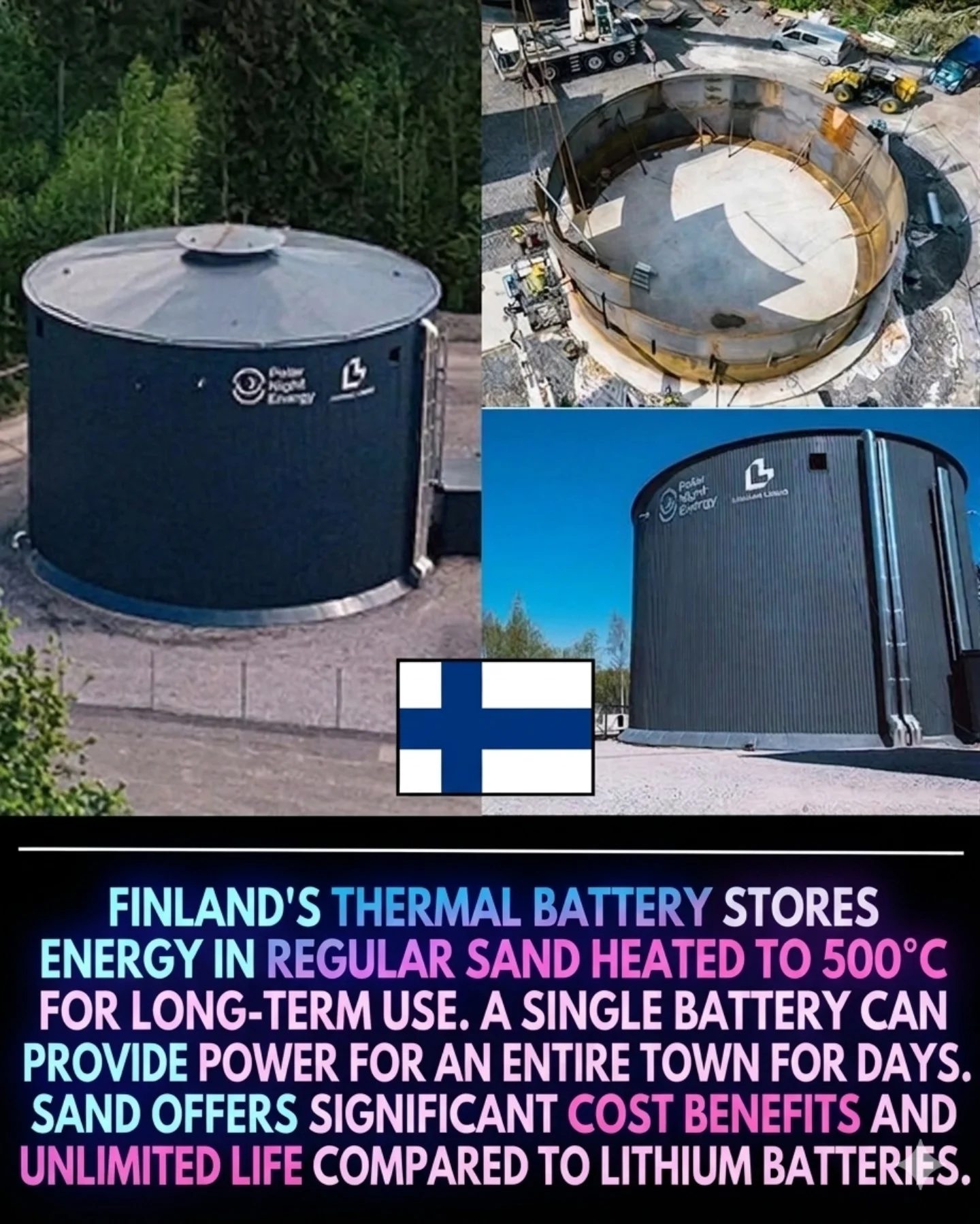
Thermal Battery Technology
Thermal battery technology offers a groundbreaking solution for storing renewable energy, particularly in regions where intermittent energy sources like wind and solar power are prevalent. This innovative approach, developed by the Finnish startup Polar Night Energy, utilizes sand as the primary medium for storing thermal energy. By heating sand to temperatures around 500°C to 600°C, this "sand battery" can provide energy security for an entire town for extended periods, making it an ideal solution for areas with seasonal variations in energy production.
Why This Matters
As the world relies more heavily on renewable energy sources, the challenge of energy storage becomes increasingly critical. Solar and wind power are intermittent, and storing this energy efficiently is essential for maintaining a stable power supply. Traditional lithium-ion batteries, while effective, come with significant drawbacks, including limited lifespan, high environmental impact, and the need for costly mining operations. Thermal battery technology aims to address these issues by providing a more sustainable, cost-effective, and durable solution.
Main Discussion
How Thermal Battery Technology Works
The thermal battery technology operates through a straightforward yet effective process:
- Charging: Excess electricity generated from wind and solar power is used to heat resistive heating elements. These elements, similar to giant toasters, heat the sand to high temperatures.
- Storage: Air is circulated through these heating elements and then through a large steel silo filled with hundreds of tons of sand or crushed soapstone. The sand, acting as a thermal storage medium, retains the heat at temperatures of 500°C to 600°C.
- Discharging: When there is a power demand, the system pumps air through the hot sand to extract the heat. The hot air is then used to heat water for district heating systems, which supply homes, offices, and even swimming pools with warm water.
This process ensures that energy generated during peak production times can be stored and utilized during periods of low production, providing a consistent and reliable energy supply.
Advantages of Thermal Battery Technology
Thermal battery technology offers several key advantages over traditional energy storage solutions:
- Cost and Material: One of the most significant benefits is the use of sand, a cheap and abundant material, as the energy storage medium. Unlike lithium-ion batteries, which require expensive and environmentally damaging mining for cobalt and lithium, sand is readily available and environmentally friendly.
- Longevity: Lithium-ion batteries degrade over time and typically last for a decade or two. In contrast, a thermal battery system can last for 50 years or more with minimal maintenance, making it a highly durable solution.
- Extended Storage Duration: The sand battery can store energy for months, allowing for the capture of solar heat in the summer and its use during the long, cold Finnish winter. This long-term storage capability makes it particularly useful in regions with significant seasonal variations in energy production and demand.
Ease of Implementation
Implementing thermal battery technology is relatively straightforward. The system can be integrated into existing energy infrastructure, making it a practical solution for both new and existing renewable energy projects. The technology can be scaled to meet the needs of small communities or entire towns, providing a versatile and adaptable energy storage solution.
Practical Tips
When considering the implementation of thermal battery technology, several practical tips can help ensure its effective use:
- Assess Energy Needs: Determine the energy storage requirements of your community or project. This will help in designing a system that can efficiently meet your needs.
- Site Selection: Choose a location for the thermal battery that is easily accessible and secure. The site should have adequate space for the large steel silos and heating elements.
- Integration with Renewable Sources: Ensure that the thermal battery system is well-integrated with your renewable energy sources. This will optimize energy storage and utilization.
- Monitoring and Maintenance: Regularly monitor the system to ensure it is operating efficiently. While the thermal battery system requires minimal maintenance, periodic checks can help extend its lifespan.
Important Takeaways
- Sustainability: Thermal battery technology offers a sustainable solution for storing renewable energy, reducing the need for environmentally taxing mining operations.
- Cost-Effectiveness: The use of sand as the storage medium makes thermal batteries a cost-effective solution compared to traditional lithium-ion batteries.
- Longevity and Reliability: With a lifespan of 50 years or more and minimal maintenance requirements, thermal batteries provide a reliable and durable energy storage solution.
- Long-Term Storage: The ability to store energy for months makes thermal batteries ideal for regions with significant seasonal variations in energy production.
Conclusion
Thermal battery technology represents a significant advancement in energy storage, offering a sustainable, cost-effective, and reliable solution for storing renewable energy. By utilizing sand as the storage medium, this technology provides a long-lasting and environmentally friendly alternative to traditional lithium-ion batteries. As the world continues to move towards renewable energy sources, thermal battery technology will play a crucial role in ensuring a stable and consistent power supply.
Watch the Reel
Questions readers ask
How does the sand battery technology developed by Polar Night Energy work?
The sand battery technology by Polar Night Energy works by heating sand to high temperatures, typically between 500°C and 600°C. This thermal energy can be stored for extended periods and then converted back into electricity when needed, providing a reliable power source, especially in regions with intermittent wind and solar power.
What are the primary advantages of using sand batteries for renewable energy storage?
Sand batteries offer several advantages, including cost-effectiveness, durability, and eco-friendliness. They provide long-duration energy storage, making them suitable for areas with seasonal variations in energy production. Additionally, they are a sustainable alternative to traditional lithium-ion batteries, reducing the need for rare earth metals.
How does thermal battery technology address the intermittency of wind and solar power?
Thermal battery technology mitigates the intermittency of wind and solar power by storing excess energy generated during peak production times. This stored thermal energy can be released and converted into electricity during periods of low production, ensuring a continuous and stable power supply.
Can sand batteries provide energy for an entire town?
Yes, sand batteries have the capacity to provide energy security for an entire town. By storing thermal energy at high temperatures, these batteries can supply power for extended periods, making them an ideal solution for communities with fluctuating energy production.
What makes Polar Night Energy's sand-powered batteries a sustainable solution?
Polar Night Energy's sand-powered batteries are a sustainable solution because they use abundant and inexpensive sand as the primary medium for storing thermal energy. This approach eliminates the need for traditional, more environmentally impactful batteries, and helps to mitigate the carbon footprint associated with energy storage.
How does the cost of sand batteries compare to traditional lithium-ion batteries?
Sand batteries are generally more cost-effective than traditional lithium-ion batteries. The primary material, sand, is abundant and inexpensive, which reduces the overall costs associated with production and maintenance. Additionally, their long lifespan and low environmental impact contribute to their affordability.
Are there any specific regions where sand battery technology is particularly beneficial?
Sand battery technology is particularly beneficial in regions with significant seasonal variations in energy production, such as those relying heavily on wind and solar power. These areas can benefit from the long-duration energy storage capabilities of sand batteries, ensuring a stable power supply even during periods of low renewable energy generation.
Related deep dives
Similar reads based on topic and creator.




Recent articles
Fresh deep dives from the latest Reels we unpacked.




Comments
Be the first to comment.