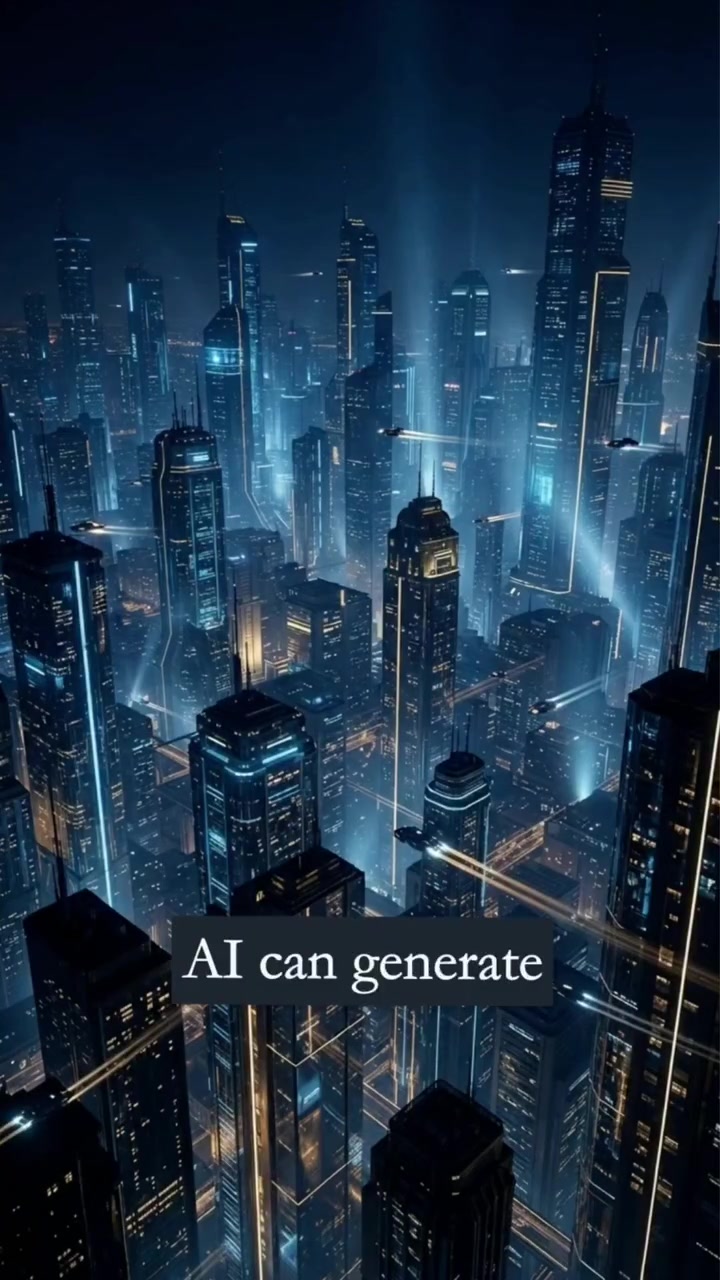
The Massive Dataset that Made Modern AI Vision Possible
Today, AI image generators churn out hyper-realistic scenes in seconds. But in 2007, AI couldn't even identify a cat in a photo. That was before computer scientist Fei-Fei Li built ImageNet, a massive dataset of 14 million labeled images that jump-started AI's ability to see. A computational model could not generate new images without first understanding what it saw. When ImageNet was absorbed into neural networks, AI finally understood the physical world.
How ImageNet Reversed AI's Visual Blindness
AI's biggest obstacle wasn't its brain; it was its lack of real-world life experience. For machines to learn, they needed a visual curriculum. Li realized this, and her work gave birth to the ImageNet database. ImageNet was a meticulously organized grid of 14 million labeled images from everyday life. Scattered images from the world were gathered and meticulously organized into 14 million labeled images. This created a visual encyclopedia that defined everyday objects for AI. A few years later, a computational model was trained on this grid, and it finally gave AI the ability to decode visual reality. This breakthrough allowed AI to not only see, but to recognize and create new images. A deep neural network powered by ImageNet created a computer vision project.
The ImageNet Data Collection
ImageNet required meticulously organized data. ImageNet was developed using images that were commonplace in everyday life. The dataset included photos from the internet with labels. Protolabels, used to crowdsource the training of data, sorted these images. After collecting the scattered images, ImageNet was built into a grid, with each image placed meticulously and labeled carefully. These labels allowed AI to understand what it was looking at. For instance, when AI looks at a cat, it knows it is a cat, thanks to the visual vocabulary the data gave it. Impatient researchers worked towards the breakthrough of ImageNet. Some researchers, however, thought this project was too ambitious, and that it wouldn't contribute much to the AI community. This project faced many obstacles. However, Fei-Fei Li persevered, and ImageNet became a visual encyclopedia that AI could rely on.
Deep Neural Networks and ImageNet
After the data collection, ImageNet was absorbed into the huge neural network that AI used during its development. The process of training came later, during which ImageNet was absorbed with a computational model and it was able to shatter previous records by decoding the textual world. A powerful computational model absorbed the ImageNet, and a breach in AI development was born. The AI was able to imagine new worlds. The new dataset launched a revolution, and ImageNet was used as a benchmark for AI's future capabilities. Fei-Fei Li was the brain behind this project, and ImageNet allowed AI to have a visual vocabulary.
The Unforeseen Impact of ImageNet
ImageNet revolutionized AI. Li didn't know that her project would become the focal point for AI development. But when ImageNet was released, the AI community was shocked, and AI began to grow rapidly. The discovery of ImageNet caused a new deep learning revolution. ImageNet allowed AI to truly understand the world, and to begin to create worlds, as well. ImageNet had a huge impact on the development of AI, and even today, ImageNet is used in AI models like ChatGPT and Midjourney. ImageNet's impact went beyond AI recognition and creation. This dataset allowed AI to expand its capabilities. ImageNet was formerly used to teach AI about animals and people. Today, AI's capabilities are used in fields like self-driving cars, in which ImageNet's impact is felt. Today, ImageNet's impact is even seen in 3D perception. Fei-Fei Li is currently building World Labs, which works on giving AI a 3D perception. And this all began without anyone knowing that their dataset would have such an impact.
Fei-Fei Li's Impact on ImageNet
Fei-Fei Li was the name behind the ImageNet project. This project involved meticulously organizing and labeling images from the internet. Using AI, Li was able to see a solution to a problem that everyone else could not. Li believed that the biggest limitation to AI's success was not lack of data, and she was right. She believed that AI needed a visual vocabulary, and ImageNet was the solution. Li's work was not easy. Some researchers even thought that she was wasting her time and resources on this project. For years, Li continued her work, and in 2012, the AI community was shocked when ImageNet was released. This project taught Li that sometimes, the biggest breakthroughs are hidden in the fields of data and vision. And sometimes, all that is needed is a person who asks a better question.
Practical guidance for trying AI image generation
Learning from AI requires a technical understanding. Here are some AI steps to help you learn.
- Get Familiar with Data: AI uses such information to learn. Focusing on useful labels, such as in the case of ImageNet, you can make it easier for AI to decode visual reality.
- Learn Python: Python is a powerful programming language that is often used for AI. Python libraries like TensorFlow and PyTorch are used for AI image generation.
- Study Machine Learning: Machine learning is the process of training a machine to learn and adapt over time. ImageNet uses this process to teach machines how to see and understand the world.
- Start Small: Create smaller models that produce smaller forms of AI generation. By doing so, you'll be able to see what you're capable of, and to understand how to navigate AI's different processes.
- Practice with Open Source Projects: The Google Colab platform, for example, offers free GPU access that can be used to train AI models.
Watch the Reel
Questions readers ask
What exactly is ImageNet and why was it so important for AI?
ImageNet is a vast dataset containing 14 million labeled images from everyday life, created by Fei-Fei Li. It was crucial for AI because it gave machines a visual curriculum, helping them understand and recognize objects in the world. Before ImageNet, AI struggled with basic visual tasks like identifying a cat in a photo. ImageNet gave AI the visual vocabulary it needed to decode the physical world, and it was used as a benchmark for AI's future capabilities.
How did ImageNet help AI understand the world?
ImageNet helped AI understand the world by providing a meticulously organized grid of labeled images. These labels acted as a visual encyclopedia, teaching AI what different objects look like. By training on ImageNet, AI could finally recognize and create new images, breaking through its previous visual blindness. The dataset gave AI the ability to decode visual reality, making it a revolutionary breakthrough in computer vision.
How was ImageNet created and who was involved in its development?
ImageNet was created by Fei-Fei Li, a computer scientist who realized that AI needed a visual curriculum to learn. She gathered scattered images from the internet and meticulously organized them into a grid, with each image carefully labeled. Protolabels were used to crowdsource the training of data, and Li's perseverance was key in overcoming the many obstacles the project faced. Despite some researchers' skepticism, Li's work gave birth to the ImageNet database, which became a visual encyclopedia for AI.
What is the process of training AI with ImageNet and how does it work?
Training AI with ImageNet involves absorbing the dataset into a deep neural network. The computational model is trained on the labeled images, allowing it to learn and recognize objects. This process enables AI to decode visual reality and create new images. The training shatters previous records by giving AI a visual vocabulary, revolutionizing its capabilities in computer vision projects.
What kind of impact did ImageNet have on the AI community and its development?
ImageNet had a profound impact on the AI community. When it was released, AI began to grow rapidly, and ImageNet became the focal point for AI development. It revolutionized the field by giving AI the ability to understand and recognize objects in the world. The dataset was used as a benchmark for AI's future capabilities, and it launched a revolution in computer vision. Fei-Fei Li's work on ImageNet continues to influence AI development today.
What are some examples of ImageNet's impact on AI capabilities, such as image generation?
ImageNet's impact on AI capabilities is vast. One notable example is the ability of AI to generate new, hyper-realistic images. Before ImageNet, AI couldn't even identify a cat in a photo. But after training on ImageNet, AI could not only recognize objects but also create new images. This breakthrough allowed for the development of advanced computer vision projects, showcasing AI's newfound ability to decode and imagine visual reality.
How does ImageNet help AI create new images, and what does that mean for the future of AI art and design?
ImageNet helps AI create new images by providing a visual vocabulary that allows AI to understand and generate visual content. By training on ImageNet, AI can decode visual reality and create hyper-realistic scenes. This capability has significant implications for the future of AI art and design, as it enables AI to generate new and innovative visual content. The ability to create new images opens up possibilities for AI in creative fields, allowing it to assist in art, design, and other visual disciplines.
Related deep dives
Similar reads based on topic and creator.
Recent articles
Fresh deep dives from the latest Reels we unpacked.




Comments
Be the first to comment.