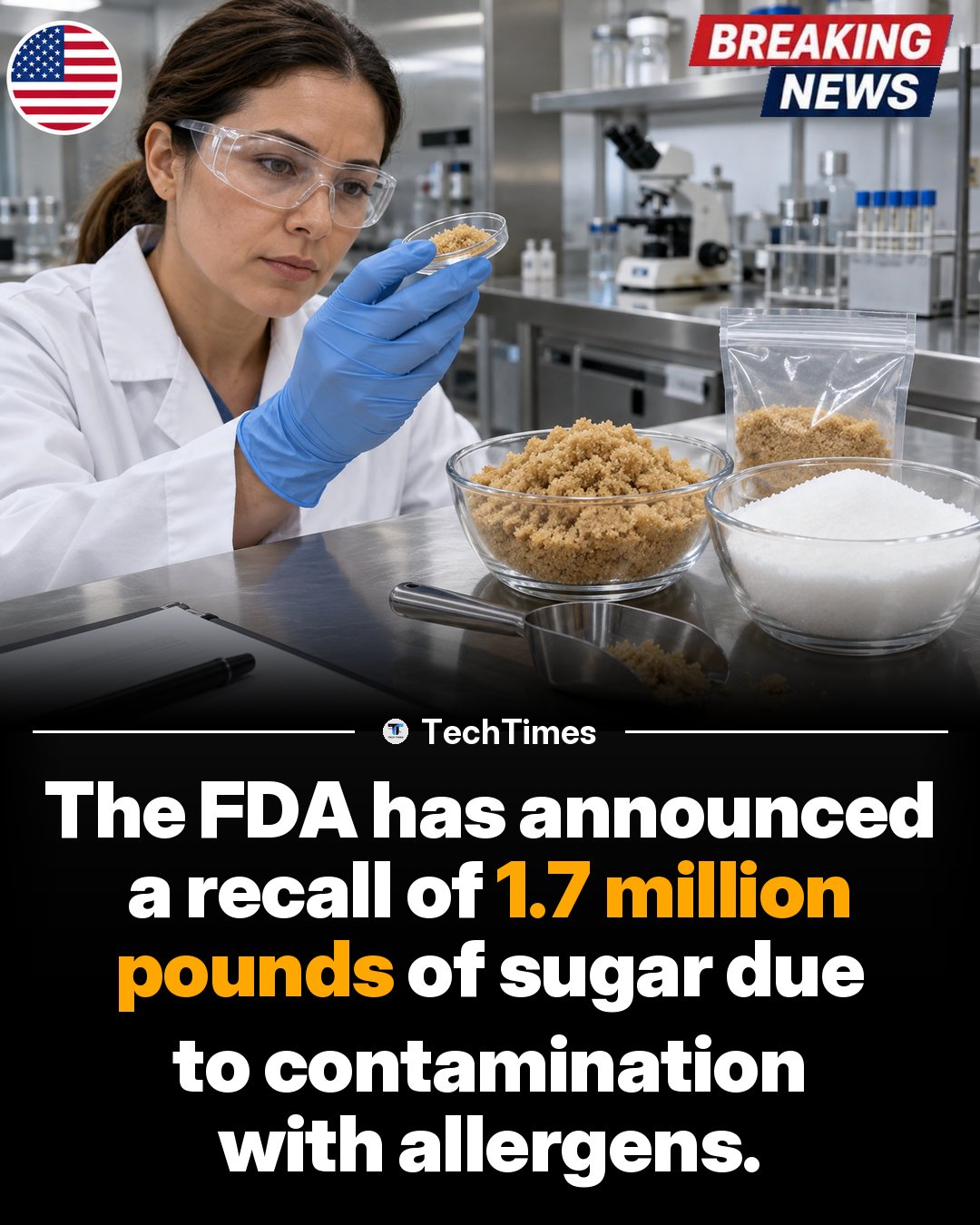
The Food and Drug Administration (FDA) announced a recall of 1.7 million pounds of sugar, issuing a break that has swept the bakery industry. The recall aims to combat a significant contamination issue caused by allergens. The recall is a public health measure that alerts consumers to remove and/or destroy the affected product in order to ensure food safety. A recall of sugar? Can something as simple as sugar pose a real threat? After all, what makes it more complicated than people realize?
You are what you bake
Sugar is a staple ingredient in most households, regularly used in beverages, baked goods, and a variety of other food products. The FDA has recently recalled 1.7 million pounds of sugar, which is not particularly risky in its purity. This sugar is a food additive that may be mixed with other products or consumed directly as a food. The problem arises when this substance picks up contaminants such as allergenic substances. These allergens have the potential to cause allergic reactions in susceptible individuals. Due to the prevalence of allergies in the general public, ensuring the safety of the food supply is of paramount importance. Sugar is not a common source of allergens, but contamination can occur for a variety of reasons, such as incorrect labeling or cross-contamination during production. This recall is particularly significant. Over 1.7 million pounds were affected, which highlights the formidable production and distribution logistics of food products in the United States. The recall affects 1.7 million pounds of sugar, which is a significant quantity and is expected to disrupt the food industry, which is highly dependent on the ready availability of sugar. This recall is a high-stakes endeavor in several respects. First, it demonstrates the FDA's commitment to protecting public health and food safety. The FDA constantly patrols the market for vulnerable commodities because the huge food industry must ensure the safety of products.
The rise of food safety concerns
Food allergy risks are on the rise, prompting the FDA to revisit its products, ingredients, and procedures. In the last five years, there has been a notable increase in food recalls due to allergen contamination. This increase highlights the materials, processes, and ingredients in food processing operations that are becoming more complex. In addition to increased food safety concerns, the world's food supply is becoming increasingly globalized, making food safety more challenging to monitor. The recall process has become more intricate and requires a farsighted approach. The recall can assist in tracking the origins, selling points, and potential allergen sources of the contaminated sugar. This information is crucial for maintaining consumer trust. It will also help the public to understand how the FDA prioritizes and addresses recalls, which are a launch-pad for consumer protection.
The scope of the recall
The first question is whether the specific allergen has been identified. However, the specifics of the allergen involved in this recall are not specified in the data available. Most FDA food recalls are caused by undeclared allergens, mislabeling, or cross-contamination. The type of sugar involved in the recall is also unspecified, which is significant because different types of sugar can have different characteristics. The FDA recall provides an overview of the recall, and its partner companies will work to provide recall coverage. The recall is extensive and includes a broad variety of sugar types and packaging. The contaminated sugar can be found in bulk and consumer packaging. This can include any form of sugar, such as white granulated or brown sugar. The FDA has also issued warnings regarding cross-contamination of allergens.
Dangers exposed
The allergen contamination presents several potential risks: the risks to consumers, risks to businesses, and risks to the FDA. The severity of the allergic reactions caused by the allergen, the number of individuals affected, and the length of exposure to this allergen are all unknown. The recall will have a significant impact on the supply chain. The recall will result in a significant loss of product and/or revenue for the company involved. The recall will also impact the supply of sugar in the manufacturing process. There will be impacts upstream of the recall, such as production stoppages, and downstream of the distribution. It will also have a significant effect on the workforce, as many jobs are dependent on the sugar industry.
Impact on industry and consumers
The recall will affect a wide range of customers, including suppliers, individuals purchasing sugar for household use, and businesses using bulk sugar for commercial purposes. The recall is far-reaching and will impact all parts of this industry. Aiming to protect public health, the FDA is planning to recall sugar products to a certain end date. Because the food industry is intertwined with sugar production, the recall is an important step in the larger goal of food safety. To ensure the safety of the food supply, the FDA mandates a careful examination of both the production process and the product itself. The recall presents a variety of specific challenges. The recall will be coordinated with supply chain management. The sugar industry and the FDA have to be transparent.
Prepping for any sugar recall – and the unexpected
Businesses should take steps to prevent food-related issues. Food and allergen testing: Regular and comprehensive tests are critical. Training is critical, and it should cover a range of subjects. Staff training: Training includes everything from allergen awareness to proper handling procedures. Proper labeling: Proper labeling is critical: Labeling includes everything from ingredient lists to allergen warnings.
Watch the Reel
Questions readers ask
What kind of allergens are typically found in sugar contamination?
The article doesn't specify the exact allergen involved in this recall. However, common allergens that might contaminate sugar include peanuts, soy, or milk, which can cause severe reactions in allergic individuals. These allergens can be introduced through cross-contamination during processing or improper labeling.
How does the FDA determine the scope of a recall like this?
The FDA evaluates the potential health risks and the extent of distribution to determine the scope of a recall. In this case, the recall involves 1.7 million pounds of sugar, indicating a widespread distribution. The agency works to identify the source of contamination and trace the affected products through the supply chain.
What should consumers do if they have the recalled sugar at home?
Consumers should check the specific details provided by the FDA regarding the recalled sugar, including the brand names, and product codes. If they have the affected sugar, they should either dispose of it safely or return it to the place of purchase. It's crucial to follow the FDA's guidelines to ensure food safety.
How does this recall impact the bakery industry?
The recall of 1.7 million pounds of sugar is significant for the bakery industry, which relies heavily on sugar as a key ingredient. Bakers may face shortages or need to find alternative suppliers, which can disrupt production and cause delays. This recall underscores the importance of vigilant ingredient sourcing and quality control in the food industry.
What steps is the FDA taking to prevent future allergen contamination in food products?
The FDA is continually revisiting its procedures and guidelines to address the rising concerns about food allergens. This includes improving labeling requirements, enhancing inspection protocols, and increasing public awareness about the risks of allergen contamination. The agency is also working on better tracking and tracing mechanisms to quickly identify and address contamination issues.
How does globalization complicate food safety monitoring?
Globalization introduces complexities in food safety monitoring due to the increased movement of goods across borders. This makes it harder to track the origins of ingredients and ensure consistent quality control. The FDA must collaborate with international regulators and implement stricter standards to maintain food safety in a globalized market.
What are the most common causes of allergen contamination in food production?
Allergen contamination in food production often occurs due to cross-contamination during processing, where allergenic substances come into contact with non-allergic products. This can happen through shared equipment, improper labeling, or inadequate cleaning procedures. Additionally, mislabeling can mislead consumers about the presence of allergens in a product.
Recent articles
Fresh deep dives from the latest Reels we unpacked.




Comments
Be the first to comment.