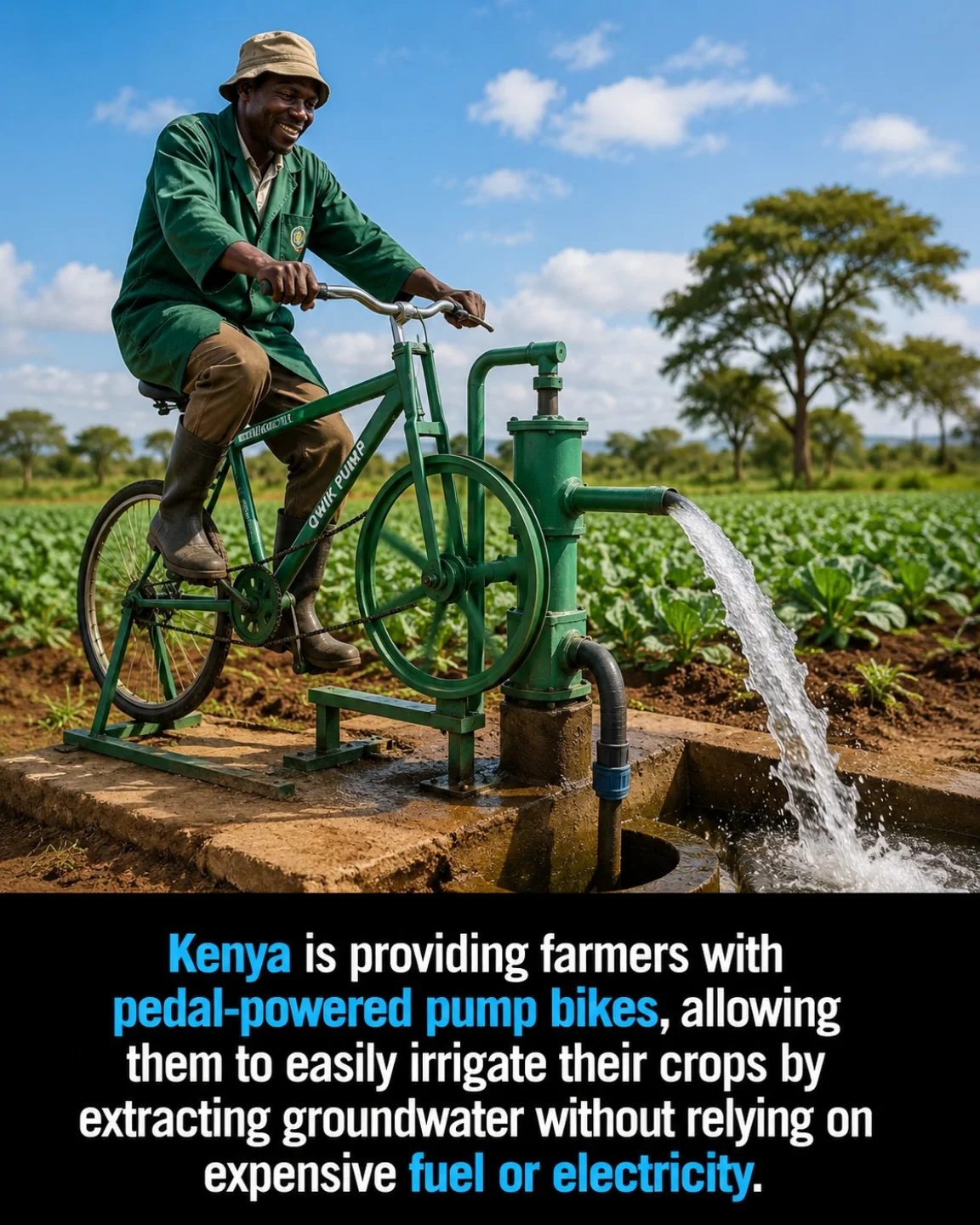
Pedal-Powered Irrigation
Pedal-powered irrigation systems, particularly pedal-powered pump bikes, are revolutionizing the way farmers in rural areas access water for their crops. These innovative devices are transforming agricultural practices, especially in regions like Kenya, where access to reliable and affordable water sources is often a challenge.
Context / Why this matters
Traditional irrigation methods often rely on expensive fuel or electricity, which can be costly and unsustainable for many small-scale farmers. Pedal-powered pump bikes offer a sustainable and cost-effective alternative, enabling farmers to irrigate their crops efficiently without the need for external energy sources. This method not only reduces operational costs but also helps in conserving the environment by minimizing the use of fossil fuels.
Main discussion
The Mechanism of Pedal-Powered Pump Bikes
Pedal-powered pump bikes operate on a simple yet effective principle. The bike is equipped with a pump mechanism that connects to a water source, typically a well. As the rider pedals, the mechanical energy generated is transferred to the pump, which then draws water from the ground. This water can be directed to the fields through a series of pipes or channels, ensuring that crops receive the necessary hydration for growth.
Benefits for Farmers
-
Cost Efficiency: One of the most significant advantages of pedal-powered pump bikes is their cost-effectiveness. By eliminating the need for fuel or electricity, farmers can significantly reduce their operational expenses. This is particularly beneficial for small-scale farmers who operate on tight budgets.
-
Sustainability: These devices are environmentally friendly. By reducing the reliance on fossil fuels, pedal-powered pumps help in lowering greenhouse gas emissions, contributing to a cleaner and healthier environment.
-
Accessibility: Pedal-powered pump bikes can be used in remote and rural areas where access to electricity or fuel may be limited or non-existent. This makes them an ideal solution for farmers in such regions.
Applications and Use Cases
Pedal-powered irrigation systems can be employed in various agricultural settings. For instance, they can be used to irrigate small plots of land, vegetable gardens, or even larger fields, depending on the design and capacity of the pump. Farmers can also use these systems to water livestock, ensuring that animals have a consistent supply of water.
Practical tips
Selecting the Right Pedal-Powered Pump Bike
When choosing a pedal-powered pump bike, consider the following factors:
-
Capacity and Efficiency: Ensure the pump has the capacity to meet your water needs. The efficiency of the pump will determine how much water can be extracted with minimal effort.
-
Durability: Look for a bike that is built to last, especially if you plan to use it in rugged, rural conditions. Durability is crucial for minimizing maintenance costs and ensuring longevity.
-
Ease of Use: The bike should be easy to operate, even for those who may not be familiar with mechanical devices. A user-friendly design can make a significant difference in the overall experience.
Maintaining Your Pedal-Powered Pump Bike
Regular maintenance is essential for keeping your pedal-powered pump bike in optimal condition. Here are some tips:
-
Regular Cleaning: Clean the bike and pump regularly to remove dirt and debris that can affect performance.
-
Lubrication: Keep the moving parts well-lubricated to prevent rust and ensure smooth operation.
-
Checking for Wear and Tear: Regularly inspect the bike for any signs of wear and tear. Replace worn-out parts promptly to avoid more significant issues in the future.
Important takeaways
Pedal-powered pump bikes offer a sustainable and cost-effective solution for irrigation in rural and remote areas. By leveraging mechanical energy, farmers can access groundwater without relying on expensive fuel or electricity. This not only reduces operational costs but also helps in conserving the environment. With the right choice and maintenance, pedal-powered pump bikes can significantly enhance agricultural productivity and sustainability.
Conclusion
Pedal-powered irrigation systems, particularly pedal-powered pump bikes, are a game-changer for farmers in regions like Kenya. By providing a sustainable and cost-effective way to access groundwater, these devices are transforming agricultural practices and improving the livelihoods of farmers. As more farmers adopt this technology, we can expect to see a positive impact on both agricultural productivity and environmental conservation.
Watch the Reel
Questions readers ask
How do pedal-powered irrigation systems work in rural Kenya?
Pedal-powered irrigation systems in rural Kenya typically consist of a bike connected to a water pump. Farmers pedal the bike to operate the pump, which draws water from a source such as a well or river and directs it to their crops. This hands-on method ensures a steady water supply without the need for external energy sources.
What are the main benefits of using pedal-powered pump bikes for irrigation?
Pedal-powered pump bikes offer several benefits, including reduced operational costs, as they do not require fuel or electricity. They also promote environmental sustainability by minimizing carbon emissions and conserving natural resources. Additionally, these systems empower farmers by giving them control over their water supply.
Can pedal-powered irrigation systems be used for large-scale farming?
Pedal-powered irrigation systems are primarily designed for small to medium-scale farming, especially in rural areas. While they are effective for individual or small farming communities, they may not be sufficient for large-scale farming operations that require extensive irrigation. Such farms might need more robust, high-capacity pumping systems.
How do these pedal-powered systems help farmers in Kenya?
In Kenya, pedal-powered irrigation systems help farmers overcome challenges related to water scarcity and high costs of fuel or electricity. By enabling farmers to access and utilize groundwater effectively, these systems support crop growth and enhance agricultural productivity, especially in regions where water sources are limited or unreliable.
What types of water sources can be used with pedal-powered irrigation systems?
Pedal-powered irrigation systems can draw water from various sources, including wells, rivers, and streams. The key requirement is that the water source must be within a reasonable distance and depth for the pump to effectively access and transport the water to the fields. Groundwater from wells is a common choice due to its reliability.
Is training required to use pedal-powered irrigation systems?
While pedal-powered irrigation systems are generally user-friendly, some level of training or guidance may be beneficial, especially for first-time users. Local initiatives or organizations often provide instruction on the proper setup, maintenance, and operation of these systems to ensure optimal performance and longevity. This support helps farmers maximize the benefits of their pedal-powered irrigation systems.
How do pedal-powered irrigation systems contribute to environmental sustainability in Kenya?
Pedal-powered irrigation systems contribute to environmental sustainability by reducing dependence on fossil fuels and minimizing greenhouse gas emissions. They also help conserve water resources by allowing farmers to access water more efficiently, which can lead to better water management practices. Additionally, these systems promote a cleaner, greener approach to farming in Kenya, benefiting both the environment and local communities.
Related deep dives
Similar reads based on topic and creator.




Recent articles
Fresh deep dives from the latest Reels we unpacked.




Comments
Be the first to comment.