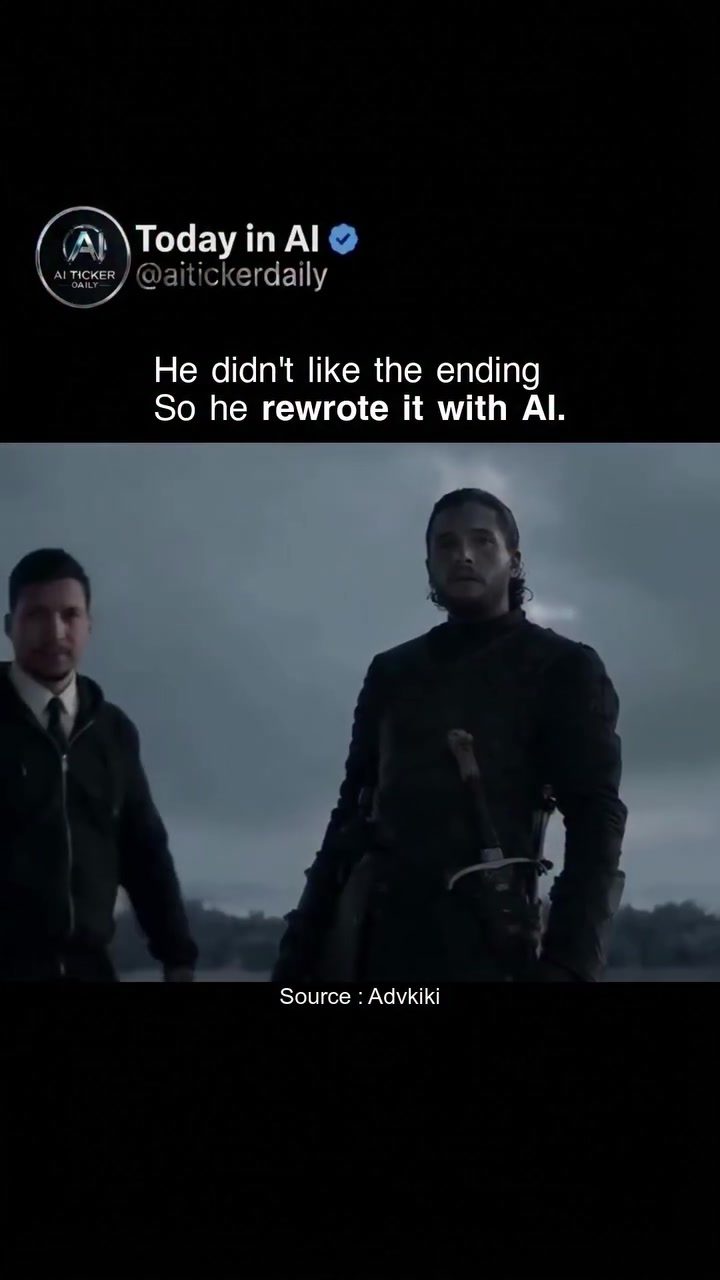
AI tools are transforming fan fiction and entertainment, enabling individuals to rewrite endings and even entire scenes of popular TV shows. The latest example of this is a fan who recreated the ending of "Game of Thrones". The process involved AI to drop their own face into the show, and then rewriting different beats, deaths, and kings. This incredible feat has significant implications for the entertainment industry, as it demonstrates the power of AI in reimagining and recreating existing content.
Why This Matters
The ability to rewrite and reshape existing media has significant implications for both content creators and consumers. For one, it means that the traditional gatekeepers of content—studios and production companies—are no longer the sole arbiters of what gets produced and released. With AI, anyone with a laptop and some technical know-how can create and share their own versions of popular media. This democratization of content creation is both exciting and daunting, as it opens up new possibilities for creativity while also raising questions about intellectual property and originality.
AI and Fan Fiction
Fan fiction has long been a staple of entertainment culture, where fans take established stories and characters and create their own narratives. Traditionally, this was confined to written works, but with the advent of AI, fan fiction has evolved into something far more dynamic. Advkiki, the company behind the AI tools used in this "Game of Thrones" re-edit, exemplifies this shift. Their technology allows users to insert themselves into existing scenes, change dialogue, and even alter the plot.
The Power of AI in Entertainment
The AI tools used by the fan to re-edit "Game of Thrones" are a testament to the capabilities of modern technology. These tools can now generate realistic footage, match lighting and facial features, and seamlessly integrate new scenes into existing content. This not only allows for the creation of highly convincing fan fiction but also raises the bar for what fans expect from official content.
The Implications for Studios
For major studios, this development is both exciting and unsettling. On one hand, it opens up new avenues for creativity and engagement with fans. On the other, it challenges the traditional model of content ownership and distribution. Studios are no longer the sole guardians of their intellectual property. Instead, they compete with a vast array of fan-generated content that can often be just as compelling as the original.
The Future of Fan Fiction
As AI continues to evolve, the line between fan fiction and official content will likely blur even further. Fans will have the tools to create content that not only rivals but sometimes surpasses the originals. This will force studios to adapt, perhaps by collaborating more closely with fans or by creating interactive experiences that allow audiences to shape the narrative.
Practical Tips
If you're interested in diving into the world of AI-edited content, here are some practical tips to get you started:
Tools and Software
Start by familiarizing yourself with the tools and software available. There are several AI-powered platforms that allow you to re-edit and recreate scenes from popular media. Look for software that offers features like facial replacement, scene integration, and lighting matching. Advkiki is one such platform, but there are others that may offer similar capabilities.
Learning the Basics
Before diving in, take some time to learn the basics of video editing. Understanding concepts like lighting, composition, and pacing will help you create more convincing and engaging scenes. There are numerous online tutorials and courses available that can help you get started.
Experiment and Iterate
Don't be afraid to experiment and iterate. The beauty of AI tools is that they allow for endless possibilities. Try out different scenarios, characters, and plots to see what works best. The more you experiment, the better you'll get at creating high-quality content.
Engage with the Community
Join online communities and forums where you can share your work, get feedback, and learn from others. Engaging with a community of like-minded creators can provide valuable insights and inspiration.
Important Takeaways
The ability to rewrite and recreate existing media using AI is a game-changer. It opens up new avenues for creativity and challenges traditional notions of content ownership. For fans, it means they can now create compelling narratives that go beyond just written words. For studios, it means adapting to a new reality where the audience plays a more active role in shaping the content they consume.
The Democratization of Content Creation
The democratization of content creation is here. With AI, anyone can create and share their own version of popular media. This not only empowers individuals but also challenges the traditional gatekeepers of content.
The Evolution of Fan Fiction
Fan fiction is evolving from written narratives to full-fledged video content. This shift is made possible by advanced AI tools that allow for realistic footage, seamless integration, and high-quality production.
The Future of Entertainment
The next decade of entertainment is poised to be made by the audience, not for them. Studios and production companies will need to adapt to this new reality, perhaps by collaborating more closely with fans or by creating interactive experiences that allow for greater audience engagement.
Conclusion
The use of AI to rewrite and recreate popular media is a powerful trend with significant implications for both creators and consumers. With tools like those provided by Advkiki, fans can now take their favorite stories and characters and create new, compelling narratives. For studios, this means adapting to a new reality where the audience plays a more active role in shaping the content they consume. The future of entertainment is exciting, and it's clear that AI will play a pivotal role in shaping it.
Watch the Reel
Questions readers ask
How does AI enable fans to rewrite TV show endings like 'Game of Thrones'?
AI tools allow fans to alter existing content by using machine learning algorithms to generate new dialogue, scenes, and even insert themselves into the narrative. This involves training the AI on the original material and then guiding it to create new, alternative endings.
What are the implications of AI-generated entertainment for the industry?
AI-generated entertainment challenges traditional content creation processes. It allows fans to become creators, blurring the lines between consumers and producers, and potentially leading to new forms of storytelling and distribution.
What are some examples of how AI has been used to alter 'Game of Thrones' content?
AI has been used to change key plot points, alter character fates, and even insert fan faces into the show. Additionally, AI can rewrite dialogues or generate entirely new scenes, providing a unique, personalized viewing experience.
Does the use of AI in fan fiction infringe on content creators' rights?
The legal implications of using AI to rewrite and reshape existing media are complex. While it may not always infringe on copyright, it can potentially violate fair use policies. It's advisable to consult legal experts for clarity on the specific use case.
Can AI-generated endings change the narrative significantly?
Yes, AI-generated endings can significantly alter the narrative. AI can create new story arcs, change character destinies, and even insert new characters, providing a fresh perspective on the original content.
What technology is used to insert fans into scenes like those in 'Game of Thrones'?
Deepfake technology is often used to insert fans into existing scenes. This technology involves using AI to superimpose a person’s face onto an actor’s body in a video, creating a convincing and realistic representation.
How does AI in entertainment affect the traditional roles of content creators?
AI in entertainment shifts the traditional roles by empowering fans to become creators. This democratization of content creation means that anyone with access to the right tools can contribute to and reshape popular entertainment, challenging the dominance of studios and production companies.
Related deep dives
Similar reads based on topic and creator.



Recent articles
Fresh deep dives from the latest Reels we unpacked.




Comments
Be the first to comment.