The Significance of Numbers and Letters
Numbers and letters are fundamental elements of language and mathematics, each serving unique purposes. Understanding the rules and significance behind their use can deepen our comprehension of both written language and numerical systems.
Context / Why This Matters
The interplay between numbers and letters is more profound than it initially seems. Numbers, being the backbone of mathematics, help us quantify and measure the world around us. Letters, on the other hand, form the basis of written communication, enabling us to convey complex ideas and emotions. When these two elements intersect, they create a bridge between abstract numerical concepts and tangible written expressions. This intersection is crucial in various fields, including linguistic studies, cryptography, and even computer science.
Main Discussion
The Role of Numbers
Numbers are essential for quantifying and understanding the world. They help us measure time, space, and quantity, providing a universal language that transcends cultural and linguistic barriers. For instance, the number 1,000 is a significant milestone in numerical systems, often representing a thousand units of measurement.
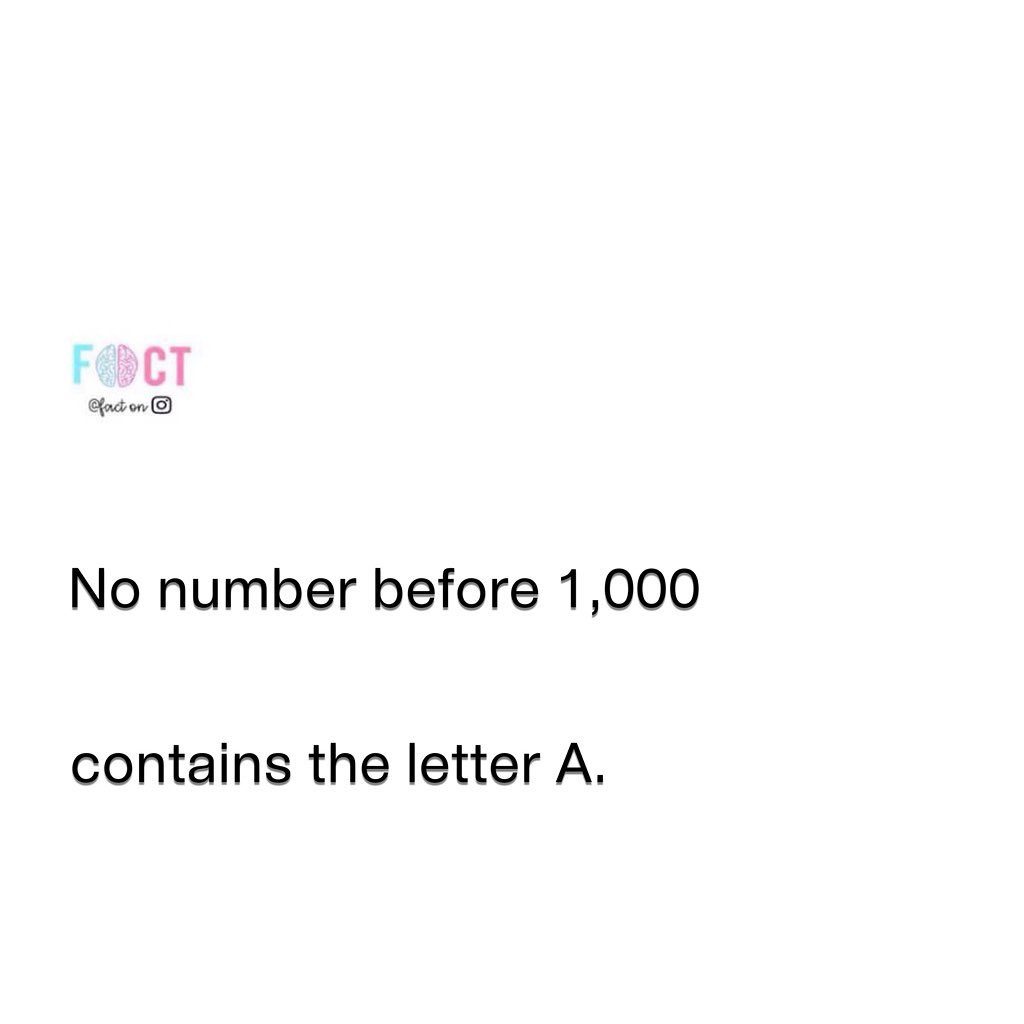
No Number Before 1,000
The phrase "No number before 1,000" hints at a deeper exploration of numerical significance. Traditionally, numbers are used to represent quantities, and 1,000 is a key threshold. It marks a transition from lower-level quantities to higher, more significant measurements. In many contexts, it represents a substantial quantity, often used in historical and contemporary references. For example, "One thousand years" is a common phrase that denotes significant historical periods, such as various eras in world history.
The Connection to Letters
While numbers quantify, letters communicate. Together, they form the basis of written language and numerical representation. The phrase "contains the letter A" emphasizes the role of letters in forming words and conveying meaning.
The Letter A
The letter 'A' is the first letter of the English alphabet, serving as a fundamental building block for countless words. Its significance lies in its versatility; it can appear in various positions within a word, from the beginning to the middle or end, influencing pronunciation and meaning. For instance, in the word "application," the letter 'A' shapes both the pronunciation and the meaning, showing how a single letter can profoundly impact communication.
The Overlap of Numbers and Letters
The intersection of numbers and letters is evident in various fields, including cryptography and coding. In cryptography, numbers and letters are used together to create codes and decrypt messages, ensuring secure communication. Similarly, in computer science, alphanumeric codes (combinations of letters and numbers) are used to write programming languages and commands.
Practical Tips
To better understand and appreciate the significance of numbers and letters, consider the following practical tips:
-
Explore Historical Contexts: Delve into historical periods defined by significant numbers, such as the 1,000-year milestones. Understanding these contexts can deepen your appreciation for the cultural and societal impact of these numerical thresholds.
-
Study Alphabetic Systems: Look at how different alphabets and languages use letters to convey meaning. This can provide insights into the universal and unique aspects of written communication.
-
Analyze Cryptographic Techniques: Examine how numbers and letters are combined in cryptography. This can offer a glimpse into the practical applications of these elements in securing information.
Important Takeaways
- Numbers and letters, while distinct in their roles, are interconnected in various ways, from historical milestones to modern-day cryptography.
- Understanding the significance of numbers and letters can enhance comprehension in fields ranging from linguistics to computer science.
- The interplay between numerical and written communication is a rich area of study with wide-ranging applications.
Conclusion
The intersection of numbers and letters is a fascinating field of study with broad implications. From historical milestones to modern cryptography, these elements play a crucial role in shaping our understanding of the world. By exploring their significance, we gain insights into both abstract numerical concepts and tangible written expressions, enriching our knowledge across various disciplines.
Watch the Reel
Questions readers ask
Why is the number 1,000 considered a significant threshold?
The number 1,000 is a significant threshold because it represents a major unit of measurement in various systems. It is the base for the metric system's kilo-prefix, indicating one thousand units, and it is also a crucial milestone in historical context, marking the transition from smaller, more manageable quantities to larger, more abstract ones.
What is the significance of the number 1,000 in text and numbers?
The number 1,000 is often used as a round figure in text and numbers to simplify communication and measurement. It serves as a clear, easily understood reference point, making it easier to convey large quantities and understand the scale of measurements in various contexts.
What does the absence of a number before 1,000 imply in a textual context?
The absence of a number before 1,000 in a textual context implies that the preceding number is 1000. This is generally done to avoid the repetition of the word 'thousand' and to simplify the text, making it easier for readers to comprehend the magnitude of the number.
How do numbers and letters intersect in language and mathematics?
Numbers and letters intersect in language and mathematics by creating a bridge between abstract numerical concepts and tangible written expressions. Numbers help quantify and measure the world, while letters form the basis of written communication, enabling the conveyance of complex ideas and emotions.
Why is the number 1,000 particularly significant in historical context?
The number 1,000 has been particularly significant throughout history as it marks the transition from smaller, more manageable quantities to larger, more abstract ones. It has been used to denote milestones, such as the 1,000th anniversary of an event, or to signify a large number of items or people.
Related deep dives
Similar reads based on topic and creator.


Recent articles
Fresh deep dives from the latest Reels we unpacked.




Comments
Be the first to comment.