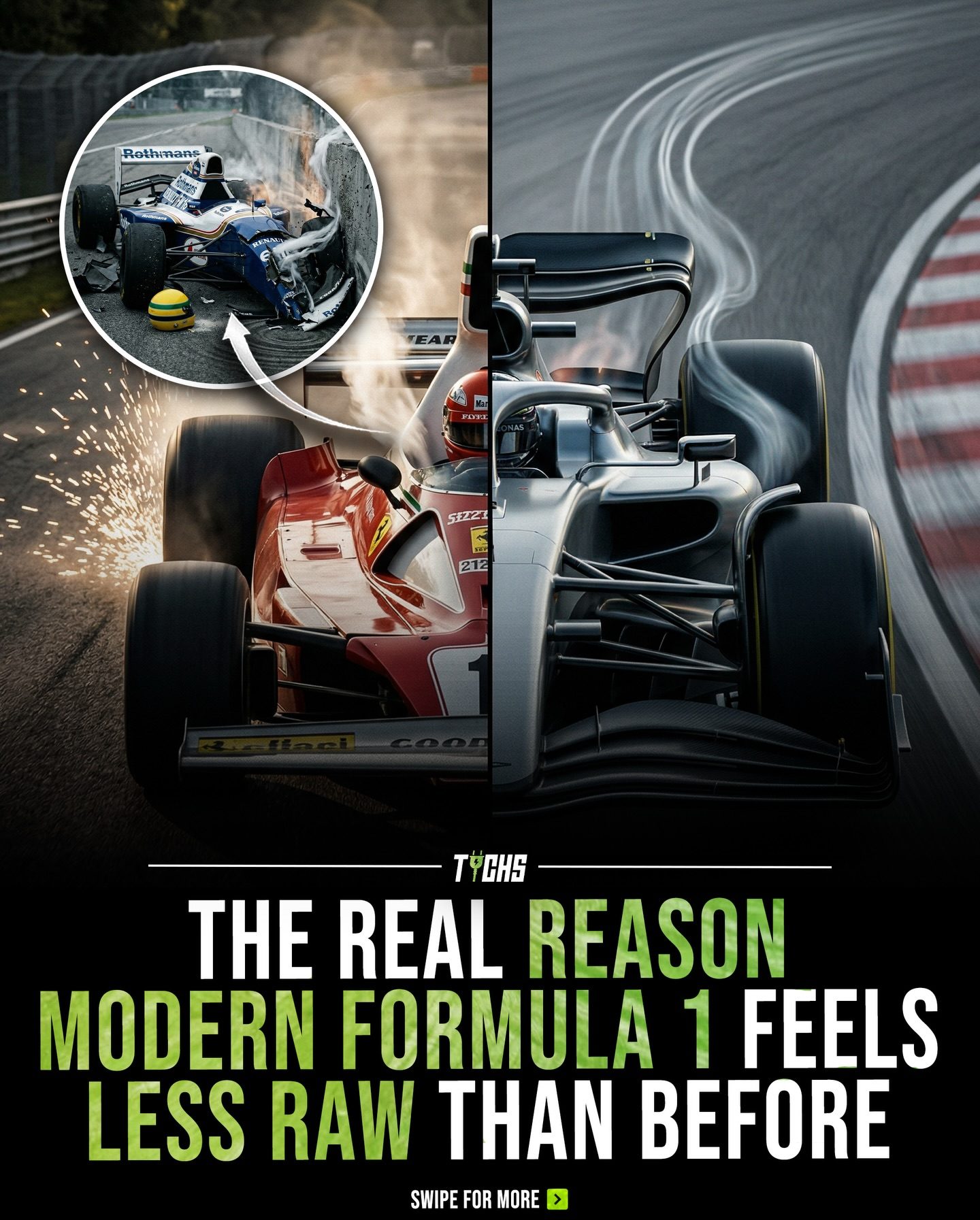
Formula 1 Evolution: From Raw Power to Safety and Efficiency
Modern Formula 1 racing has undergone significant changes, transitioning from an era of raw power and unpredictable experimentation to one focused on safety, efficiency, and sustainability. This shift is evident in the evolution of race cars, from the design and technology to the regulations that govern the sport.
Why This Matters
Understanding the evolution of Formula 1 is crucial for racing enthusiasts and those interested in automotive technology. The changes in racing cars reflect broader trends in engineering and safety, influencing not only the sport but also the automotive industry at large. The advancements in safety and efficiency have made the sport more competitive and sustainable, ensuring its longevity and relevance in the modern world.
The Evolution of Formula 1 Cars
The Wild Days of the Past
In the past, Formula 1 teams were known for their radical and innovative designs. Teams experimented with ground effect aerodynamics and turbocharged engines, pushing the limits of what was possible. The lack of strict regulations allowed for greater creativity and experimentation. This led to groundbreaking technologies and designs that were both thrilling and dangerous.
Some of the most memorable innovations from this era include:
- Ground Effect Aerodynamics: This technology revolutionized how cars handled, using the ground effect to keep the car stable at high speeds.
- Turbocharged Engines: These engines provided a massive boost in power, making the cars faster and more exciting to watch.
The Tragic Loss of Ayrton Senna
The tragic loss of Ayrton Senna in 1994 was a turning point for Formula 1. His death highlighted the dangers of the sport and prompted significant changes in safety standards. The FIA (Fédération Internationale de l'Automobile) responded with a series of safety improvements, including:
- Advanced Crash Standards: New regulations required cars to meet stricter crash standards, ensuring better protection for drivers.
- Safer Tracks: The design of racetracks was revised to reduce the likelihood of fatal crashes.
- The Halo Device: Introduced to protect drivers' heads from debris and impact, the halo has saved many lives.
These changes made the sport safer, but they also affected the overall feel of the racing, making it less raw and unpredictable.
The Shift to Efficiency and Sustainability
Modern Formula 1 cars are a far cry from their predecessors. Today's cars are designed with a focus on hybrid efficiency and energy recovery systems. The engines are more powerful but also more efficient, reflecting a broader shift towards sustainability in the automotive industry.
Some key features of modern F1 cars include:
- Hybrid Power Units: These combine traditional internal combustion engines with electric motors, providing a significant boost in performance while reducing fuel consumption.
- Energy Recovery Systems: Modern cars can recover energy from braking and exhaust heat, using it to power the electric motors, further improving efficiency.
Regulations and Standardization
The Fédération Internationale de l'Automobile (FIA) has introduced strict regulations to control innovation and reduce spending gaps between teams. These regulations include:
- Budget Caps: Introduced to limit spending and create a more level playing field, budget caps ensure that smaller teams have a chance to compete against larger, better-funded outfits.
- Standardized Components: Regulations stipulate standardized components, which reduce the variety of designs but ensure greater safety and standardization across the board.
These changes have made the sport more competitive, ensuring that the focus is on skill and strategy rather than just financial resources.
Practical Tips for Racing Enthusiasts
If you're a racing enthusiast, there are several ways to stay updated on the latest developments and enjoy the sport to the fullest:
- Attend Live Events: There's nothing like experiencing the thrill of Formula 1 live. It allows you to see the latest technologies in action and understand the dynamics of the sport better.
- Watch Documentaries and Highlights: Documentaries and highlight reels offer in-depth looks at the evolution of Formula 1, providing insights into the technology and behind-the-scenes workings of the teams.
- Follow Racing Forums and Blogs: Engaging with online communities can provide valuable insights and keep you updated on the latest news and developments in the world of Formula 1.
- Engage with Social Media: Following teams and drivers on social media platforms can give you a more personal connection to the sport and keep you informed about upcoming events and technological advancements.
Important Takeaways
The evolution of Formula 1 from an era of raw power and experimentation to one of safety, efficiency, and sustainability is a testament to the sport's ability to adapt and improve. Key takeaways include:
- Formula 1 has seen significant changes in design, technology, and regulations.
- Safety improvements, including the introduction of the halo device and stricter crash standards, have made the sport safer.
- Modern cars prioritize hybrid efficiency and energy recovery systems over raw power.
- Regulations and standardization have created a more level playing field, emphasizing skill and strategy over financial resources.
Conclusion
The evolution of Formula 1 is a fascinating journey through the world of motorsport, showcasing the remarkable advancements in technology, safety, and sustainability. From the raw, unpredictable racing of the past to the efficient, safe, and competitive racing of today, the sport continues to captivate fans and inspire innovation. As Formula 1 continues to evolve, it remains a thrilling and dynamic arena for cutting-edge technology and human skill.
Watch the Reel
Questions readers ask
How have F1 safety features evolved over the years?
F1 safety features have advanced significantly. Early cars had minimal protection, but modern designs include advanced crash protection systems, stronger monocoques, and enhanced cockpit safety cells. Additionally, the Halo device, introduced in 2018, provides critical head protection for drivers.
What are the key differences between past and present F1 cars?
Past F1 cars were notorious for their raw power and risky designs, often prioritizing speed over safety. In contrast, modern F1 cars focus on efficiency, sustainability, and advanced safety features. Today's cars are equipped with hybrid power units, aerodynamic advancements, and stringent safety regulations.
How has the focus on F1 efficiency changed the sport?
The shift towards efficiency in F1 has led to the development of hybrid power units and aerodynamic advancements. These changes have not only made racing more competitive but also influenced the broader automotive industry by promoting sustainable and efficient technologies.
What role do F1 safety regulations play in the sport's evolution?
F1 safety regulations have been crucial in transforming the sport. They have mandated advanced safety features, such as crash data recorders and improved safety structures. These regulations ensure that F1 remains at the forefront of automotive safety, benefiting both drivers and the broader automotive industry.
What are some of the innovative designs that have emerged in modern F1 cars?
Modern F1 cars feature several innovative designs, including active aerodynamic elements, energy recovery systems, and lightweight materials. These advancements have not only improved performance but also enhanced safety and sustainability, reflecting the broader trends in engineering and automotive technology.
How has the evolution of F1 crash protection improved the sport?
The evolution of F1 crash protection has been remarkable. From simple roll cages to advanced crash structures, these advancements have significantly reduced the risk of severe injuries. The introduction of the Halo device and improved monocoques have further enhanced driver safety, making the sport more secure for all participants.
What sustainability improvements have been made in Formula 1?
Formula 1 has made significant strides in sustainability, focusing on fuel efficiency and reducing environmental impact. The introduction of hybrid power units, which combine internal combustion engines with electric motors, has led to more efficient and sustainable racing. These efforts have not only improved the sport but also influenced the broader automotive industry.
Related deep dives
Similar reads based on topic and creator.




Recent articles
Fresh deep dives from the latest Reels we unpacked.




Comments
Be the first to comment.