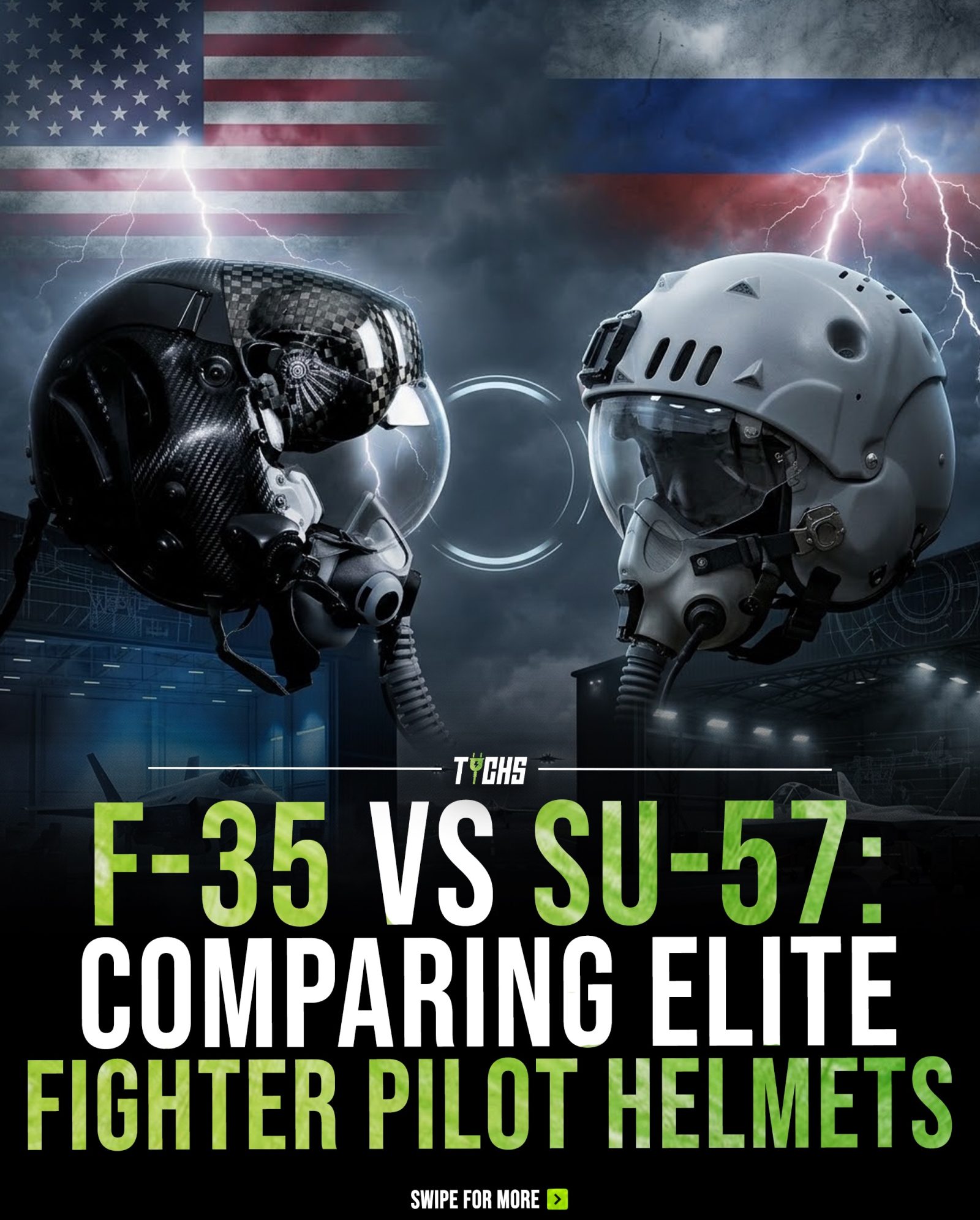
The Evolution of Fighter Pilot Helmets: F-35 vs. Su-57
Modern fighter jets have transformed the role of the pilot's helmet from mere protective gear to a sophisticated computer. The F-35 Helmet Mounted Display System (HMDS) and the Su-57 helmet are prime examples of this evolution, designed to provide pilots with critical battlefield information without the need to look down at cockpit instruments. These advanced helmets integrate various technologies to enhance a pilot's situational awareness, targeting capabilities, and decision-making speed.
Why This Matters
As air warfare becomes increasingly data-driven, the helmet has become one of the most crucial technologies inside a fighter aircraft. The ability to process and display information in real-time can be just as powerful as the aircraft's speed or firepower. This is where the F-35 HMDS and the Su-57 helmet shine, offering features like 360° sensor fusion, augmented reality displays, and helmet-mounted missile cueing.
Key Features of F-35 and Su-57 Helmets
F-35 Helmet Mounted Display System (HMDS)
The F-35 HMDS is a standout feature of the Lockheed Martin F-35 Lightning II. This helmet incorporates a 360° sensor fusion system, which integrates data from various sensors to provide pilots with a comprehensive view of their surroundings. The HMDS also includes an augmented reality display that overlays critical information directly onto the pilot's field of view, allowing them to track targets, identify threats, and make informed decisions in a fraction of a second.
Su-57 Helmet
The Su-57 helmet, part of the Russian Su-57 fighter jet, offers its own set of advanced features. One of the most notable is the helmet-mounted missile cueing system. This system allows the pilot to designate a target by simply looking at it, streamlining the targeting process and reducing the time needed to engage threats. The Su-57 helmet is also designed for night operations, providing enhanced visibility and situational awareness in low-light conditions.
Cost Comparison
The cost of these advanced helmets reflects their technological sophistication and the critical role they play in modern air combat. The F-35 HMDS is estimated to cost around $40,000, while the Su-57 helmet is significantly more expensive, with an estimated cost of approximately $350,000. These costs highlight the substantial investment required to equip modern fighter pilots with the latest in avionics and display technology.
Practical Tips for Understanding Fighter Pilot Helmets
When examining the features and capabilities of fighter pilot helmets, consider the following practical tips:
-
Understand the Technology: Familiarize yourself with the key technologies integrated into modern fighter pilot helmets, such as sensor fusion, augmented reality, and missile cueing. These technologies are designed to enhance the pilot's situational awareness and decision-making capabilities.
-
Evaluate the Cost: Recognize that the cost of these helmets is a reflection of their advanced features and the critical role they play in air combat. The higher cost is justified by the significant advantages they offer in terms of performance and safety.
-
Consider the Application: Understand that these helmets are designed for specific applications, such as night operations or data-driven combat scenarios. Their features and capabilities are tailored to meet the unique demands of modern air warfare.
Important Takeaways
-
Advanced Technology: Modern fighter pilot helmets, such as the F-35 HMDS and the Su-57 helmet, are equipped with advanced technologies that provide pilots with critical battlefield information in real-time.
-
Cost and Investment: The cost of these helmets is high, reflecting the significant investment required to equip modern fighter pilots with the latest in avionics and display technology.
-
Role in Modern Warfare: As air warfare becomes increasingly data-driven, the pilot's helmet has evolved into one of the most important technologies inside a fighter aircraft. The ability to process and display information in real-time can be just as powerful as the aircraft's speed or firepower.
Conclusion
The F-35 HMDS and the Su-57 helmet represent the pinnacle of modern fighter pilot technology. These helmets are designed to provide pilots with the critical information they need to make split-second decisions during combat. As the role of the pilot's helmet continues to evolve, it is clear that these advanced systems will play an increasingly important role in the future of air warfare.
Watch the Reel
Questions readers ask
What are the primary functions of the F-35 HMDS and the Su-57 helmet in modern air combat?
The primary functions of these advanced helmets are to provide pilots with real-time battlefield information, enhance situational awareness, and improve targeting capabilities. They enable pilots to process and act on data instantly, reducing the need to look down at cockpit instruments. This allows for faster decision-making and improved combat performance.
How does the F-35 HMDS differ from traditional fighter pilot helmets?
The F-35 HMDS is a significant leap from traditional helmets in several ways. It integrates various technologies, including augmented reality displays, to project essential flight and targeting data directly onto the pilot's visor. It also has a night vision camera that provides a clear view of the environment, and it helps to keep the pilot’s head up and focused on the external environment.
What specific technologies are integrated into the Su-57 helmet to enhance pilot capabilities?
The Su-57 helmet incorporates a wide-angle display that provides pilots with a comprehensive view of their surroundings. It also includes a high-resolution camera system that allows for enhanced situational awareness and targeting capabilities. The helmet can also detect and display various signals, enabling pilots to instantly identify and respond to threats.
How do the F-35 and Su-57 helmets contribute to situational awareness in modern air combat?
Both helmets contribute to situational awareness by providing pilots with real-time data and visual information directly in their line of sight. This includes flight information, targeting data, and warnings about potential threats. By keeping the pilot's focus outward, these helmets help maintain a constant awareness of the surrounding environment, which is crucial for quick decision-making and effective combat operations.
What are the key advantages of using advanced helmets like the F-35 HMDS and the Su-57 helmet in fighter jets?
The key advantages include improved situational awareness, enhanced targeting capabilities, and faster decision-making. These helmets allow pilots to access critical information without diverting their gaze from the outside world, making them more effective in high-stakes combat situations. Additionally, they reduce the cognitive load on pilots by presenting information in an easily digestible format, which minimizes the risk of errors.
Can the F-35 HMDS and Su-57 helmet be used in conjunction with other advanced technologies in fighter jets?
Yes, both the F-35 HMDS and the Su-57 helmet are designed to integrate seamlessly with other advanced technologies in modern fighter jets. They can work in conjunction with on-board sensors, radar systems, and artificial intelligence to provide pilots with a comprehensive and up-to-date overview of the battlefield. This integration ensures that pilots have access to the most current and relevant information, enhancing their overall combat effectiveness.
Related deep dives
Similar reads based on topic and creator.




Recent articles
Fresh deep dives from the latest Reels we unpacked.




Comments
Be the first to comment.