Humanoid Robots and the Challenge of Climbing Ladders
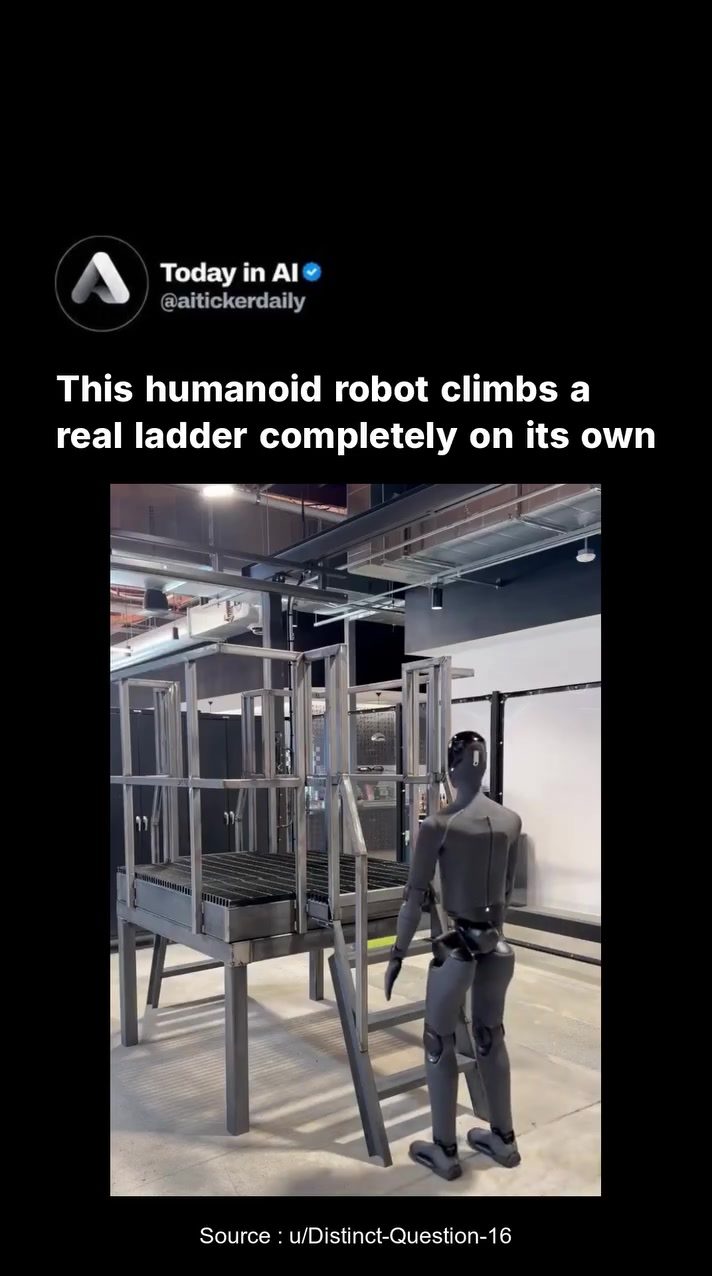
Humanoid robots have long been at the forefront of robotics research, pushing the boundaries of what machines can achieve. Recent advancements have brought us closer to a future where these robots can navigate complex environments designed for humans, rather than just flat factory floors. A standout example of this progress is the F.03 humanoid robot's demonstration of climbing a full metal ladder completely autonomously.
Context: The Significance of Ladder Climbing
Climbing a ladder may seem like a mundane task for humans, but for robots, it's a complex challenge. This task demands whole-body balance, coordinated hand and foot placement, and precise weight shifting, especially at height. For a robot to master this, it needs sophisticated sensors, advanced algorithms, and precise motor control. Achieving this milestone is a significant step toward creating robots that can operate in human workspaces, undergoing the same challenges as human workers.
Main Discussion
The Complexity of Ladder Climbing
For a humanoid robot, climbing a ladder involves several intricate processes. The robot must first identify the ladder and its rungs. This requires advanced computer vision systems that can detect and differentiate between the various components of the ladder. Once the ladder is identified, the robot must then plan its movements, calculating the exact force and trajectory needed to ascend safely.
The robot's balance is crucial during this process. Humans instinctively shift their weight and adjust their center of gravity to maintain balance. A robot must do the same, but it relies on complex algorithms and real-time sensor data to achieve this. The robot must also coordinate the movement of its hands and feet, placing each foot carefully on the rungs and using its hands to grip and support itself.
The F.03 Humanoid Robot's Demonstration
The F.03 humanoid robot, developed by aitickerdailyFigure, showcased its ability to climb a metal ladder autonomously. This demonstration highlights several key advancements in robotics:
- Autonomous Navigation: The robot climbed the ladder without any teleoperation, meaning it made all decisions and movements independently. This level of autonomy is essential for robots to operate in real-world environments where immediate human control may not be possible.
- Whole-Body Balance: The F.03 robot demonstrated impressive whole-body balance, shifting its weight and adjusting its center of gravity to maintain stability. This is a critical aspect of climbing a ladder, as any loss of balance could result in a fall.
- Coordinated Hand and Foot Placement: The robot's ability to place its hands and feet precisely on the ladder rungs is a testament to its advanced motor control and sensing capabilities. This precision is necessary for safe and efficient climbing.
The Role of AI in Robotics
The F.03 robot's demonstration underscores the growing role of artificial intelligence (AI) in robotics. AI enables robots to process vast amounts of data in real-time, make decisions based on that data, and adapt to changing circumstances. In the case of ladder climbing, AI allows the robot to analyze its surroundings, plan its movements, and execute those movements with precision.
AI also plays a crucial role in improving the robot's balance and coordination. Advanced algorithms can simulate various scenarios and optimize the robot's movements to achieve the desired outcome. This iterative process, known as machine learning, allows robots to improve their performance over time.
Practical Tips for Advancing Humanoid Robotics
For those involved in robotics research, the F.03 robot's demonstration offers several practical insights:
- Invest in Advanced Sensors: High-quality sensors are essential for robots to perceive their environment accurately. This includes cameras, lidar, and other sensing technologies that can provide the data needed for complex tasks like ladder climbing.
- Develop Sophisticated Algorithms: The algorithms that power a robot's decision-making and movement control must be sophisticated enough to handle real-world challenges. This may involve techniques like machine learning, reinforcement learning, and computer vision.
- Focus on Whole-Body Balance: Achieving whole-body balance is crucial for robots to perform complex tasks. This requires careful design of the robot's physical structure and development of advanced control algorithms.
- Encourage Multidisciplinary Collaboration: Advancing robotics requires expertise from various fields, including mechanical engineering, computer science, and AI. Encouraging collaboration among these disciplines can lead to innovative solutions and rapid progress.
Important Takeaways
The F.03 humanoid robot's demonstration of climbing a metal ladder autonomously highlights several key points:
- Humanoid robots are capable of performing complex tasks in real-world environments, demonstrating their potential to operate in human workspaces.
- Ladder climbing is a challenging task that requires advanced sensors, algorithms, and motor control, showcasing the sophistication of modern robotics.
- AI plays a crucial role in robotics, enabling robots to process data, make decisions, and adapt to changing circumstances.
- Advancing robotics requires investment in sensors, algorithms, and multidisciplinary collaboration, emphasizing the importance of continuous innovation and collaboration.
Conclusion
The F.03 humanoid robot's ability to climb a metal ladder autonomously is a remarkable achievement in robotics. It demonstrates the potential of humanoid robots to navigate complex environments designed for humans, marking a significant milestone in the field. As robotics continues to advance, we can expect to see more impressive feats, bringing us closer to a future where robots and humans work together in harmony.
Watch the Reel
Related deep dives
Similar reads based on topic and creator.




Recent articles
Fresh deep dives from the latest Reels we unpacked.




Comments
Be the first to comment.