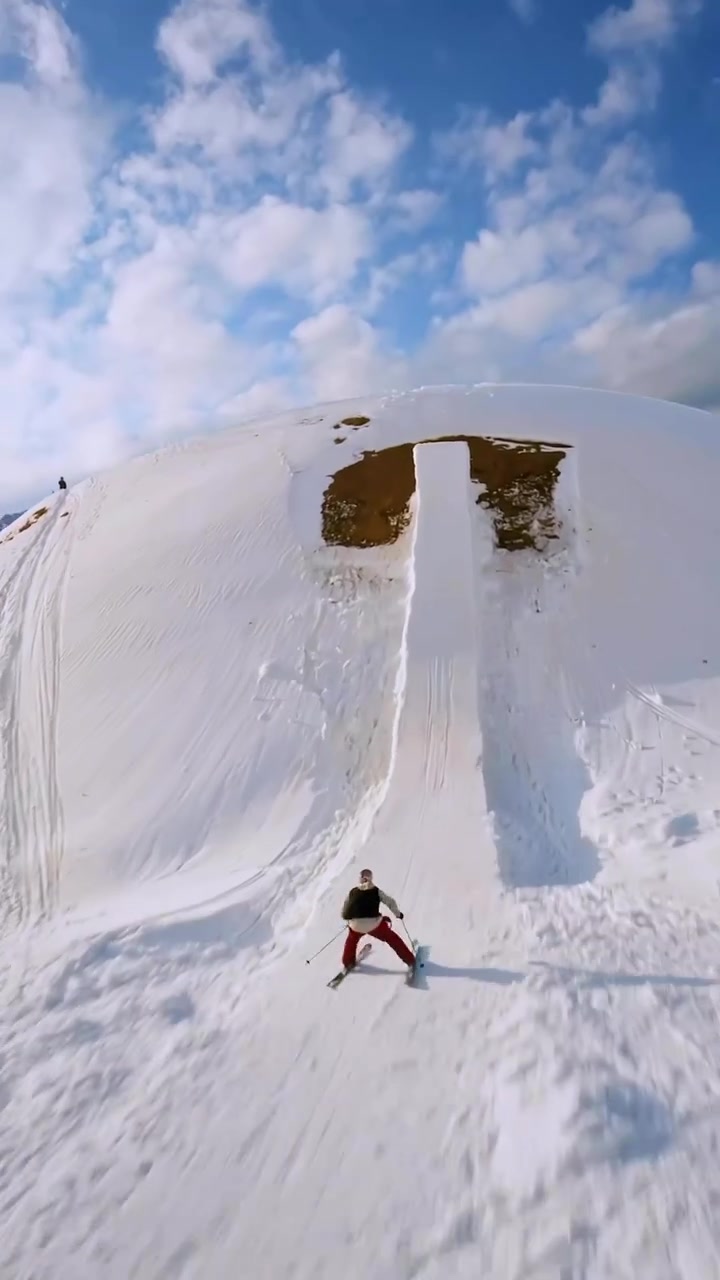
A skier soars through the air, executing a daring trick off the lip of a massive snow-covered jump. This is the heart-pounding world of extreme skiing.
The Speed and Thrill of Ski Jumping
Extreme skiing combines the precision of traditional alpine skiing with the daredevil spirit of extreme sports. Specifically, ski jumping involves launching down a large, steep hill and jumping off a lip at high speeds before landing gracefully downhill. In a ski jump, the aim is to cover as much distance as possible. The video shows a skier launching a trick mid-air, The skier achieves the jump and trick in a snowy mountain landscape with a blue sky. Extreme skiing makes speed and aerials the main attractions, rewarding creativity and skill. The critical elements that distinguish extreme skiing from traditional skiing include speed and the kind of jumps and tricks performed. Typically, the sport requires a steep slope, a "kicker" or lift-off lip, and ample distance to land comfortably. The incline and terrain are specially designed for speed and the airborne acrobatics that lie between launch and arrival. The range of tricks that a skier can perform mid-air is vast. Sometimes, these maneuvers combine several flip and twist rotations. The more complex the trick, the more points they can score in competitions. Extreme skiing, therefore, requires not only physical prowess but also masterful control over the equipment and surrounding conditions. The distinctiveness of extreme skiing comes from the unparalleled thrill of the sport and the unique challenges it poses. Skiers must navigate high speeds, unpredictable terrain, and tricky landings. Ski jumping is particularly extreme, pushing skier control to the limit.
Behind the Thrill and Drama: A New Breed of Spectator Sport
Extreme skiing, including ski jumping, has become a cultural touchstone for adventure seekers. The sport taps into a broader cultural fascination with adrenaline-fueled activities, pushing the limits of human capabilities. In the past decade, the popularity of extreme sports has surged, driven by the internet and social media, which offer easy access to high-intensity content. This trend has allowed niche activities like ski-jumping to gain mainstream traction. The thrill of extreme skiing now attracts more than just hardcore fans, and viewers from across the globe live for these moments. This increased visibility has also brought sponsorship opportunities for athletes and brands. The sport’s edge-of-your-seat intensity attracts big names, from equipment manufacturers to apparel brands. The symbiotic relationship between athletes and sponsors further propels the sport’s visibility and industry growth.
The Mechanics of Skier-In-Motion
The Physics of Takeoff
A ski jump is a critical moment when the skier accelerates from a high speed downhill run, and the skis lift off the ground at the end of the jump ramp. Speed, the length of the ramp, and the jump angle are the primary variables required to nail the jump and trick. The physics of a skijump involves the skier accelerating under the gravitational pull and the centrifugal force. Takeoff is influenced by the skier's speed, body position, and stance. The ramp's angle and the skier's technique also play crucial roles in ensuring a smooth lift-off -- typically, a slight lean forward helps in elevating the skis. The skier flexes the body forward towards the springboard, and the greater this forward flexion, the higher the jump and the faster the rotation. Time spent airborne depends on the steep angle of the ramp; a more upright landing position ensures that a skier can successfully execute their trick.
Tricks and Maneuvers in the Air
Mid-air, the skier is not a passive passenger; they must execute precise movements to control the skis during the rotation while in the air, landing in a controlled manner. In the extreme skiing world, the more complex the trick, the higher the accolades. Tricks can be twists, flips, or a combination of both. For instance, a 360-degree spin is basic, while a backflip requires significant skill. Toe-to-Tail Rotation, for example ("I'm in my bag") is a complex maneuver, rotating the ski horizontally. Tricks are scored based on various factors, including difficulty. The ski-jumping world is rigorous—judges evaluate performance on precision, creativity, and technique. The related factor is the control that skiers maintain mid-air. Skilled skiers can brake the jump by hitting the tail of their ski on the edge of the lip, and the softer the jump, the more the rotation slows down. Other factors that contribute to controlling the jump include the weight distribution and balance on the skies.
Precision-Landed Touchdown
The landing is as crucial as the jump. The skier aims to touch down gently, absorbing the impact with knees bent to prevent injury. Optimal control of speed and body position reduces the shock to a skier's body. The jump's design must allow a safe landing area to accommodate the skier's approach. The vertical and horizontal approach speed to the jump must be considered when accounting for the landing.
The Mountain Range: A Generation of Risk-Takers
The Ski Jumping Culture
A deep dive into ski jumping culture reveals a community driven by a shared love for adventure and camaraderie. However, safety is paramount, and skiers employ a variety of techniques to mitigate risk. This includes meticulous preparation, rigorous training, and the use of cutting-edge equipment.
Ski Equipment
Equipment for extreme sports is scientific, with, for example, skis that leverage carbon fiber for strength and lightweight. The sport's evolution has led to innovative materials and designs, enhancing both performance and safety. Ski boots, for instance, have been re-engineered to provide support and protection, balancing energy absorption with weight.
Skiing the Mountain: Gliding in a Blue Sky
Ski Jumping is as much about the thrill of speed and adrenaline as it is about the beauty of the natural surroundings. Ski jumping is an art form -- until you fall, or the snow gets you. There is nothing soaring a ski jump in a mountain range than the feeling of absolute freedom and the rush of aerodynamic power.
Watch the Reel
Questions readers ask
What exactly is the difference between extreme skiing and traditional alpine skiing?
Extreme skiing and traditional alpine skiing differ primarily in the level of risk, speed, and the types of tricks and jumps performed. Extreme skiing focuses on high-speed descents and aerial maneuvers, often involving complex flips and twists, while traditional alpine skiing is more about precision and control on varied terrain. Additionally, extreme skiing often requires specialized equipment and terrain designed for high-speed jumps and landings, which aren't typically found in traditional skiing.
How do skiers manage to perform such complex tricks mid-air?
Skiers performing complex tricks mid-air rely on a combination of physical prowess, equipment mastery, and precise control over their movements. The tricks often involve multiple rotations and flips, which require extensive training and practice. The design of the jumps, including the length of the ramp and the angle of takeoff, also play a crucial role in allowing skiers to execute these maneuvers safely and effectively.
What kind of training is involved in preparing for extreme skiing competitions?
Preparing for extreme skiing competitions involves rigorous training that focuses on both physical conditioning and technical skill development. Athletes typically spend a lot of time practicing on specialized jumps and terrain to build up their speed, control, and aerial maneuverability. Additionally, they often work closely with coaches and trainers to refine their techniques and ensure they are physically fit to handle the demands of the sport.
Is extreme skiing becoming more accessible to the general public, or is it still primarily a niche sport?
While extreme skiing has traditionally been a niche sport due to its high-risk nature and the specialized skills required, its popularity has been growing, especially with the rise of social media. This increased visibility has made it more accessible to a broader audience, attracting new fans and even inspiring some to try the sport. However, it remains a high-risk activity and is unlikely to become as mainstream as traditional skiing.
Are there any notable athletes or competitions in the world of extreme skiing that stand out?
The world of extreme skiing has several notable athletes and competitions. Athletes like Tom Wallisch and Bobby Brown are known for their daring tricks and high-level performances. Competitions like the X Games and the Freeride World Tour are major events where extreme skiers showcase their skills, attracting large audiences and significant media attention. These events often feature a variety of disciplines, including ski jumping and big mountain skiing, and have helped to elevate the sport's profile globally.
Related deep dives
Similar reads based on topic and creator.



Recent articles
Fresh deep dives from the latest Reels we unpacked.



Comments
Be the first to comment.