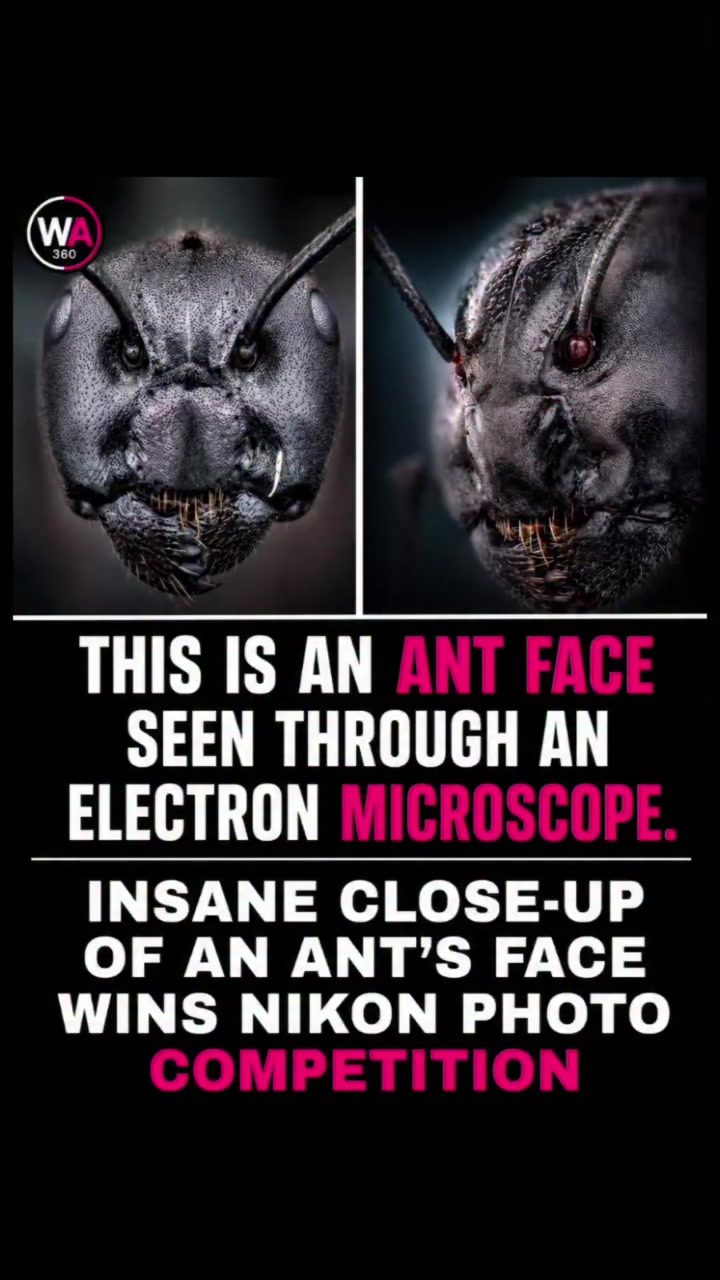
Ant Face Microscopic View
Ants are ubiquitous, but have you ever considered what an ant's face looks like under extreme magnification? The intricate textures and dramatic contours revealed through high-detail macro photography and photomicrography are truly astonishing. This exploration delves into the fascinating world of microscopic imaging, highlighting how perspective, lighting, and magnification can dramatically alter our perception of tiny creatures.
Context / Why this matters
Macro photography and photomicrography are powerful tools that transform our understanding of the natural world. These techniques allow us to see beyond the naked eye, revealing intricate details and textures that are otherwise invisible. The images captured through these methods can challenge our perceptions and inspire awe at the complexity of life forms we often overlook.
In this case, macro photography and photomicrography are used to capture the face of an ant. The two images featured—the Macro Classic and the Viral Contender—provide a stark contrast, showing how different techniques and magnification levels can produce vastly different visual outcomes. The Macro Classic, with its high-detail close-up, and the Viral Contender, with its dramatic lighting and extreme close-up framing, demonstrate the versatility and impact of these imaging methods.
Main discussion
The Macro Classic: High-Detail Macro Photography
The Macro Classic photograph is a renowned example of high-detail macro photography. This technique involves capturing extremely close-up images of small subjects, revealing intricate details that are not visible to the naked eye. In this case, the ant's face is showcased with remarkable clarity, highlighting the intricate textures and patterns that make up its surface.
Macro photography typically uses specialized lenses designed to focus on subjects at very close distances. These lenses allow photographers to capture fine details and textures, resulting in images that are both visually striking and scientifically informative. The Macro Classic image of the ant's face is a testament to the power of macro photography, offering a fresh perspective on a familiar insect.
The Viral Contender: Photomicrography Contest Winner
The Viral Contender, an award-honored entry in the Nikon Small World photomicrography contest, takes a different approach. Captured under 5x magnification, this image showcases the ant's face with dramatic lighting and extreme close-up framing. The result is an otherworldly view that could be mistaken for a scene from a fantasy movie.
Photomicrography involves using a microscope to capture images at high magnifications. This technique can reveal details that are completely invisible to the human eye, offering a unique perspective on the microscopic world. The Viral Contender image demonstrates the potential of photomicrography to produce stunning, surreal visuals that captivate the imagination and inspire wonder.
The Impact of Magnification and Lighting
Both the Macro Classic and the Viral Contender images highlight how magnification and lighting can drastically alter our perception of small subjects. Magnification allows us to see fine details and textures that are otherwise hidden, while lighting can enhance these features, creating dramatic contrasts and shadows. The combination of these elements can transform a familiar insect into something that appears almost alien.
The Macro Classic image, with its high-detail close-up, provides a more naturalistic view of the ant's face, allowing us to appreciate the intricate textures and patterns that make up its surface. The Viral Contender, on the other hand, offers a more surreal and dramatic perspective, highlighting the potential of photomicrography to produce visually striking and imaginative images.
Practical tips
Choosing the Right Equipment
To achieve high-quality macro and photomicrography images, it's essential to have the right equipment. For macro photography, specialized macro lenses or attachment lenses designed for close-up work are crucial. These lenses allow you to focus on subjects at very close distances, capturing fine details and textures with precision.
For photomicrography, a microscope equipped with a camera attachment is necessary. High-quality microscopes, such as those produced by Nikon and other leading brands, offer the magnification and resolution needed to capture detailed images of microscopic subjects.
Mastering Lighting Techniques
Lighting plays a critical role in both macro photography and photomicrography. The right lighting can enhance the details and textures of your subject, creating dramatic contrasts and shadows that add depth and interest to your images. Experimenting with different lighting setups, such as ring lights and side lights, can help you achieve the desired effect.
For macro photography, natural light or diffused artificial light can provide a soft, even illumination that highlights the subject's textures and details. In photomicrography, specialized lighting systems designed for microscopy, such as LED ring lights, are often used to achieve the best results.
Post-Processing for Enhanced Detail
Post-processing techniques can further enhance the details and textures captured in your macro and photomicrography images. Software such as Adobe Photoshop and Lightroom offer a range of tools for adjusting contrast, sharpness, and color to bring out the best in your images.
For example, increasing contrast can make the textures and patterns in an ant's face more pronounced, while sharpening can enhance the fine details and edges. Adjusting color can also help to emphasize certain features, making your images more visually appealing and informative.
Important takeaways
The world of macro photography and photomicrography offers fascinating insights into the intricate details and textures of tiny creatures. The Macro Classic and the Viral Contender images of an ant's face demonstrate how different techniques and magnification levels can produce vastly different visual outcomes. The combination of magnification and lighting can transform a familiar insect into something that appears almost alien, revealing the complexity and beauty of nature's smallest forms.
These imaging methods not only provide a fresh perspective on familiar subjects but also inspire awe and curiosity. By capturing details that are invisible to the naked eye, macro photography and photomicrography challenge our perceptions and deepen our understanding of the natural world.
Conclusion
Exploring the microscopic world through macro photography and photomicrography reveals a realm of beauty and complexity that is often overlooked. The images of an ant's face, captured through these techniques, showcase the power of magnification and lighting to alter our perception and inspire wonder. Whether you're a photography enthusiast or a science enthusiast, delving into the world of microscopic imaging can open your eyes to a hidden universe of detail and intricacy.
Watch the Reel
Questions readers ask
What are the key differences between macro photography and photomicrography when it comes to viewing an ant's face?
Macro photography uses specialized lenses to capture close-up images of subjects, revealing details that are not visible to the naked eye. Photomicrography, on the other hand, uses microscopes to magnify subjects even further, often to a level where individual cells or microscopic structures can be observed. While macro photography provides a more naturalistic view, photomicrography delves deeper into the microscopic world, showing structures that are far too small for standard macro lenses.
What equipment is needed to capture extreme close-up images of an ant's face?
To capture extreme close-up images of an ant's face, you will need specialized equipment such as a macro lens or a microscope with a camera attachment. Macro lenses allow for high magnification at close distances, while microscopes can achieve even greater magnification levels. Additionally, a stable setup, good lighting, and a steady camera or microscope mount are essential for capturing sharp, detailed images.
Can an electron microscope be used to view ants up close?
Yes, electron microscopes can be used to view ants up close, but they are not typically used for general purposes due to their high cost and specialized nature. Electron microscopes use a beam of electrons to achieve incredibly high magnification levels, revealing details at the nanometer scale. This makes them ideal for scientific research but less practical for general insect macro photography.
How does lighting affect the visibility of ant face contours and textures?
Lighting plays a crucial role in revealing the contours and textures of an ant's face. Side lighting can highlight the dramatic contours, while backlighting can create a silhouette effect. Diffused lighting helps to minimize glare, allowing for a clearer view of the intricate textures. Experimenting with different lighting angles and intensities can significantly enhance the visibility of these fine details.
What kind of perspective do macro and photomicrography images of ants provide?
Macro and photomicrography images of ants offer a unique perspective by magnifying the tiny details that are invisible to the naked eye. These images can transform our perception of ants, showcasing their intricate structures and textures. By revealing the unseen beauty of an ant's face, these techniques challenge our preconceptions and offer a fresh appreciation for these small creatures.
Are there any safety considerations when using macro photography or photomicrography to capture ant images?
While macro photography and photomicrography are generally safe, there are a few considerations to keep in mind. Ants can be delicate and may be harmed by improper handling or excessive lighting. Additionally, the use of microscopes and specialized equipment requires care to avoid damage. It is important to handle the subject and equipment gently to ensure the safety and well-being of the ants and the integrity of the equipment.
Related deep dives
Similar reads based on topic and creator.




Recent articles
Fresh deep dives from the latest Reels we unpacked.




Comments
Be the first to comment.