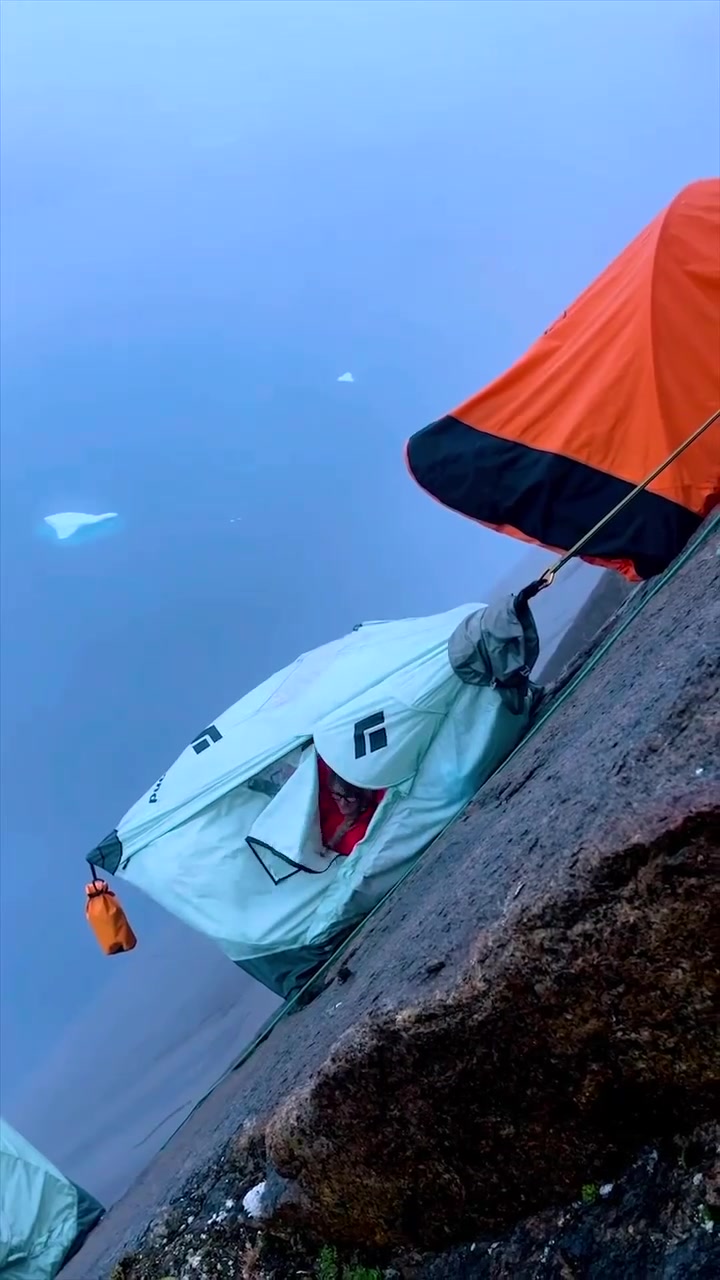
The adventurer is rappelling down a cliff. As the climber sets up a tent on a rocky ledge, secured with ropes and gear, it seems the individual is experiencing a form of extreme camping.
The Thrill of the Vertical
Extreme camping, like the kind shown, involves pitching a tent in highly challenging, rugged landscapes. The most intense forms involve rock faces, summits, or ocean floes. Extreme camping is not your typical camping experience. First, there’s the camping setup itself — a tent is positioned in an extremely precarious location. Rappelling down cliffsides takes a specific skill set, requiring a certain type of gear. As the person rappels out in a harness and ropes, they are said to be utilizing Black Diamond gear. Black Diamond is known for making high-quality rope and safety gear, which are essential for setting up camp in such conditions.
Wild Trails as the New Playground
Extreme camping sits at the frontier of the growing trend of outdoor sports and adventuring. Outdoor activities are gaining popularity in a post-pandemic world. It is also a part of a broader trend toward off-the-grid escapades. Geared towards the intrepid, extreme camping is about testing the boundaries of familiarity — "Extreme ways are back again, extreme places I didn't know." From the reels, we get a glimpse of an exciting route that is difficult but worth experiencing for the thrill of it.
The Indoor Camping World
Limited Essentials
On the cliff, this camper set up a minimal tent and ropes. This isn’t just a light pack, but a streamlined survival kit: each piece of gear serves a purpose. When choosing an extreme camping gear kit, one must discard everything unnecessary — "I broke everything new again, everything that I'd owned. I threw it out the windows, came along".
Reaching New Heights
The most distinctive feature of rock face camping here is the altitude. Whereas traditional camping might involve scenery at sea level, or a tent in a flat meadow, the climber here is on the edge of a cliff. The gear is trimmed down to haul up, and it’s important to know the exact altitude to acclimatize. The camp isn’t just at this height, it’s on this height — there’s nothing behind or below it. Wind and thermal effects alter camping on cliffsides.
Braving the Elements
There’s no getting around it — cliff-side camping is dangerous. Even basic mistakes can result in severe injury or frostbite. Many climbers actually rely on the tent ropes to move. Climbing and rappelling gear are therefore integral to these extreme forms of camping. They are essential for securing yourself against the cliff-face, warming up, cooling down, and sleeping. “Extreme camping is not a trend for amateurs,” said [one commenter]. Simply put, cliff-side camping is great thrills — but no one should try it without expert training in the ropes and any circumstances.
Thinking of Tackling the Risk?
The greatest risk from cliff-side camping or mountaineering involves weather, terrain hazards, and the possibility that something might not go exactly as expected. Even with a survival kit, most people do not survive if they go over a cliff or fall into a crevasse. For those interested in the experience:
- Start on Low-Height Walls. Instead of starting with a tall rock face, start practicing with lower walls.
- Learn From Local Experts — pick up lessons from local guides, who are usually adept with the equipment and ropes.
- Don’t Be Fooled By Visuals — be aware if a cliff might be treacherous even if it looks not-so-bad from a distance — crevasses, slopes, and other hazards are not always obvious when approaching.
- Have the Proper Gear. it’s important to be sure to have basic gear on you at all times.
- Listen to Your Body. Know your limits. Sometimes your body knows before you consciously realize it that there's danger.
- Learn the Rules. Know how to climb, rappel, and ascend with your harness, helmet, and ropes. The script in the video encapsulates the idea that advanced climbers may discard gear that isn't necessary, but that doesn't mean they discard the gear blindly. They know exactly what's expendable and what's crucial.
The End of a Rock's Edge
Extreme camping is both an extension of and a departure from traditional camping. It pushes the form to its farthest reaches, testing the limits of what’s doable and safe. But it also offers a distilling, a shearing away of non-essentials, down to a pure experience that isn’t dulled by convenience. This is what the climber on the cliff gets to enjoy.
Watch the Reel
Questions readers ask
What exactly is extreme camping and how does it differ from traditional camping?
Extreme camping involves setting up camp in highly challenging and rugged landscapes, such as rock faces, summits, or ocean floes. Unlike traditional camping, which often takes place in relatively safe and accessible locations, extreme camping requires specialized gear and skills to navigate and survive in precarious environments.
What kind of gear is essential for extreme camping, especially when using Black Diamond equipment?
For extreme camping, especially on cliffs, Black Diamond gear is crucial. This includes high-quality ropes and safety gear designed for rappelling and securing yourself to the cliff face. The gear must be reliable and durable to withstand harsh conditions and ensure safety.
How does the altitude factor into extreme camping on cliffs?
Altitude plays a significant role in cliff-side camping. It affects not only the physical demands but also the gear selection and setup. Climbers need to acclimatize to the height and be aware of wind and thermal effects, which can be more pronounced at higher altitudes, making survival more challenging.
What are the risks associated with cliff-side camping, and how can they be mitigated?
Cliff-side camping is inherently dangerous due to weather, terrain hazards, and the potential for things to go wrong. To mitigate these risks, climbers must have expert training in using ropes and other climbing gear. Additionally, a streamlined survival kit and thorough preparation are essential for managing unexpected situations.
Can anyone attempt extreme camping, or is it reserved for experienced adventurers?
Extreme camping is not suitable for amateurs. It requires a high level of skill, specialized gear, and extensive training. Even experienced climbers must be cautious and well-prepared, as the risks are significant and the environment unforgiving.
What are some key differences between cliff-side camping and other forms of extreme camping, such as camping on summits or ocean floes?
Cliff-side camping is distinguished by its unique challenges, including altitude, wind, and thermal effects. In contrast, camping on summits may involve different weather conditions and terrain hazards, while camping on ocean floes presents challenges related to water and cold. Each environment requires specific gear and skills tailored to its unique dangers and demands.
What inspired the trend of extreme camping, and why is it gaining popularity?
The trend of extreme camping is part of a broader movement towards off-the-grid escapades and adventuring. Post-pandemic, outdoor sports and activities have surged in popularity, with people seeking thrilling and challenging experiences. Extreme camping offers a way to test boundaries and explore rugged, often inaccessible landscapes, appealing to those who crave adventure and the unknown.
Related deep dives
Similar reads based on topic and creator.
Recent articles
Fresh deep dives from the latest Reels we unpacked.


Comments
Be the first to comment.