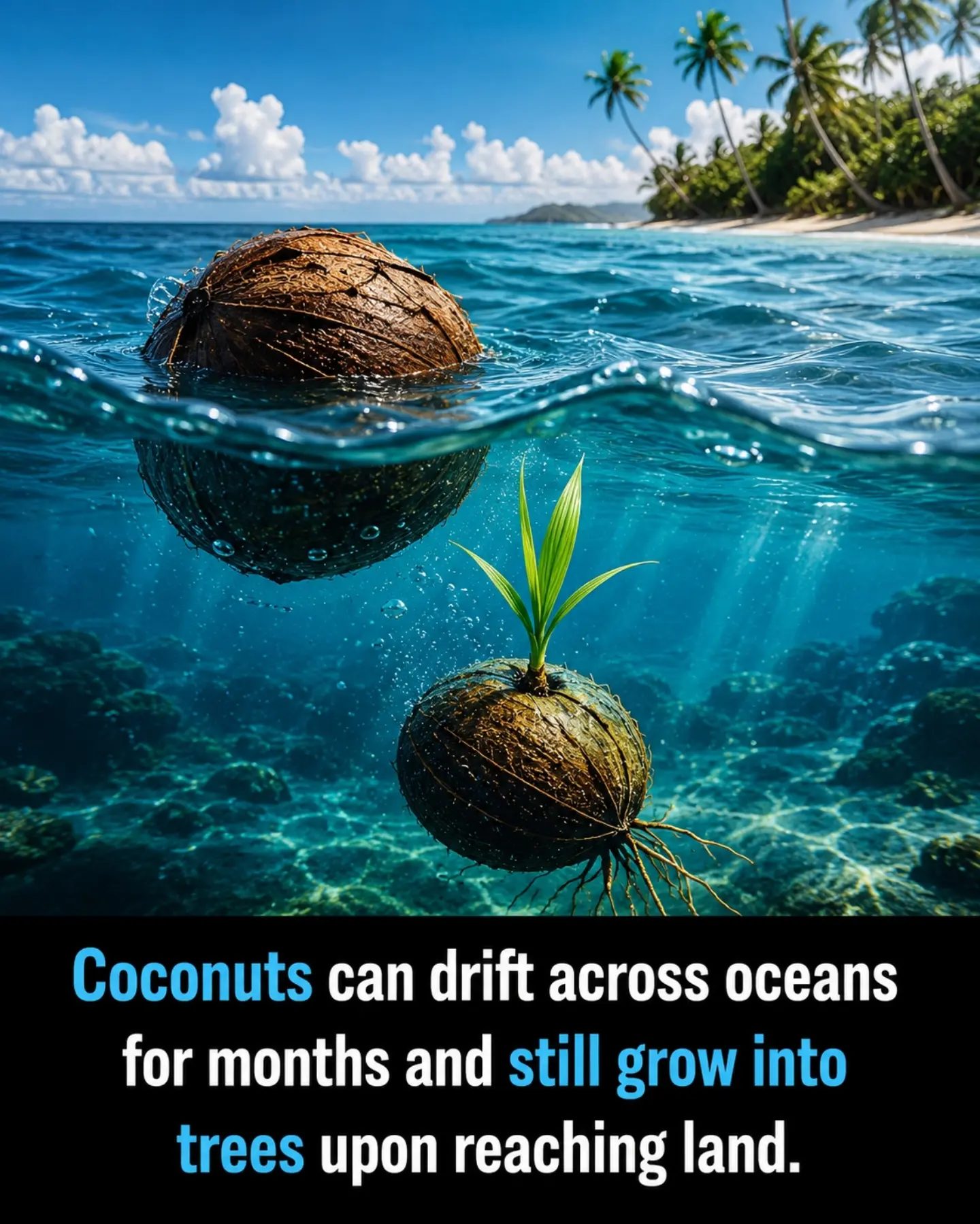
Coconut Life Cycle
Coconuts are not just a tropical delight; they are a testament to nature's remarkable resilience and adaptability. Understanding the life cycle of a coconut reveals fascinating insights into how these versatile fruits can travel vast distances and still germinate into new trees.
Why this matters
The journey of a coconut from a floating seed to a mature palm tree is more than just a botanical curiosity. It underscores the hardiness and adaptability of certain plant species, particularly those that rely on ocean currents for dispersal. This life cycle is crucial for the propagation and survival of coconut palms in tropical regions, ensuring the continuity of these ecosystems.
Main discussion
Traveling seeds
Coconuts have a unique ability to drift across vast oceans for months, carried by currents and tides, while retaining their viability. This long-distance travel is facilitated by the coconut's fibrous husk, which acts as a natural buoy, keeping the seed afloat and protected from saltwater damage. This buoyant property allows coconuts to endure long journeys, landing on distant shores where they can germinate and grow into new trees. This remarkable trait is a key factor in the widespread distribution of coconut palms across tropical regions.
Germination
Upon reaching land, coconuts can take root and begin to grow under the right conditions. The process of germination starts when the coconut germinates in the sandy soil, sending out a shoot and a root. The sprout visible on one of the coconuts in the visualization showcases this early stage of growth. This initial sprout will eventually develop into the trunk of the coconut palm, while the roots anchor the plant firmly in the soil, absorbing water and nutrients necessary for growth.
Growth and maturity
As the coconut palm grows, it develops a strong, slender trunk that supports a cluster of large, feathery leaves. This growth phase can take several years, during which the tree establishes a robust root system and continues to photosynthesize effectively. Over time, the palm tree reaches maturity, producing its own coconuts which will eventually fall and repeat the cycle, whether they drift across oceans or stay close to their parent trees.
Practical tips
Growing coconut palms
If you're interested in cultivating coconut palms, consider the following tips:
- Climate and Soil: Choose a location with a tropical or subtropical climate. Coconut palms thrive in well-drained sandy soil with plenty of sunlight. They are tolerant of saline conditions, making them ideal for coastal areas.
- Planting: Plant the coconut at a depth of about 4-6 inches, ensuring the sprout is positioned upwards. Water the plant regularly but avoid waterlogging.
- Care: Young palms require consistent watering, especially during the dry season. Once established, coconut palms are quite resilient and require minimal care, although regular fertilizing can boost growth.
Important takeaways
- Resilience: Coconuts exhibit exceptional resilience, capable of surviving long ocean voyages and still germinating upon reaching land.
- Ocean Currents: The ability of coconuts to travel long distances via ocean currents is a key factor in their widespread distribution.
- Germination: Upon reaching suitable land, coconuts can germinate and grow into new trees, continuing the life cycle.
- Care: Growing your own coconut palm involves selecting the right climate and soil, proper planting techniques, and consistent care during the initial growth phase.
Conclusion
The life cycle of a coconut is a testament to nature's ingenuity and the incredible journey these seeds undertake to propagate new life. From drifting across oceans to taking root and growing into towering palm trees, coconuts embody the resilience and adaptability that make them a symbol of tropical ecosystems. Whether you're a nature enthusiast or considering growing your own coconut palm, understanding this cycle offers a deeper appreciation for the wonders of the natural world.
Watch the Reel
Questions readers ask
How do coconuts travel such long distances across oceans?
Coconuts are equipped with a natural buoyancy that allows them to float on water. This buoyancy, combined with the dense fibrous husk that protects the inner seed, enables coconuts to drift across vast ocean distances, carried by currents and waves, and remain viable for germination once they reach land.
What is the significance of coconut distribution in tropical regions?
The widespread distribution of coconut palms in tropical regions is crucial for maintaining the health and diversity of these ecosystems. As coconuts drift and germinate in new locations, they help to preserve and expand the range of tropical palm trees, ensuring the continuity of these environments.
Can coconuts really grow into new trees after floating in water for extended periods?
Yes, coconuts have an amazing ability to retain their viability even after long periods in salt water. Their thick husk acts as a protective barrier, allowing the inner seed to stay dormant until it reaches a suitable environment for germination. This makes it possible for coconuts to grow into new trees even after extensive ocean journeys.
What role do ocean currents play in the journey of coconuts?
Ocean currents are instrumental in the journey of floating coconuts. They act as natural conveyors, transporting coconuts over long distances and helping to disperse them to new tropical locations. By relying on these currents, coconuts can effectively colonize distant shores and establish new coconut palm populations.
How do coconuts contribute to the diversity of tropical ecosystems?
Coconuts play a significant role in maintaining and enhancing the diversity of tropical ecosystems. By traveling across oceans and germinating in new locations, they introduce new genetic material to existing palm populations, fostering diversity and adaptability. Additionally, coconut palms provide habitat and sustenance for various species, further enriching these ecosystems.
Why are coconuts so resilient to their ocean journeys?
The resilience of coconuts is due to their unique physical characteristics. Their dense fibrous husk and buoyant nature enable them to withstand saltwater exposure, wave action, and sunlight. These features allow coconuts to remain viable and protected during their oceanic voyages, making them uniquely equipped for long-distance dispersal.
What happens when a floating coconut reaches a suitable shore?
When a floating coconut reaches a suitable shore, it can eventually germinate if conditions are favorable. The coconut will first take root in the sand or soil. Then, the seedling will begin to grow into a young coconut palm tree, continuing the cycle of coconut palm distribution and ensuring the survival of these adaptable trees in tropical environments.
Related deep dives
Similar reads based on topic and creator.




Recent articles
Fresh deep dives from the latest Reels we unpacked.
Comments
Be the first to comment.