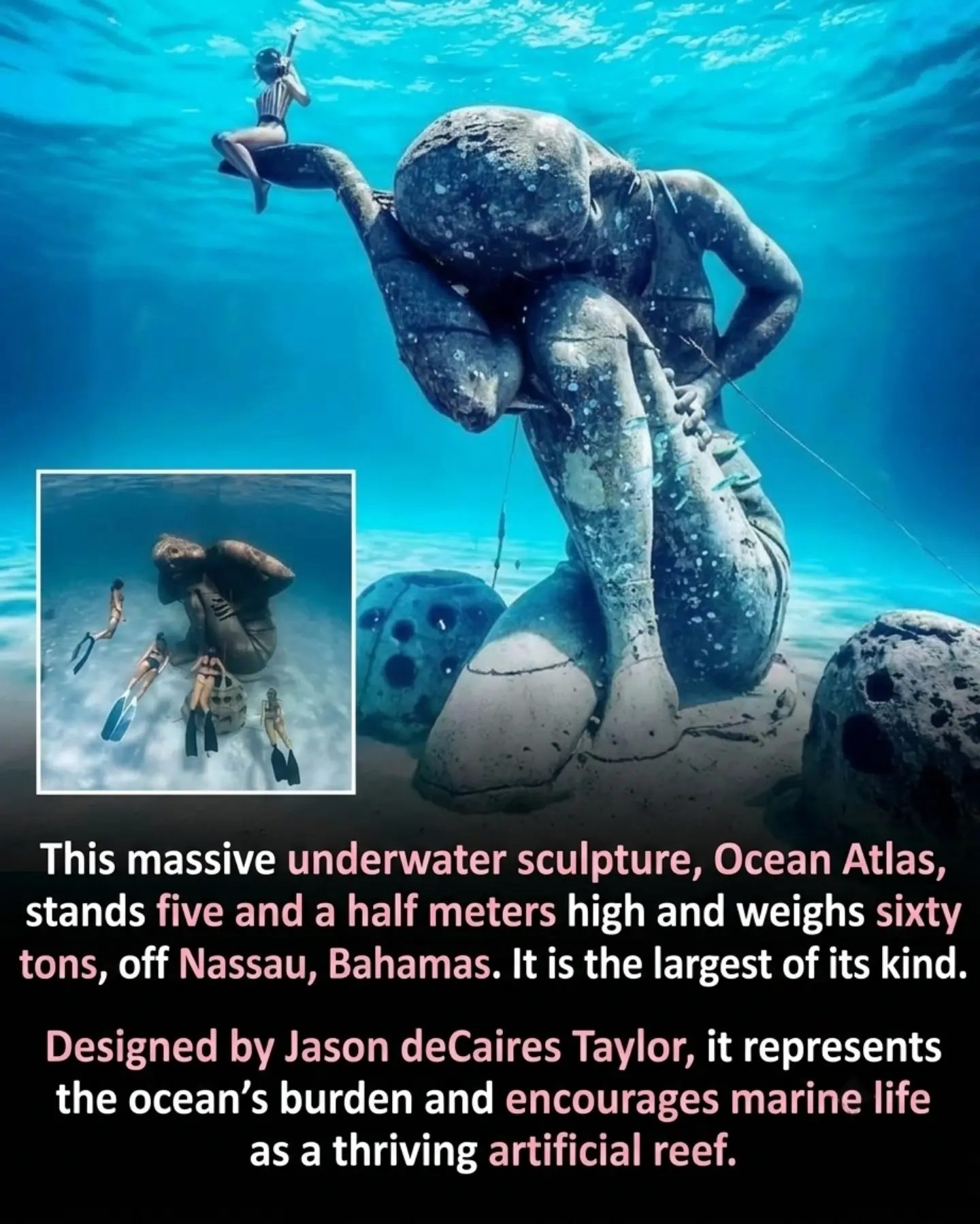
Ocean Atlas: The World's Largest Underwater Sculpture
Resting off the coast of Nassau, Bahamas, stands Ocean Atlas, the world's largest underwater sculpture. This monumental artwork, created by renowned sculptor Jason deCaires Taylor, is a true marvel of art and marine conservation. At 5.5 meters tall and weighing over 60 tons, Ocean Atlas is not just a stunning piece of art but also a significant contributor to marine life and conservation efforts.
Why This Matters
Underwater sculptures like Ocean Atlas serve a dual purpose: they are awe-inspiring art installations and vital habitats for marine life. Artworks of this scale and nature are significant for several reasons. They raise awareness about environmental issues, attract tourists to support local economies, and create artificial reefs that support marine biodiversity.
The Story Behind Ocean Atlas
The Conception and Design
Ocean Atlas was conceptualized to represent the burden the ocean carries, both in terms of environmental challenges and human impact. The sculpture depicts a local Bahamian girl holding the weight of the ocean on her shoulders. Designed with meticulous detail, the sculpture's eco-friendly, pH-neutral concrete is designed to promote the growth of new coral and provide a safe habitat for marine life. This approach ensures that the artwork not only serves as a visual spectacle but also contributes to the ecosystem it resides in.
The Creative Mind Behind the Artwork
Jason deCaires Taylor, the creative force behind Ocean Atlas, is known for his innovative and environmentally conscious approach to sculpture. His designs often focus on the intersection of art and nature, creating pieces that are not just visually striking but also ecologically beneficial. Taylor's work is a testament to the potential of art to drive meaningful change.
Location and Significance
Situated off the coast of Nassau, Bahamas, Ocean Atlas is a major attraction for divers and marine enthusiasts. Its strategic placement in the ocean not only enhances its aesthetic appeal but also turns it into an artificial reef. This reef is a thriving habitat for various marine species, contributing to the local biodiversity and conservation efforts. The sculpture's location in the Bahamas, a region known for its stunning marine life and vibrant coral reefs, adds to its allure and impact.
Practical Tips
Diving with Ocean Atlas
If you're planning to dive and see Ocean Atlas in person, here are some tips to make the most of your experience:
- Check with Local Dive Operators: The best way to ensure a safe and enjoyable dive is to go with a certified dive operator. Many local companies offer guided tours to Ocean Atlas.
- Prepare for the Depth: Ocean Atlas is located at a depth that requires advanced diving skills. Ensure you have the necessary certification and experience.
- Respect the Environment: Remember that you're diving in a sensitive marine environment. Follow best practices to minimize your impact on the surrounding ecosystem, including not touching the sculpture or marine life.
Marine Conservation
If you're interested in supporting marine conservation, Ocean Atlas offers a unique opportunity to see how art can drive environmental change:
- Visit and Support Local Conservation Efforts: Your dive to see Ocean Atlas can support local marine conservation initiatives. Many dive operators partner with conservation organizations, so your visit can have a direct impact.
- Spread Awareness: Share your experience with others. Raising awareness about underwater sculptures and their environmental benefits can inspire more people to get involved in conservation efforts.
Important Takeaways
- Art and Conservation: Ocean Atlas exemplifies how art can intersect with conservation efforts to create meaningful environmental change.
- Eco-Friendly Design: The use of eco-friendly materials in the sculpture's construction promotes coral growth and supports marine life.
- Tourism and Economy: Underwater sculptures like Ocean Atlas attract tourists, contributing to local economies and supporting marine conservation initiatives.
- Environmental Awareness: Such installations raise awareness about the ocean's environmental challenges and inspire action.
Conclusion
Ocean Atlas is more than just the world's largest underwater sculpture; it is a beacon of environmental stewardship and artistic innovation. Its presence off the coast of Nassau, Bahamas, not only adds to the region's marine beauty but also serves as a living example of how art can contribute to conservation efforts. If you ever get the chance, diving to see Ocean Atlas is an experience that combines the thrill of exploration with the beauty of art and the wonder of marine life.
Watch the Reel
Questions readers ask
Who is the artist behind Ocean Atlas, the world's largest underwater sculpture?
Jason deCaires Taylor, a renowned sculptor known for his environmental artworks, is the creator of Ocean Atlas. His unique approach combines art with marine conservation, making him a significant figure in the world of underwater sculpture.
What is the significance of Ocean Atlas to the local marine ecosystem?
Ocean Atlas serves as an artificial reef, providing a habitat for various marine species. The sculpture's structure and materials promote coral growth and attract diverse marine life, contributing to the local ecosystem's health and biodiversity.
How can visitors experience Ocean Atlas?
Ocean Atlas is located off the coast of Nassau, Bahamas, and is best experienced through diving or snorkeling. Many local dive operators offer guided tours to the site, allowing visitors to explore the sculpture and its marine inhabitants up close.
What inspired Jason deCaires Taylor to create underwater sculptures?
Taylor's inspiration comes from a desire to raise awareness about environmental issues and the impact of climate change on marine ecosystems. His sculptures are designed to interact with the ocean environment, promoting coral growth and attracting marine life to foster a healthy ecosystem.
What other underwater sculptures has Jason deCaires Taylor created?
Taylor has created numerous underwater sculptures around the world, including the Silhouette Park in Grenada and the Vicarious Sculptures in Cancun, Mexico. Each of these installations shares his signature style of blending art with marine conservation efforts.
How does Ocean Atlas contribute to the local economy of Nassau, Bahamas?
As a major tourist attraction, Ocean Atlas draws divers and marine enthusiasts from around the world. This influx of visitors supports local businesses, including dive operators, hotels, and restaurants, contributing positively to the local economy.
What materials were used to create Ocean Atlas, and why?
Ocean Atlas was constructed using a combination of steel and special cement designed to promote coral growth. This material choice ensures the sculpture's durability while fostering marine life, making it an effective tool for both art and conservation.
Related deep dives
Similar reads based on topic and creator.




Recent articles
Fresh deep dives from the latest Reels we unpacked.




Comments
Be the first to comment.