3D Raspberry Visualization
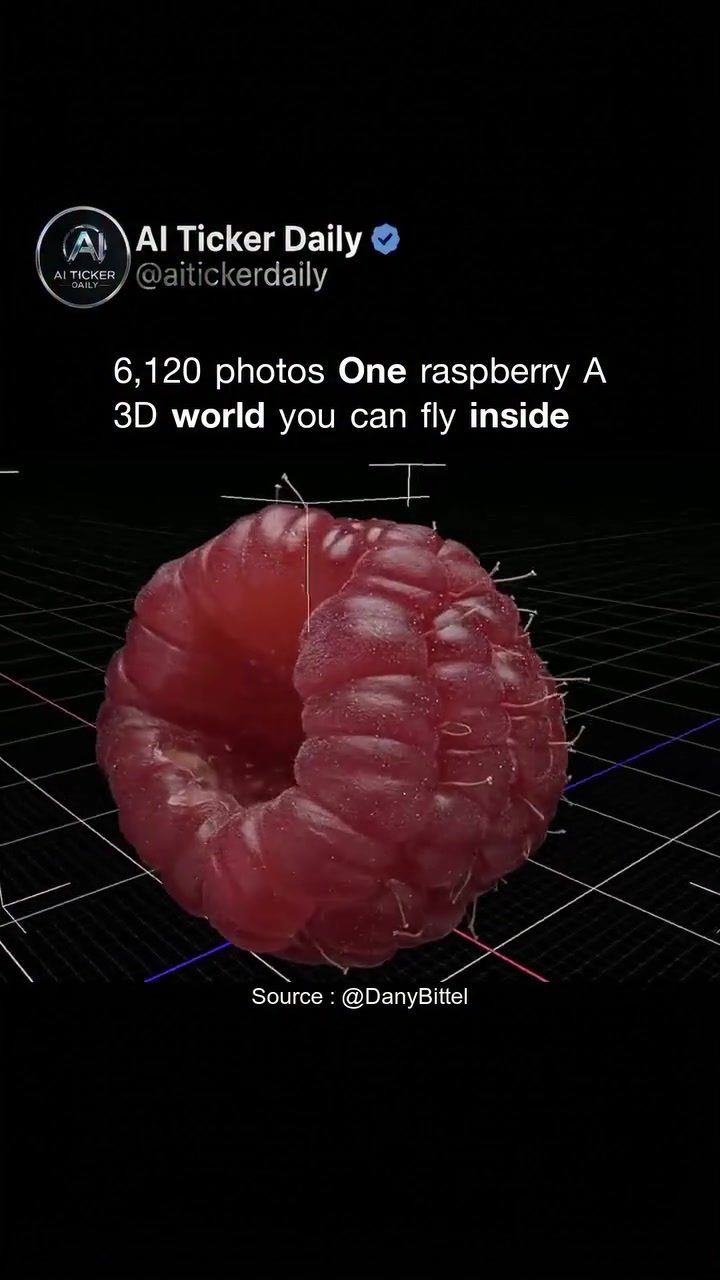
The 3D visualization of a raspberry is transforming the way we see and interact with macro photography. This technique, showcased by @aitickerdaily, involves a meticulous process that delivers a hyperreal, detailed 3D model of a single raspberry. The result is a stunning 3D rendition that allows for a comprehensive exploration of the fruit's surface, revealing every seed, fiber, and droplet in 3D space.
Why This Matters
This advanced technique represents the future of macro photography, moving beyond traditional flat images and videos. As we delve deeper into a world where virtual and augmented reality are becoming mainstream, seeing intricate details of everyday objects like a raspberry in a 3D, interactive model is a groundbreaking development. This technology opens doors for game developers, VFX artists, and AR creators, providing them with new tools to create immersive experiences.
The Process Behind 3D Raspberry Visualization
Photographing the Raspberry
The process begins with a detailed photography session. Dany Bittel, the photographer, captured a single raspberry using 90 focus stacks of 68 photos each. This results in a total of 6,120 macro shots. The focus stacking technique involves taking multiple photos at various focal points and then combining them to create a single, highly detailed image. Each focus stack is carefully aligned, ensuring that every part of the raspberry, from the smooth surface to the tiny seeds, is captured in sharp detail.
Creating the 3D Model
After capturing the photographs, the images are transformed into a 2.37 million-splat 3D Gaussian Splatting model. This involves using sophisticated algorithms to convert the 2D images into a 3D representation. The process includes mapping out the depth and texture of the raspberry, creating a highly detailed and interactive 3D model. This model allows for a 360-degree view, where users can rotate, zoom in, and explore the raspberry from any angle, giving a comprehensive understanding of its intricate structure.
The Technology Behind 3D Visualization
Gaussian Splatting
Gaussian Splatting is a cutting-edge technology used to create high-quality 3D models from 2D images. This technique involves breaking down the image into millions of small Gaussian splats, which are then rendered into a 3D space. Each splat contains information about the color, depth, and texture of the object, allowing for a highly detailed and realistic 3D model. The resulting model is highly interactive, enabling users to zoom in and explore every minute detail.
Virtual and Augmented Reality Integration
The 3D visualization of the raspberry is set in a virtual or augmented reality environment, as indicated by the grid-like background. This environment allows for a more immersive experience, where users can virtually step inside the 3D model and explore it from all angles. This technology has significant implications for various industries, including gaming, film, and design, where a detailed and interactive 3D model can enhance the overall user experience.
Practical Tips for 3D Visualization
Equipment and Software
To achieve similar results, you will need a high-quality camera capable of capturing macro shots, as well as software that supports focus stacking and 3D modeling. Some popular choices for macrophotography equipment include macro lenses, focusing rails, and dedicated macro photography software. For 3D modeling, you may use software that supports Gaussian Splatting or other 3D rendering techniques.
Technique and Patience
Creating a 3D model of a small object like a raspberry requires patience and precision. Ensure that each photo is taken with the right focus and lighting conditions. Post-processing involves careful alignment and blending of images, followed by converting the 2D images into a 3D model. The more detailed and accurate the photographs, the better the final 3D model will be.
Applications and Usage
This technology has various applications, from creating realistic environments in video games to enhancing the visual effects in movies. AR creators can also utilize this to create interactive and immersive experiences. For example, a 3D model of a raspberry could be used in an AR app to teach users about the structure and characteristics of the fruit in a more engaging way.
Important Takeaways
- The 3D visualization of a raspberry showcases the future of macro photography, allowing for a detailed and interactive exploration of the fruit.
- The process involves capturing high-resolution macro shots and converting them into a detailed 3D model using sophisticated algorithms.
- This technology has significant applications in various industries, including gaming, film, and AR, where realistic and interactive 3D models can enhance the user experience.
Conclusion
The 3D visualization of a raspberry is not just a visual marvel; it is a testament to the advancements in photography and 3D modeling. As this technology continues to evolve, we can expect to see more immersive and interactive 3D models, transforming the way we interact with the world around us. This technique is already gaining traction, and its applications are limitless, from enhancing gaming experiences to creating realistic AR environments. Embrace the future of macro photography and explore the intricate details of the world in a whole new dimension.
Watch the Reel
Questions readers ask
What is focus stacking and how is it used in raspberry macro photography?
Focus stacking is a photography technique where multiple images with different focus points are combined to create a single image with a greater depth of field. In raspberry macro photography, this method ensures that both the surface details and the intricate textures of the raspberry are sharply focused, enhancing the overall clarity and detail of the 3D model.
What is 3D Gaussian Splatting and how does it contribute to the 3D raspberry model?
3D Gaussian Splatting is a rendering technique that transforms 2D images into a 3D space by interpolating the focus points from each image. This technique is crucial in creating the hyperreal 3D raspberry model, allowing viewers to interact with and explore the raspberry from various angles, providing a detailed and immersive experience.
How can I start exploring macro photography of small objects like a raspberry?
To begin with macro photography, invest in a good macro lens or use macro extension tubes with your existing lens. Practice focusing on small details and use a tripod for stability. Start with a simple setup to understand the basics, and gradually experiment with focus stacking to capture the minute details of the subject.
What can I do to create interactive 3D photos like the raspberry model?
To create interactive 3D photos, you need to capture multiple images of your subject with varying focus points. Use software that supports 3D Gaussian Splatting to process these images. This will allow you to generate a 3D model that can be viewed and interacted with from different perspectives, providing a more engaging experience.
What are the benefits of viewing a 3D raspberry model compared to traditional 2D photos?
Viewing a 3D raspberry model offers a more immersive and detailed experience compared to traditional 2D photos. You can explore the raspberry from various angles, zoom in on specific details, and appreciate the intricate textures and structures that might be missed in a flat image. This interactive approach enhances the overall viewing experience and appreciation for the subject.
How does daily macro photography help in improving photography skills?
Daily macro photography encourages you to focus on the minute details of everyday objects, improving your observation skills. It helps you understand lighting, composition, and depth of field better. Regular practice with macro photography can also enhance your technical skills, such as focus stacking, and inspire creativity in capturing the beauty of small subjects.
Related deep dives
Similar reads based on topic and creator.


Recent articles
Fresh deep dives from the latest Reels we unpacked.




Comments
Be the first to comment.