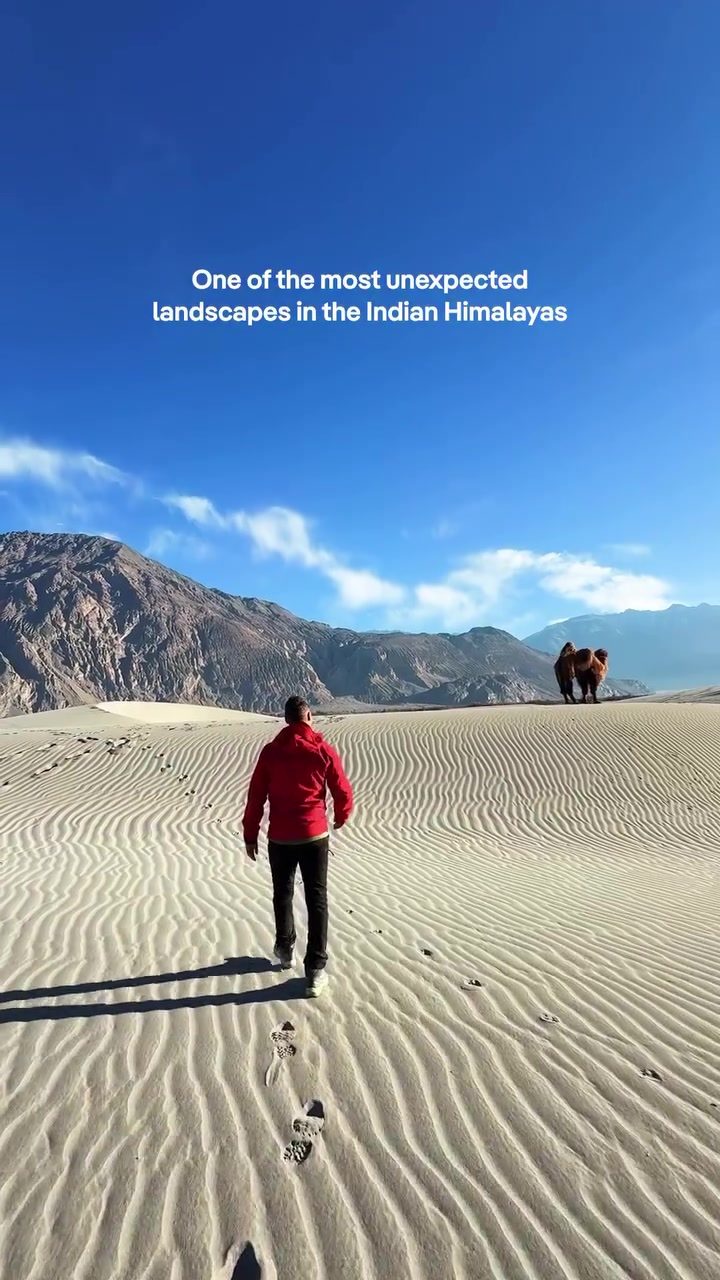
Nubra Valley: The Unexpected Face of the Himalayas
Nestled in the far north of Ladakh, Nubra Valley is a landscape that defies expectations. This region, where cold desert sand dunes meet snow-capped peaks, offers a unique blend of arid desert and alpine scenery. Double-humped Bactrian camels roam freely beneath vast mountain skies, creating a surreal and otherworldly atmosphere. The Shyok and Nubra rivers carve through the valley, adding to its diverse and unexpected beauty.
Why Nubra Valley Matters
Nubra Valley is often described as one of the most unexpected regions in the Indian Himalayas. Its vast, quiet, and completely otherworldly landscape challenges every expectation of what the Himalayas should look like. Unlike the typical images of snow-covered peaks and lush valleys, Nubra Valley offers a unique blend of desert and alpine scenery, making it a must-visit for any traveler seeking something different.
The Unique Landscape of Nubra Valley
Sand Dunes and Snow-Capped Peaks
One of the most striking features of Nubra Valley is the contrast between its sand dunes and snow-capped peaks. This unique combination creates a landscape that feels closer to Central Asia than to the typical Himalayan terrain. The vast sand dunes stretch out under the open sky, while the distant peaks remain capped with snow. This contrast is a visual feast for anyone who loves the outdoors.
The Rivers of Nubra Valley
The Shyok and Nubra rivers are the lifeblood of the valley, carving through the landscape and creating a network of waterways that support a diverse ecosystem. These rivers add to the valley's unique charm, providing a source of water and life in an otherwise arid environment.
Iconic Fauna
The double-humped Bactrian camels that roam the valley are a unique and iconic feature of Nubra Valley. Originally from Central Asia, these camels have adapted well to the harsh conditions of the valley, making them a common sight in the region. Additionally, yaks can be seen grazing on the grassy plains, adding to the valley's diverse wildlife.
Exploring Nubra Valley
Diskit Monastery
Diskit Monastery is one of the oldest and largest monasteries in the Nubra Valley. Built in the 14th century, it is a significant religious and cultural landmark. The monastery is home to a community of Buddhist monks and offers stunning views of the surrounding landscape, making it a must-visit for anyone exploring the region.
Khardung La Pass
Drive across the highest motorable pass in the world, Khardung La. The pass is a gateway to the Siachen Glacier and offers breathtaking views of the surrounding mountains. The drive itself is an adventure, with steep climbs and winding roads that test even the bravest of travelers.
Watching the Light Move
One of the simplest yet most rewarding experiences in Nubra Valley is watching the light move across the dunes. The ever-changing play of light and shadow on the sand dunes creates a mesmerizing spectacle, making it a photographer's paradise and a soulful experience for anyone who loves the serenity of nature.
Practical Tips for Visiting Nubra Valley
-
Best Time to Visit: The best time to visit Nubra Valley is during the summer months from April to September. This is when the weather is pleasant, and the roads are accessible. During the winter, the valley is often inaccessible due to heavy snowfall.
-
Permits and Formalities: To visit Nubra Valley, you will need an Inner Line Permit (ILP). This can be obtained from the District Commission Office in Leh. Make sure to carry a valid photo ID and passport-size photographs for the application process.
-
Accommodation: There are several accommodation options in Nubra Valley, ranging from basic guest houses to more luxurious hotels. Hunder and Diskit are popular destinations within the valley, offering a variety of lodging options for travelers.
-
Transportation: The most convenient way to explore Nubra Valley is by hiring a 4WD vehicle. The roads in the valley are often rough and unpaved, making a sturdy vehicle essential. Alternatively, you can join a guided tour that provides transportation and a local guide.
Important Takeaways
-
Diverse Landscapes: Nubra Valley offers a unique blend of desert and alpine landscapes, making it a must-visit for anyone seeking something different from the typical Himalayan scenery.
-
Iconic Wildlife: The presence of double-humped Bactrian camels and yaks adds to the region's charm, making it a paradise for wildlife enthusiasts.
-
Cultural and Historical Sites: Diskit Monastery is a significant religious and cultural landmark, offering a glimpse into the region's rich history and spiritual heritage.
-
Adventure Activities: The Khardung La Pass and other rugged terrain offer thrilling drives and hiking experiences, making Nubra Valley a paradise for adventure seekers.
Conclusion
Nubra Valley is a hidden gem in the Indian Himalayas, offering a unique blend of desert and alpine landscapes, iconic wildlife, and cultural and historical sites. Whether you're a wildlife enthusiast, a nature lover, or an adventure seeker, Nubra Valley has something to offer. So, if you're planning a Ladakh itinerary, make sure to include Nubra Valley for a journey that challenges every expectation and leaves you with unforgettable memories.
Watch the Reel
Questions readers ask
Where exactly is Nubra Valley located and what makes its location unique?
Nubra Valley is situated in the far north of Ladakh, a region known for its high-altitude deserts and rugged mountains. Its unique location allows for a rare confluence of cold desert sand dunes and snow-capped Himalayan peaks, creating a stark yet harmonious landscape.
What are Bactrian camels and why are they significant in Nubra Valley?
Bactrian camels are distinctive for their two humps. In Nubra Valley, they roam freely, adding an exotic and surreal element to the landscape. These camels are well-adapted to the region's harsh conditions, making them a iconic sight for visitors exploring the valley.
What rivers flow through Nubra Valley and how do they shape the landscape?
The Shyok and Nubra rivers are the primary rivers that carve through Nubra Valley. These rivers contribute to the valley's diverse beauty, shaping its terrain and supporting the unique ecosystem that thrives in this unexpected Himalayan landscape.
How does the landscape of Nubra Valley differ from typical Himalayan landscapes?
Unlike the typical images of lush greenery and snow-covered peaks, Nubra Valley presents a stark contrast with its cold desert sand dunes and snow-capped mountains. This blend of arid desert and alpine scenery creates a unique and otherworldly atmosphere, challenging the conventional perceptions of Himalayan landscapes.
What activities can visitors enjoy in Nubra Valley besides appreciating the landscape?
Visitors to Nubra Valley can enjoy camel rides on the Bactrian camels, which are a popular way to traverse the sand dunes. Additionally, exploring nearby attractions like Diskit Monastery and the villages adds to the overall experience, offering a mix of cultural and adventurous activities.
How does Nubra Valley compare to other popular destinations in Ladakh, such as Lake Pangong?
While Lake Pangong is renowned for its serene waters and reflective beauty, Nubra Valley offers a more rugged and diverse landscape. The valley's unique combination of desert and mountain terrain, along with the presence of Bactrian camels, provides a distinct experience for travelers exploring Ladakh.
What is the best time to visit Nubra Valley for optimal weather and sightseeing?
The best time to visit Nubra Valley is during the summer months, from May to September, when the weather is relatively mild, and the roads are accessible. This period offers clear skies and warmer temperatures, making it ideal for exploring the valley's diverse landscapes and enjoying outdoor activities.
Related deep dives
Similar reads based on topic and creator.



Recent articles
Fresh deep dives from the latest Reels we unpacked.




Comments
Be the first to comment.