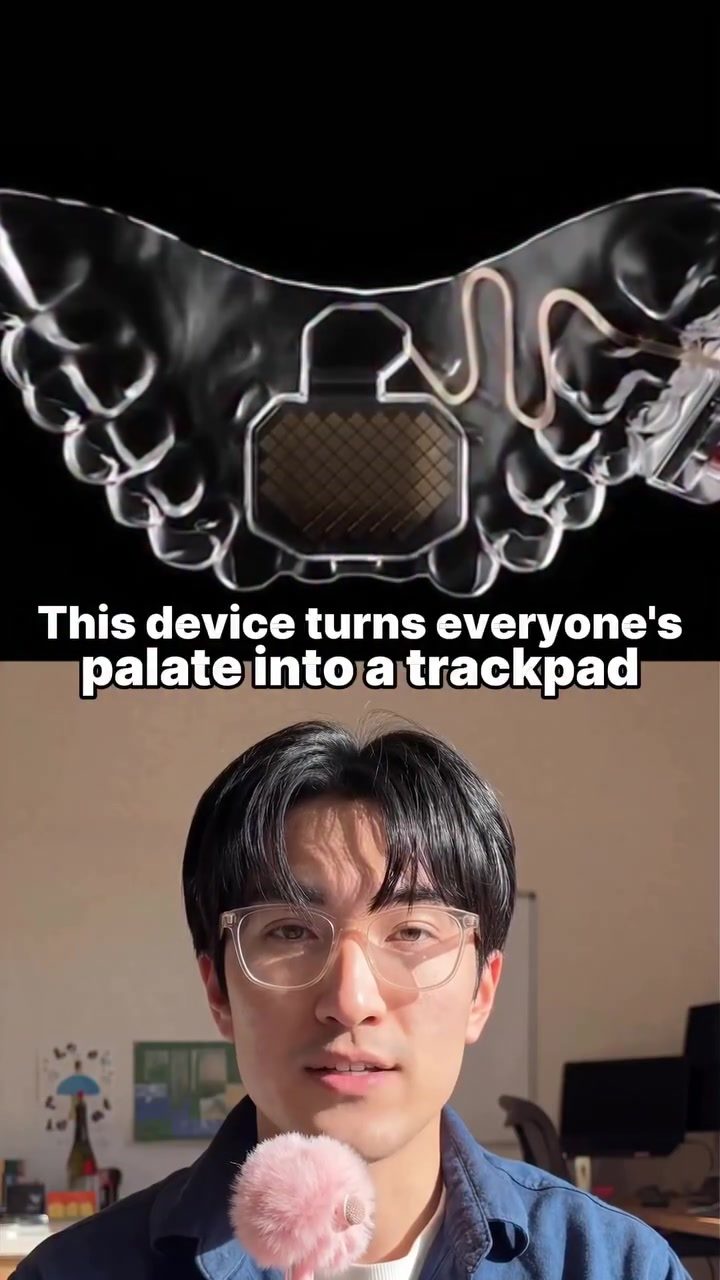
JC-MouthPad: Revolutionizing Assistive Technology
The JC-MouthPad is a groundbreaking device that transforms the roof of your mouth into a trackpad, controlled effortlessly by your tongue. This innovative technology, developed by the MIT Media Lab spinoff Augmental, has recently become available in the U.S. It offers a unique solution for individuals with limited mobility, enabling them to interact with computers and other digital devices.
Context / Why This Matters
Assistive technology plays a crucial role in enhancing the quality of life for individuals with disabilities. Traditional interfaces, such as keyboards and mice, can be challenging or impossible to use for those with severe mobility impairments. The JC-MouthPad addresses this challenge by providing a non-invasive, user-friendly alternative.
Main Discussion
The Technology Behind JC-MouthPad
The JC-MouthPad fits over the user's upper teeth, resembling a retainer. Approximately one millimeter thick, it features a pressure-sensitive pad on top. This pad responds to the movements of the user's tongue, which acts as a cursor. The device also includes a microphone pendant that picks up vibrations through the throat, similar to a stethoscope. These vibrations, along with the tongue movements, are used to decipher the user's intended speech.
How It Works
The JC-MouthPad and the Vox microphone pendant work in tandem to create a seamless communication experience. When the user speaks, their tongue traces specific patterns on the roof of their mouth. The Vox pendant records these vibrations, while the mouthpad records the tongue movements. Together, they help teach a model to recognize which tongue patterns produce which words. Once the model has learned the user's unique patterns, the audio becomes optional. The user can simply mouth the sentence, and the text will appear on the screen.
Performance and Benefits
In a cursor test, a user of the JC-MouthPad achieved an impressive 10.41 bits per second, matching the speed of state-of-the-art brain-computer interfaces that require actual brain surgery. This demonstrates the device's potential to provide a high level of control and precision for users with limited mobility.
Practical Tips
Configuration and Calibration
The JC-MouthPad can be configured and calibrated for optimal performance. The on-screen interface provides options such as "Configure," "Pause," and "Recalibrate," ensuring that the device is tailored to the user's specific needs. This customization helps to enhance the overall user experience and accuracy of the device.
Using the JC-MouthPad
The device offers features like "Click-and-Drag" and "Live View" for precise control. Users can navigate through various applications, select options, and input text with ease. The "Live View" feature allows users to see real-time updates, making the interaction more intuitive and responsive.
Providing Feedback
The JC-MouthPad includes an option to send feedback, labeled "Send MouthPad Feedback." This feature is essential for continuous improvement and user satisfaction. Users can provide valuable insights and suggestions, helping the developers make necessary adjustments and enhancements.
Design Philosophy
The founders of the JC-MouthPad argue that designing for the most constrained users ultimately leads to better interfaces for everyone. This principle underscores the device's inclusive approach, aiming to create technology that is accessible and beneficial to a wide range of users.
Important Takeaways
- The JC-MouthPad is a revolutionary device that turns the roof of the mouth into a trackpad controlled by the tongue.
- It is designed to enhance accessibility for individuals with limited mobility, offering a non-invasive and user-friendly interface.
- The device, made by the Augmental, matches the speed of brain-computer interfaces without the need for invasive surgery.
- The JC-MouthPad provides customization options, including configuration and calibration, to ensure optimal performance.
- The device offers features like "Click-and-Drag" and "Live View" for precise control and real-time interaction.
Conclusion
The JC-MouthPad represents a significant advancement in assistive technology, offering a practical and effective solution for individuals with mobility impairments. Its innovative design and user-friendly interface make it a valuable tool for enhancing accessibility and independence. As technology continues to evolve, devices like the JC-MouthPad pave the way for a more inclusive and accessible digital world.
Watch the Reel
Questions readers ask
How does the JC-MouthPad work to control a computer?
The JC-MouthPad functions by using a non-invasive sensor attached to the roof of the mouth. The user can control a computer by touching, tapping, and moving their tongue on the sensor. This converts the tongue movements into commands that the computer can understand, such as clicking, scrolling, and navigating menus.
Who can benefit from using the JC-MouthPad?
Individuals with severe mobility impairments, such as those with spinal cord injuries, ALS, or other conditions that affect physical movement, can greatly benefit from the JC-MouthPad. It provides an alternative to traditional interfaces, allowing these users to interact with computers and digital devices more easily.
What makes the JC-MouthPad a non-invasive solution for computer control?
The JC-MouthPad is considered non-invasive because it does not require any surgical procedures, implants, or modifications to the body. The device is simply attached to the roof of the mouth, allowing users to control their computer using natural tongue movements without causing discomfort or harm.
How is the JC-MouthPad different from other assistive technology devices?
Unlike traditional assistive devices that rely on hand or eye movements, the JC-MouthPad uses the tongue as a control method, making it particularly useful for individuals with severe mobility impairments. It also offers a more intuitive and natural control method for users who have difficulty using other interfaces.
What role does Augmental play in the development of the JC-MouthPad?
Augmental, a startup originating from the MIT Media Lab, is the company behind the development of the JC-MouthPad. They have focused on creating innovative assistive technologies that empower individuals with disabilities, starting with this groundbreaking device.
Related deep dives
Similar reads based on topic and creator.




Recent articles
Fresh deep dives from the latest Reels we unpacked.




Comments
Be the first to comment.