Aircraft Engines
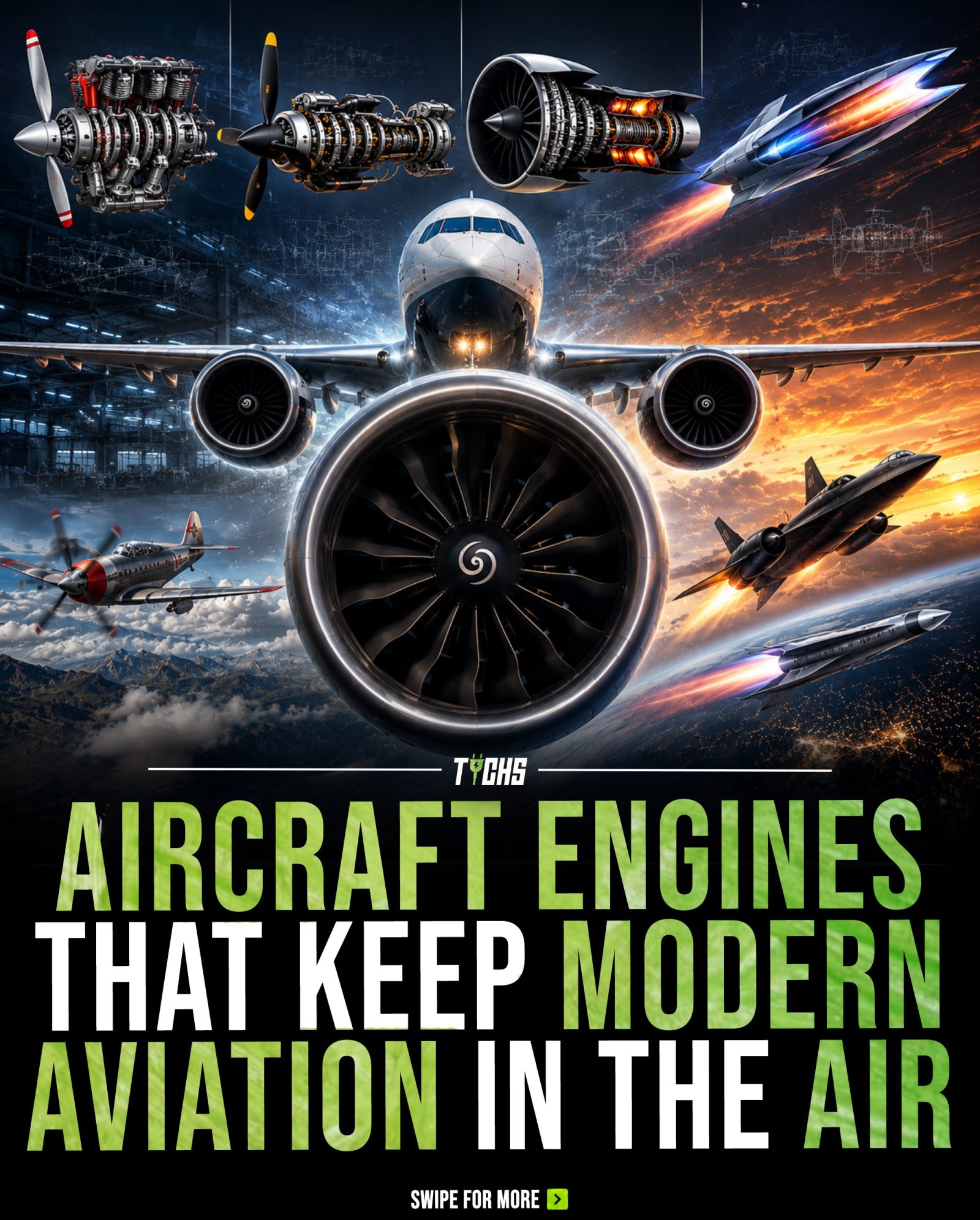
Aircraft engines are the heart of modern aviation, each designed to meet specific mission requirements. From piston engines powering small training aircraft to advanced turboprops, turbofans, and even ramjets and scramjets, every engine is tailored for a unique balance of speed, efficiency, altitude, and performance. Whether it's a turboprop serving regional routes or a turbofan carrying millions of airline passengers, the engine determines how high, how fast, and how far an aircraft can go.
Why this matters
Air travel has become an integral part of global transportation. Understanding the various types of aircraft engines and their unique characteristics is crucial for appreciating the complexities and innovations driving the aviation industry forward. From efficiency to speed, each engine type serves a distinct purpose, enabling different types of aircraft to perform their specific missions effectively.
Aircraft Engine Types
Piston Engines
Piston engines are commonly found in smaller aircraft, typically used for training and private flights. These engines are relatively simple in design, featuring reciprocating pistons that convert pressure into rotational motion. Piston engines are known for their reliability and ease of maintenance, making them ideal for light aircraft.
Turboprop Engines
Turboprop engines use a gas turbine to drive a propeller. This combination allows for efficient cruising at moderate speeds, making them popular for regional and short-haul flights. Turboprop engines are favored for their fuel efficiency and ability to operate from shorter runways, which is particularly useful for regional airlines serving smaller airports.
Turbofan Engines
Turbofan engines are the workhorses of commercial aviation. These engines feature a large fan at the front that draws in air, with a portion of this air being bypassed around the core to generate thrust. Turbofan engines are designed for high efficiency and reliability, making them suitable for long-haul flights. Their ability to operate at high altitudes and speeds makes them ideal for transporting large numbers of passengers over long distances.
Ramjet and Scramjet Engines
Ramjet and scramjet engines are more advanced and are used for high-speed and hypersonic flight. Ramjet engines utilize the high speed of the aircraft to compress incoming air, which is then mixed with fuel and ignited. Scramjets, or supersonic combustion ramjets, operate at even higher speeds, using supersonic airflow to achieve combustion. These engines are at the cutting edge of aviation technology, pushing the boundaries of what is possible in terms of speed and performance.
Key Features of Aircraft Engines
Efficiency
Efficiency is a critical factor in aircraft engine design. Engines are engineered to maximize fuel consumption while minimizing emissions, ensuring that flights are both cost-effective and environmentally friendly. Piston and turboprop engines are particularly known for their fuel efficiency, while turbofan engines are designed to balance efficiency with performance.
Performance
Performance in aircraft engines encompasses a range of factors, including speed, thrust, and altitude capability. Turbofan engines excel in performance, enabling high-altitude and high-speed travel. Meanwhile, ramjet and scramjet engines are designed to push the limits of speed, making them ideal for future hypersonic flight applications.
Reliability
Reliability is paramount in aircraft engines, as any malfunction can have serious consequences. Engines are rigorously tested and maintained to ensure they perform consistently under various conditions. Piston, turboprop, and turbofan engines are known for their reliability, ensuring safe and dependable flights for passengers and cargo.
Altitude
Different engine types are designed to operate at different altitudes. Turbofan engines, for instance, are capable of operating at high altitudes, making them suitable for long-haul flights. Meanwhile, turboprop and piston engines are more commonly used for lower-altitude flights, serving regional and private aviation needs.
Practical Tips
Choosing the Right Engine
Selecting the right engine for an aircraft depends on the mission requirements. For short-haul flights and regional routes, turboprop engines offer a good balance of fuel efficiency and performance. For long-haul flights, turbofan engines are the preferred choice due to their high efficiency and reliability. For high-speed and hypersonic applications, ramjet and scramjet engines are at the forefront of innovation.
Maintenance and Upkeep
Regular maintenance is essential to ensure the longevity and reliability of aircraft engines. Piston, turboprop, and turbofan engines require routine inspections, oil changes, and component replacements to keep them in optimal condition. Advanced diagnostic tools and predictive maintenance techniques are often employed to anticipate and address potential issues before they become critical.
Future Innovations
The aviation industry is constantly evolving, with new engine technologies being developed to meet future demands. Innovations in electric and hybrid propulsion systems are gaining traction, offering the potential for cleaner and more sustainable flight. Additionally, advancements in materials science and aerodynamics are enabling the development of more efficient and powerful engines, setting the stage for the next generation of aviation.
Important takeaways
Aircraft engines are the driving force behind modern aviation. Each type of engine—whether it's a piston, turboprop, turbofan, ramjet, or scramjet—is meticulously designed to meet specific performance and efficiency requirements. Understanding the unique characteristics and capabilities of these engines is essential for appreciating the complexity and innovation inherent in the aviation industry. The future of air travel will undoubtedly be shaped by ongoing advancements in engine technology, paving the way for even more efficient, reliable, and sustainable flight.
Conclusion
From piston engines powering small training aircraft to advanced turbofan and ramjet engines pushing the limits of speed and efficiency, aircraft engines are the backbone of modern aviation. Each engine type serves a unique purpose, contributing to the diverse and dynamic world of air travel. As technology continues to evolve, the future of aircraft engines promises even greater advancements, ensuring that aviation remains a vital and innovative sector of global transportation.
Watch the Reel
Questions readers ask
What are the main types of aircraft engines?
The main types of aircraft engines include piston engines, turboprop engines, turbofan engines, turbojet engines, ramjet engines, and scramjet engines. Each type is designed to meet specific performance needs, from powering small training aircraft to driving high-speed jets.
How do piston engines differ from turbofan engines?
Piston engines are typically smaller and simpler, often used in light aircraft and training planes. They operate by converting the pressure from combustion into rotational motion using pistons. Turbofan engines, on the other hand, are larger and more complex, using a gas turbine to drive a fan and generate thrust, making them suitable for larger, faster aircraft.
What are turbofan engines and why are they commonly used in commercial aviation?
Turbofan engines are a type of jet engine that generates thrust through a combination of a turbine and a large fan at the front. They are commonly used in commercial aviation because they offer a good balance of fuel efficiency, speed, and noise reduction, making them ideal for long-haul flights and carrying large numbers of passengers.
What are ramjet and scramjet engines, and how do they work?
Ramjet and scramjet engines are advanced forms of aircraft propulsion designed for high-speed flight. Ramjets use the forward motion of the aircraft to compress incoming air, mix it with fuel, and ignite it to generate thrust. Scramjets work similarly but operate at even higher speeds, using supersonic airflow to achieve combustion, allowing for speeds above Mach 5.
What role do turboprop engines play in aviation?
Turboprop engines are particularly efficient for regional and short-haul flights. These engines use a gas turbine to drive a propeller, providing excellent fuel efficiency and performance at lower altitudes and speeds. This makes them ideal for smaller, regional aircraft serving routes where speed is not the primary concern, but fuel efficiency is.
How do aircraft engines impact the performance of an aircraft?
Aircraft engines determine key performance factors such as speed, altitude, range, and fuel efficiency. For example, piston engines are suitable for lower speeds and altitudes, while turbofan and turbojet engines enable higher speeds and greater altitudes, making them ideal for long-distance, high-speed travel. The choice of engine type directly influences the aircraft's mission capabilities and operational costs.
Related deep dives
Similar reads based on topic and creator.




Recent articles
Fresh deep dives from the latest Reels we unpacked.




Comments
Be the first to comment.