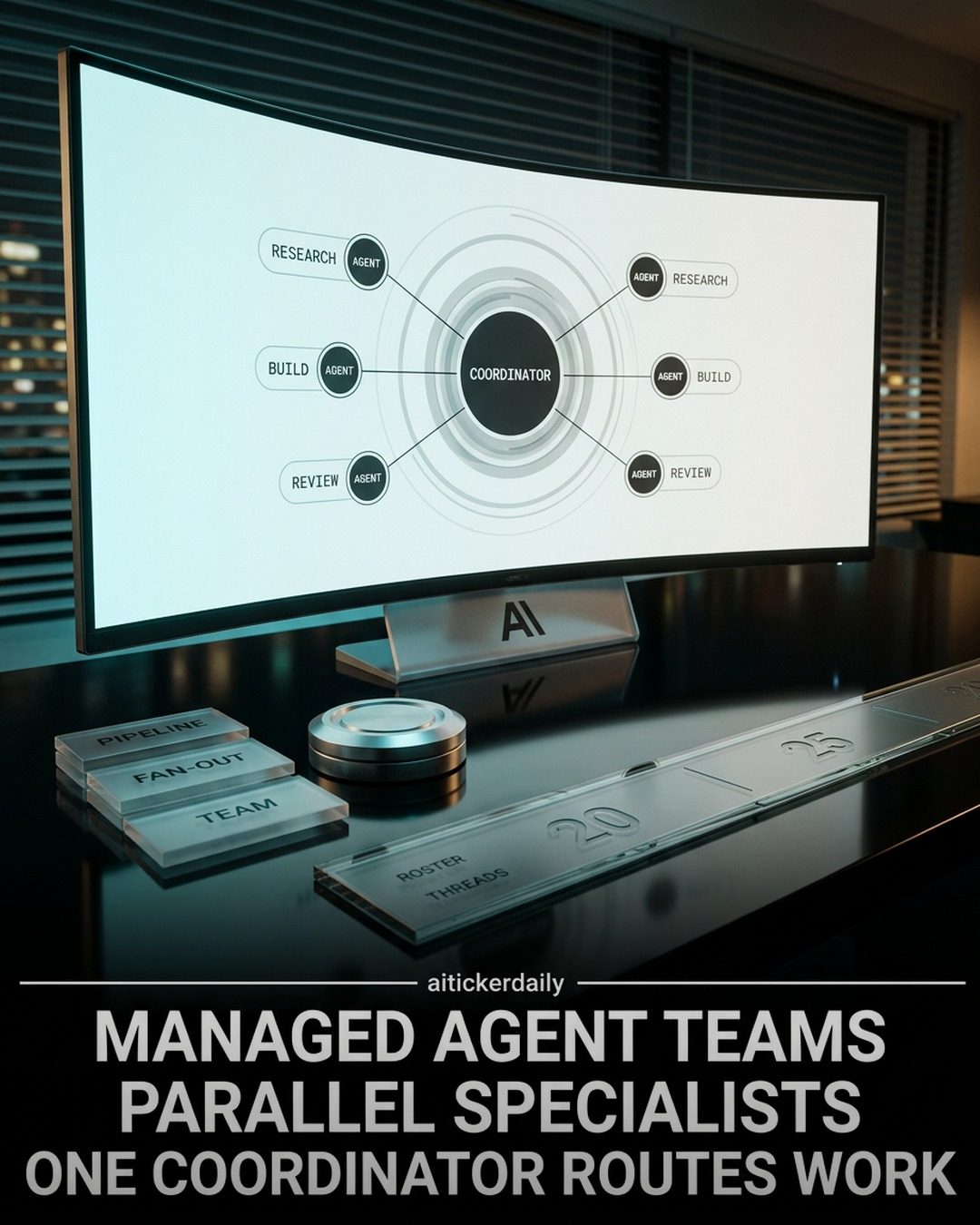
AI Agent Coordination
AI agent coordination is a critical aspect of modern business software, enabling efficient multi-agent orchestration and streamlined workflows. This article delves into the intricacies of AI agent coordination, focusing on the coordination of specialist agents, pipeline management, and incremental integration strategies.
Why This Matters
In today's fast-paced business environment, efficient coordination of AI agents is essential for maximizing productivity and minimizing errors. Whether you are dealing with complex data processing tasks, intricate project management, or large-scale information extraction, a well-coordinated team of AI agents can significantly enhance your operational efficiency. Understanding the nuances of AI agent coordination can help you leverage this technology to its fullest potential, ensuring that your business operations are both scalable and reliable.
Understanding AI Agent Coordination
The Basics of AI Agent Coordination
AI agent coordination involves the orchestration of multiple AI agents to perform tasks collaboratively. This coordination is typically managed by a central coordinator, which delegates tasks to specialist agents. Each specialist agent operates within its own thread, maintaining its own model, tools, and transcript. This setup allows for parallel processing and ensures that each agent can focus on its specific task without interference.
The Role of the Coordinator
The coordinator plays a pivotal role in AI agent coordination. It is responsible for delegating tasks to the appropriate specialist agents and ensuring that the workflow remains smooth and efficient. The coordinator routes work to the specialist agents, which then handle their assigned tasks in parallel. This distributed approach allows for concurrent processing, significantly speeding up the overall workflow.
Parallel Specialists and Shared Workspace
One of the key features of AI agent coordination is the use of parallel specialists. Each specialist agent is assigned a specific task and operates independently within its own thread. This parallelization allows for the simultaneous processing of multiple tasks, which is particularly beneficial for complex projects that require a high degree of specialization.
The shared workspace is another critical component of AI agent coordination. It serves as a central repository where all the files and artifacts produced by the agents are stored. This shared workspace ensures that all agents have access to the necessary resources and that the workflow remains cohesive.
Pipeline Management
Strict Dependencies and Checklists
Pipelines in AI agent coordination are designed to fit strict dependencies, ensuring that each stage of the process is completed in a specific order. This sequential approach helps prevent errors and ensures that each task is completed accurately. For example, synthetic fixtures are ingested and normalized, then analyzed to draft from the artifact, and finally reviewed against a checklist. Each stage consumes the validated output of the previous stage, ensuring seamless integration and minimal errors.
Fan-Out for Wide Data Processing
Fan-out is another essential feature of pipeline management. It involves distributing tasks among multiple agents to process a wide range of data simultaneously. This approach is particularly useful for tasks that require the extraction of information from large datasets. For example, five workers can be tasked with processing five different log buckets, contract directories, or pricing pages. The synthesis agent then ranks the deltas and demands evidence for each claim, ensuring comprehensive and accurate data processing.
Specialist Team Mode
For complex deliverables, specialist team mode is employed. This mode involves dedicating specific lanes for different types of tasks, such as market scans, cost assumptions, and customer-facing copy. A reviewer agent then checks for contradictions and ensures that the final output is cohesive and error-free. This structured approach ensures that each component of the deliverable is handled by a specialist, resulting in high-quality output.
Incremental Integration and Reviewer Checkpoints
Incremental Rollout
Incremental rollout is a key strategy for managing the integration of new agents into the workflow. This approach involves shipping two agents in a pipeline first, proving contracts on synthetic fixtures, and then adding a third worker only after handoff tests go green. Every new node multiplies failure modes, so incremental integration helps keep the velocity of the workflow while the graph grows.
Reviewer Checkpoints
Inserting reviewer checkpoints is crucial for maintaining quality and preventing errors. These checkpoints are particularly important wherever money or reputation is touched, such as in pricing tables, customer-facing copy, legal summaries, and infrastructure diffs. A checklist-driven reviewer agent can help catch errors early, making it a more cost-effective solution than correcting errors after launch.
Token Hygiene
Planning tokens like capacity is essential for efficient AI agent coordination. Multi-agent runs spend more preamble and tool trace than a single long chat. Tightening system prompts, caching stable instructions on disk, and preferring concise structured logs over essay dumps can help optimize token usage. Adding golden-run fixtures after each model or tool upgrade ensures that the system remains robust and efficient.
Practical Tips
Implementing AI agent coordination in your business software can be complex, but following these practical tips can help streamline the process:
Leverage Specialized Agents
Use specialized agents for specific tasks to maximize efficiency. Each agent should have its own model, tools, and transcript to ensure that it can focus on its designated task without interference.
Utilize Parallel Processing
Parallelize independent work to speed up the workflow. This approach allows multiple tasks to be processed simultaneously, significantly reducing the overall time required to complete a project.
Maintain a Shared Workspace
Ensure that all agents have access to a shared workspace where they can store and retrieve files and artifacts. This central repository helps maintain cohesion and ensures that all agents have the necessary resources to complete their tasks.
Implement Checklists
Use checklists to review each stage of the process. This ensures that each task is completed accurately and that any errors are caught early. Checklists can be particularly useful for tasks that involve critical aspects of the project, such as pricing tables and legal summaries.
Plan for Tokens
Plan tokens like capacity to ensure that the system can handle the workload efficiently. Tightening system prompts, caching stable instructions, and preferring concise structured logs can help optimize token usage and prevent bottlenecks.
Important Takeaways
- AI agent coordination involves the orchestration of multiple AI agents to perform tasks collaboratively, managed by a central coordinator.
- Parallel specialists and a shared workspace are key features of AI agent coordination, allowing for efficient and accurate task completion.
- Pipeline management involves strict dependencies, fan-out for wide data processing, and specialist team mode for complex deliverables.
- Incremental rollout and reviewer checkpoints are crucial for maintaining quality and preventing errors.
- Practical tips for implementing AI agent coordination include leveraging specialized agents, utilizing parallel processing, maintaining a shared workspace, implementing checklists, and planning for tokens.
Conclusion
AI agent coordination is a powerful tool for optimizing workflows and maximizing efficiency in business software. By understanding the intricacies of AI agent coordination, including the role of the coordinator, the use of parallel specialists, pipeline management, and incremental integration, you can leverage this technology to its fullest potential. Implementing the practical tips outlined in this article can help you streamline your workflows and achieve your business goals more effectively.
Watch the Reel
Questions readers ask
What are AI specialist agents and why are they important in AI agent coordination?
AI specialist agents are individual AI components designed to excel in specific tasks. They are crucial in AI agent coordination because they allow for parallel processing, enabling multiple tasks to be handled simultaneously, and enhancing overall efficiency. By leveraging these specialists, businesses can tackle complex problems more effectively.
How does pipeline management contribute to AI agent coordination?
Pipeline management in AI agent coordination ensures a smooth and orderly sequence of tasks, much like an assembly line. It allows for the sequential processing of tasks by different agents, minimizing errors and bottlenecks. By managing the pipeline efficiently, businesses can optimize their workflow and ensure that tasks are completed in the most productive manner.
What is the role of a central coordinator in AI agent management?
The central coordinator serves as the orchestrator in a multi-agent system, managing communication and task delegation between AI agents. It ensures that specialist agents are assigned appropriate tasks, and it monitors the progress and performance of each agent. Essentially, it keeps all the agents working harmoniously, even in parallel, to achieve the desired outcomes.
Can you explain the concept of parallel processing in AI agent coordination?
Parallel processing in AI agent coordination involves multiple AI agents performing different tasks simultaneously, rather than sequentially. This can significantly speed up the completion of complex projects by allowing various components of the project to be worked on at the same time. The key to successful parallel processing is effective coordination to ensure tasks are divided and managed properly.
What are the benefits of incremental integration in AI agent coordination?
Incremental integration in AI agent coordination involves gradually adding and integrating new agents or tasks into an existing system. This approach allows for more flexible and manageable updates, reducing the risk of system-wide failures. It also ensures that each new addition is thoroughly tested before full integration, leading to a more stable and reliable AI system.
How does AI agent coordination help in minimizing errors in business processes?
AI agent coordination minimizes errors by ensuring that each task is handled by a specialist agent, reducing the likelihood of mistakes. It also provides a structured workflow, allowing for better tracking and management of tasks. By coordinating agents effectively, businesses can identify and address issues more quickly, leading to a more efficient and error-free operational environment.
Related deep dives
Similar reads based on topic and creator.




Recent articles
Fresh deep dives from the latest Reels we unpacked.




Comments
Be the first to comment.