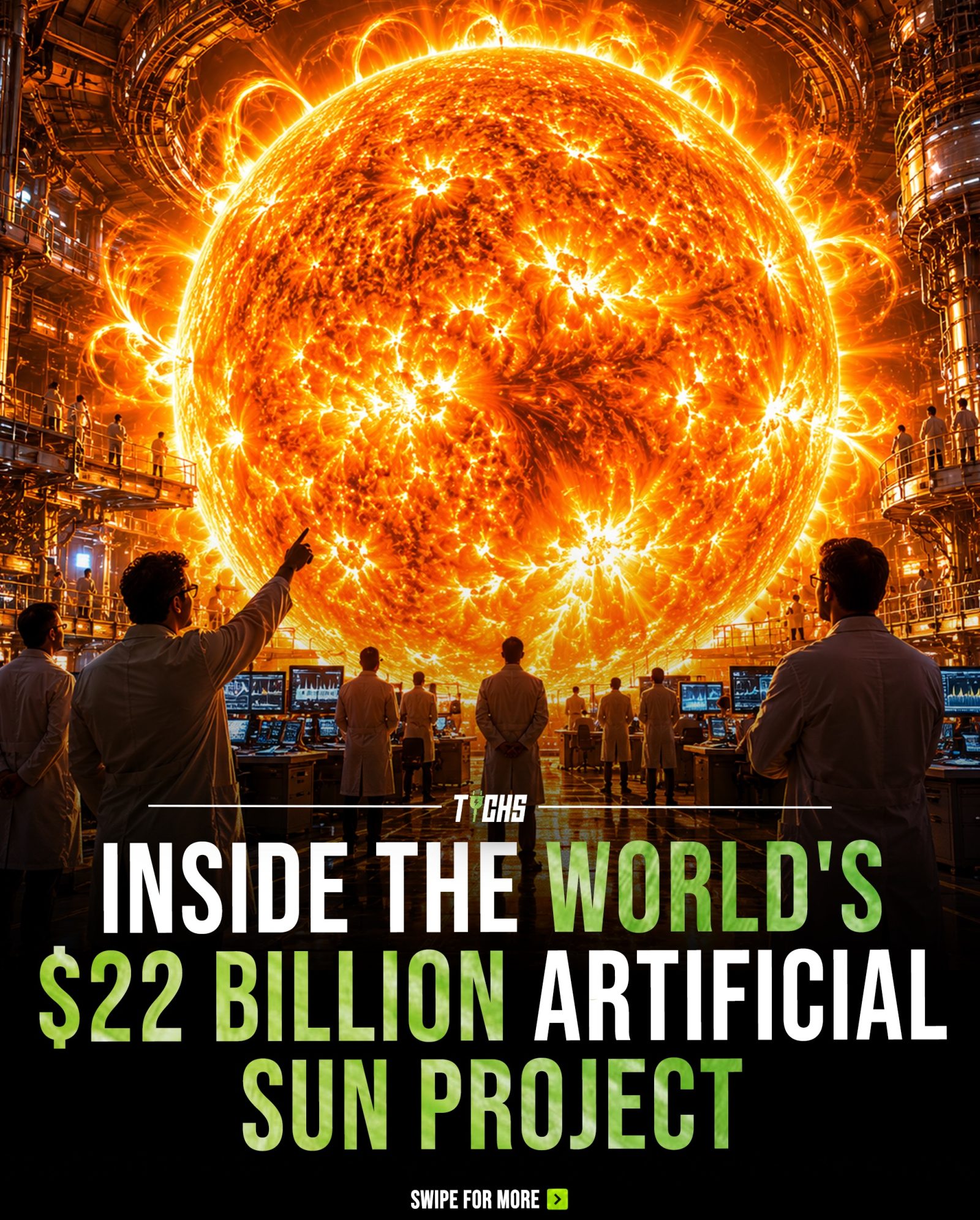
Artificial Sun Project
The ITER reactor in France is at the heart of one of humanity's most ambitious engineering endeavors: creating an artificial sun. This monumental project aims to harness the same fusion process that powers stars, potentially revolutionizing global energy production. By controlling plasma hotter than the Sun's core using some of the most powerful magnets ever built, scientists and engineers are working to make fusion energy a commercial reality. Let's dive into the intricacies of this groundbreaking initiative.
Context / Why This Matters
The ITER reactor is a joint venture involving multiple countries and decades of research. The goal is to generate abundant, low-carbon power by replicating the fusion reactions that occur in the Sun. If successful, this project could mark a new era in energy production, fundamentally transforming how the world generates electricity and significantly reducing carbon emissions.
The Science Behind Fusion
Fusion Reaction
Fusion, the process that powers stars, involves combining atomic nuclei to form heavier elements, releasing enormous amounts of energy. In the Sun, hydrogen atoms fuse to form helium, releasing energy in the form of heat and light. The ITER project aims to replicate this process on Earth using isotopes of hydrogen: deuterium and tritium. When these isotopes fuse, they form helium and a neutron, along with a tremendous amount of energy.
Plasma and Magnetic Confinement
Fusion requires an environment where the plasma, the fourth state of matter, can be heated to temperatures exceeding 150 million degrees Celsius. This super-hot plasma must be confined and controlled to sustain the fusion reaction. The ITER reactor uses powerful magnetic fields to achieve this confinement, ensuring that the plasma does not come into contact with the reactor's walls, which would otherwise cool it down and stop the reaction.
The central solenoid, a record-breaking magnet standing five stories tall and weighing about 1,000 tons, plays a crucial role in this process. This magnet generates the magnetic fields necessary to start and sustain the fusion reactions. It is one of the most complex and important components of the ITER reactor, highlighting the scale and complexity of the project.
The Role of Super-Hot Plasma
Fusion reactions require plasma hotter than the Sun’s core. The challenge is to contain and control this super-hot plasma, which is why the ITER reactor relies on some of the most powerful magnets ever built. These magnets help start and sustain the fusion reactions by creating a magnetic field that confines the plasma, allowing it to reach the necessary temperatures for fusion to occur.
The ITER Reactor
Design and Construction
The ITER reactor is a marvel of modern engineering, designed to demonstrate the feasibility of fusion power. The construction involves thousands of engineers and contributions from multiple countries, reflecting the global significance of this project. The reactor is housed in a massive building, and its components, including the central solenoid and other magnets, are designed to withstand the extreme conditions of fusion reactions.
Key Components
- Central Solenoid: This magnet is critical for generating the magnetic fields required to confine the plasma. Its size and weight are unprecedented, standing five stories tall and weighing about 1,000 tons.
- Toroidal Field Magnets: These magnets are arranged in a toroidal shape to create the magnetic field that confines the plasma.
- Poloidal Field Magnets: These magnets help to shape and control the plasma within the reactor.
- Vacuum Vessel: This is the chamber where the fusion reactions take place. It is designed to withstand the extreme temperatures and pressures of the plasma.
- Blankets and Divertors: These components protect the reactor walls from the intense heat and radiation produced by the fusion reactions and help to extract the energy from the plasma.
Practical Tips for Understanding Fusion
Understanding Plasma
Plasma is the fourth state of matter, consisting of free electrons and ions. It is highly conductive and can be manipulated using magnetic fields. In the ITER reactor, plasma is heated to temperatures exceeding 150 million degrees Celsius, making it hotter than the Sun's core.
Magnetic Confinement
Magnetic confinement is the process of using magnetic fields to contain and control plasma. In the ITER reactor, powerful magnets generate the magnetic fields necessary to confine the plasma, allowing it to reach the temperatures required for fusion.
Important Takeaways
The ITER reactor in France represents a groundbreaking effort to harness the power of fusion energy. By recreating the fusion process that powers stars, scientists and engineers aim to provide abundant, low-carbon power. The project involves complex technologies, including the use of powerful magnets to confine super-hot plasma, and requires the collaboration of thousands of engineers and contributions from multiple countries. If successful, the ITER project could revolutionize global energy production, paving the way for a new era of clean and sustainable energy.
Conclusion
The ITER reactor and the artificial sun project underscore the incredible potential of fusion energy to transform the world's energy landscape. By harnessing the power of fusion, we can generate abundant, low-carbon energy, significantly reducing our reliance on fossil fuels and mitigating the effects of climate change. This endeavor represents the pinnacle of human ingenuity and collaboration, pushing the boundaries of what is possible in the realm of energy production. As the project continues to advance, the world eagerly awaits the breakthroughs that could unlock a new era of clean, sustainable energy.
Watch the Reel
Questions readers ask
What makes the ITER project unique compared to other fusion energy endeavors?
The ITER project stands out due to its global collaboration and ambition to create the world's first practical fusion reactor. Unlike smaller-scale experiments, ITER aims to produce a plasma hotter than the sun's core and contain it using record-breaking magnets, setting a new benchmark in fusion energy production.
How does the ITER reactor plan to generate low-carbon power?
The ITER reactor seeks to generate low-carbon power by replicating the fusion reactions that occur in the sun. This process involves heating plasma to immense temperatures and using powerful magnets to contain and control it, ultimately producing energy with minimal greenhouse gas emissions.
What role do the ITER magnets play in the fusion energy production process?
The ITER magnets are crucial for containing the superheated plasma within the reactor. These are some of the most powerful magnets ever built and are designed to confine the plasma, preventing it from damaging the reactor walls and enabling the sustained fusion reactions needed for energy production.
What are the main engineering challenges faced by the ITER project?
The ITER project faces several engineering challenges, including creating and maintaining plasma hotter than the sun's core, designing magnets powerful enough to contain this plasma, and managing the immense forces and heat generated within the reactor. Additionally, integrating these technologies into a coherent and functional fusion reactor is a complex task.
How does the ITER project contribute to global energy goals?
The ITER project contributes to global energy goals by pursuing a sustainable, low-carbon energy source. If successful, the technology developed for the ITER reactor could lead to commercial fusion power plants, providing abundant energy with reduced environmental impact and helping to mitigate climate change.
What is the fuel for the sun's core and how is it used in the ITER project?
The fuel for the sun's core, and similarly for the ITER project, is a mix of deuterium and tritium, both isotopes of hydrogen. In the ITER reactor, these fuels are heated to extreme temperatures to form a plasma, where fusion reactions occur, releasing a tremendous amount of energy.
What are the key milestones in the development of the ITER project?
Key milestones in the ITER project include the completion of the reactor's main components, such as the magnets and vacuum vessel, as well as the successful initiation and maintenance of plasma within the reactor. The project aims to achieve its full fusion power by 2035, paving the way for future commercial fusion power plants.
Recent articles
Fresh deep dives from the latest Reels we unpacked.




Comments
Be the first to comment.