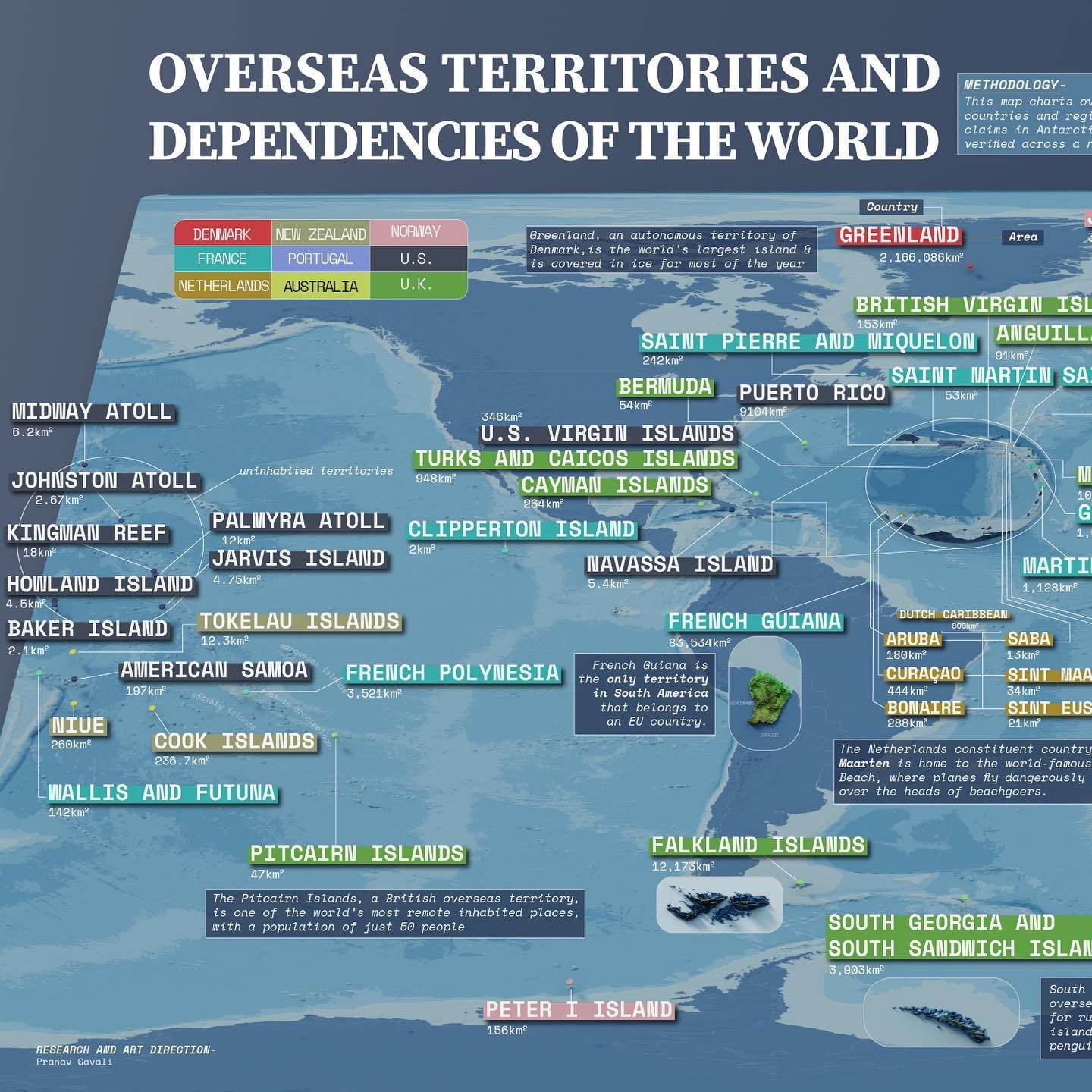
World Territories and Dependencies
Overseas territories and dependencies are regions that maintain ties to a sovereign nation but are not fully independent states nor constituent parts of their parent country. These territories often have unique histories, frequently linked to modern colonialism or wars, and continue to rely on their parent countries for various forms of support, including economic, military, and diplomatic affairs. This article will delve into the complexities of these regions, exploring their significance, key features, and notable examples.
Context / Why this matters
Understanding overseas territories and dependencies is crucial for several reasons. These regions often play pivotal roles in global geopolitics, influencing international relations, trade, and defense strategies. Moreover, they offer unique cultural, environmental, and strategic assets to their parent countries. By examining these territories, we gain a deeper appreciation for the intricacies of international governance and the enduring legacies of historical events.
Additionally, these territories serve as microcosms for broader discussions on sovereignty, autonomy, and self-determination. They challenge conventional notions of nation-states and highlight the diversity of political and administrative structures that exist around the world. This topic is especially pertinent in today's interconnected world, where the actions and decisions of one region can have far-reaching consequences.
Main discussion
Historical Background
The histories of overseas territories and dependencies are as diverse as the regions themselves. Many were established during the age of colonialism, beginning in the 1400s, as European powers sought to expand their empires. Others emerged from territorial disputes and wars in the 19th and 20th centuries. These territories often served as strategic outposts, resource-rich colonies, or locations for military bases.
For instance, Greenland, an overseas territory of Denmark, has a long history of Danish influence dating back to the 18th century. Similarly, French Guiana, an overseas department of France, was colonized in the 17th century and has since maintained strong ties to France. These territories are part of the broader legacy of European colonialism, which shaped global politics and economics for centuries.
Characteristics and Types
Overseas territories and dependencies can be categorized in various ways based on their characteristics and relationships with their parent countries. Some are fully integrated into the political and administrative systems of their parent countries, while others enjoy significant autonomy. For example, the British Virgin Islands, an overseas territory of the United Kingdom, operates under a system of self-governance with the UK maintaining responsibility for defense and foreign affairs.
Other territories, such as the Falkland Islands, are the subject of ongoing sovereignty disputes. The Falklands, a British overseas territory, have been a contentious issue between the UK and Argentina since the 19th century. This ongoing dispute highlights the geopolitical significance of these territories and the complexities of international relations.
Economic, Military, and Diplomatic Support
Many overseas territories and dependencies rely on their parent countries for various forms of support. This support can range from economic aid and infrastructure development to military protection and diplomatic representation. For example, the Pitcairn Islands, a British overseas territory, depend on the UK for economic assistance, defense, and foreign affairs. Similarly, American Samoa, an overseas territory of the United States, receives significant economic support from the U.S. government.
This reliance on parent countries for support is a defining characteristic of many overseas territories and dependencies. It underscores the interconnected nature of these regions and their parent countries, as well as the strategic and economic importance of these territories. Moreover, it highlights the ongoing role of colonial legacies in shaping global governance and international relations.
Key Regions and Examples
Notable overseas territories and dependencies include:
- Greenland: An autonomous territory of Denmark, Greenland is known for its vast landscapes and unique Inuit culture.
- Saint Pierre and Miquelon: An overseas collectivity of France, these islands are located off the coast of Canada and maintain strong ties to France.
- French Guiana: An overseas department and region of France, located on the northern Atlantic coast of South America, it serves as a key European outpost in the region.
- American Samoa: An unincorporated territory of the United States, it is known for its tropical climate, lush landscapes, and vibrant culture.
- Falkland Islands: A British Overseas Territory with a contentious history, it remains a subject of dispute between the UK and Argentina.
- Svalbard: A Norwegian archipelago in the Arctic Ocean, it is known for its unique polar environment and rich wildlife.
Each of these territories has a unique history, cultural identity, and strategic significance. They offer diverse examples of how overseas territories and dependencies interact with their parent countries and the broader global community.
Practical Tips
Exploring overseas territories and dependencies can be a rewarding and enlightening experience. Here are some practical tips for those interested in learning more:
Research and Stay Informed
Stay informed about current events and developments in these regions. Follow reliable news sources and academic publications to gain insights into the latest trends and issues affecting overseas territories and dependencies.
Visit and Experience
If possible, visit these territories. Traveling to these regions can provide firsthand experience and a deeper understanding of their unique characteristics. Whether it's exploring the vast landscapes of Greenland or experiencing the vibrant culture of American Samoa, these visits can be enlightening and memorable.
Engage with Local Communities
Engage with local communities to learn about their unique cultures, histories, and perspectives. Participate in local events, visit cultural sites, and interact with residents to gain a deeper appreciation for these regions.
Important Takeaways
- Overseas territories and dependencies are regions with ties to sovereign nations, offering unique cultural, environmental, and strategic assets.
- Their histories are diverse, often linked to modern colonialism or wars, and they continue to rely on their parent countries for various forms of support.
- These territories serve as microcosms for broader discussions on sovereignty, autonomy, and self-determination.
- Notable examples include Greenland, Saint Pierre and Miquelon, French Guiana, American Samoa, and the Falkland Islands.
Conclusion
Overseas territories and dependencies are intricate and multifaceted regions that play significant roles in global politics, economics, and culture. By understanding their histories, characteristics, and strategic importance, we gain a deeper appreciation for the complexities of international governance and the enduring legacies of historical events. Whether through research, travel, or community engagement, exploring these territories offers a rich and rewarding experience.
Watch the Reel
Questions readers ask
What are some examples of overseas territories and their parent countries?
Some well-known examples of overseas territories and their parent countries include the British Overseas Territories, such as the Falkland Islands and Bermuda, and the French Overseas Territories, like French Polynesia and Guadeloupe. These territories maintain strong ties to their respective parent countries and rely on them for various forms of support.
How do overseas territories influence global affairs?
Overseas territories play a significant role in global affairs by influencing international relations, trade, and strategic military positions. Their unique locations and resources often make them pivotal in global governance and international politics. These territories can also serve as key points for diplomatic negotiations and economic agreements.
What impact has colonialism had on overseas territories?
Colonialism has had a profound impact on overseas territories, shaping their cultural, economic, and political landscapes and often leaving complex legacies. Many of these territories still carry the influences of their colonial past, including language, legal systems, and cultural practices. Additionally, the historical ties to colonial powers continue to affect their relations and dependencies on their parent countries.
Why are South Pacific atolls significant in the context of overseas territories?
South Pacific atolls are significant because they often serve as strategic military and economic hubs. These small, remote islands can play crucial roles in global governance and international relations. Additionally, the sovereignty of these atolls, especially when contested, can lead to complex international disputes and negotiations, impacting the broader geopolitical landscape.
What are the main benefits of understanding the significance of overseas territories?
Understanding the significance of overseas territories provides valuable insights into the complexities of international governance and sovereignty. It helps in comprehending the economic, military, and cultural importance of these regions, as well as the strategic value they hold in global affairs. This knowledge can aid in navigating the intricacies of international relations and fostering a deeper appreciation for the diverse and interconnected world.
How do parent countries support their overseas territories?
Parent countries typically support their overseas territories in various ways, including economic aid, military protection, and diplomatic representation. This support helps these territories maintain their unique identities and navigate the challenges of governance and sovereignty. Additionally, the parent countries often facilitate economic opportunities and strategic advantages through their overseas territories, enhancing their own global influence.
Related deep dives
Similar reads based on topic and creator.

Recent articles
Fresh deep dives from the latest Reels we unpacked.




Comments
Be the first to comment.