Ancient Wonders of the World
The original Seven Wonders of the Ancient World are a collection of remarkable structures built by various civilizations. These architectural marvels were considered the most impressive achievements of their time, and while most no longer exist, they continue to captivate people with their former beauty and grandeur. Let's delve into the history, locations, and unique features of these ancient wonders.
Context / Why this matters
Understanding the original Seven Wonders of the Ancient World provides a fascinating glimpse into the ingenuity and artistry of ancient civilizations. These wonders, celebrated in ancient guidebooks and poems, were a testament to the engineering and aesthetic prowess of the Hellenistic world. Exploring their locations and features offers insights into the cultural and historical contexts of different eras, making them relevant subjects of study even today.
Main discussion
The Great Pyramid of Giza
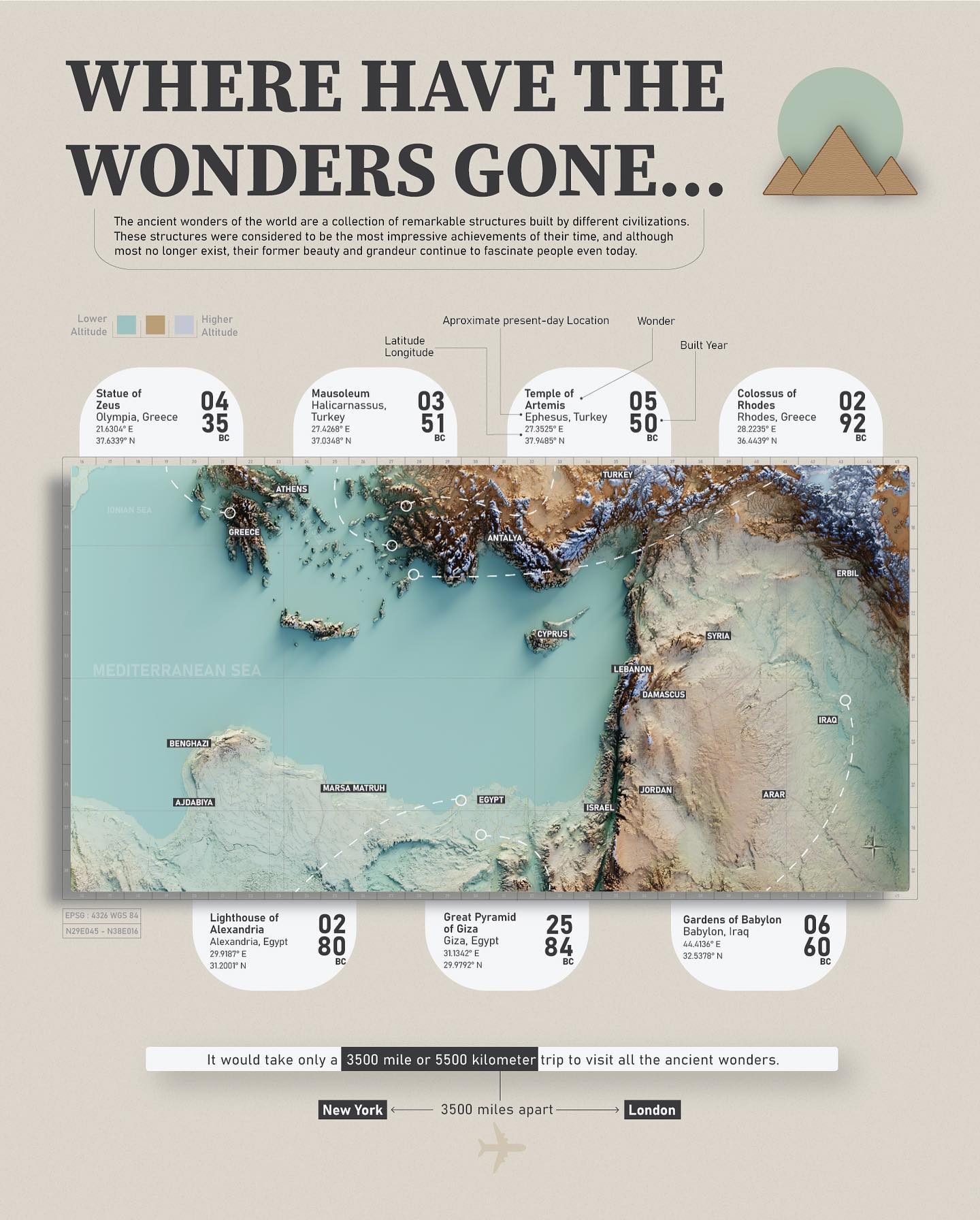
The Great Pyramid of Giza, located in Egypt, is the oldest and most enduring of the Seven Wonders. Built around 2550 BCE, it originally stood at 147 meters in height, making it the tallest man-made structure for over 3,800 years. The pyramid was constructed as a tomb for Pharaoh Khufu and is a marvel of ancient Egyptian engineering. Today, it remains the only wonder from the original list still standing, a testament to the enduring legacy of ancient Egyptian civilization. Its precise location is marked at approximately 29.97° N latitude and 31.20° E longitude.
The Hanging Gardens of Babylon
Located in the ancient city of Babylon, the Hanging Gardens were built around 600 BCE. These gardens are often depicted as a remarkable feat of engineering, with terraced gardens and lush vegetation suspended in the air. However, the exact location of the gardens remains a subject of debate among historians, with some speculating they might have been located in the city of Nineveh instead. The precise latitude and longitude of the gardens are approximately 32.537° N and 44.422° E, respectively.
The Statue of Zeus
The Statue of Zeus, created by the Greek sculptor Phidias, was located in the Temple of Zeus at Olympia, Greece, around 435 BCE. This colossal statue, made of ivory and gold, was renowned for its craftsmanship and grandeur. Unfortunately, the statue was destroyed, and only descriptions and replicas provide a glimpse into its former glory. The approximate present-day location is marked at 37.639° E and 27.772° N.
The Temple of Artemis
Built in the city of Ephesus, Turkey, around 550 BCE, the Temple of Artemis was one of the most revered sites in the ancient world. Dedicated to the goddess Artemis, this temple was known for its intricate design and ornate decor. Although it has since been destroyed, the site continues to be a place of historical and cultural significance. The temple's approximate present-day location is at 37.965° N and 31.20° E.
The Mausoleum at Halicarnassus
Located in Halicarnassus, Turkey, around 350 BCE, the Mausoleum was built as a tomb for Mausolus, a Persian satrap, and his sister-wife Artemisia. The structure was renowned for its architectural beauty and intricate sculptures. Today, the site is marked at 37.910° E and 31.20° N.
The Colossus of Rhodes
The Colossus of Rhodes, a massive statue of the Greek god Helios, was constructed on the island of Rhodes, Greece, around 280 BCE. Standing at an estimated height of over 30 meters, it was one of the most iconic landmarks of the ancient world. The statue was destroyed by an earthquake, and its exact location is approximately 36.443° N and 28.218° E.
The Lighthouse of Alexandria
The Lighthouse of Alexandria, built on the island of Pharos off the coast of Alexandria, Egypt, around 280 BCE, was one of the tallest man-made structures of its time. Standing at approximately 100 meters, it served as a beacon for sailors and was renowned for its architectural grandeur. The lighthouse's approximate present-day location is at 31.20° N and 29.97° E.
Practical tips
If you're planning to visit the modern-day locations of these ancient wonders, here are some practical tips to help you make the most of your journey:
-
Research in Advance: Gather as much information as possible about each site before your visit. This will give you a deeper understanding of the historical and cultural significance of each wonder.
-
Plan Your Route: Given the distances between the sites, plan your route efficiently. For instance, traveling from the Great Pyramid of Giza to the Hanging Gardens of Babylon would involve a 3,500-mile journey, which is approximately 5500 kilometers. This means you will need to allocate sufficient time for travel between sites.
-
Check for Local Resources: Many of these sites have local museums, guides, and resources that can enhance your experience. Engaging with local experts can provide valuable insights and a more immersive experience.
-
Respect Cultural Norms: Each site has its own cultural and historical context. Be respectful of local customs and traditions while visiting these locations.
-
Stay Safe and Secure: Ensure you have the necessary travel documents and stay updated on any travel advisories or restrictions related to the locations you plan to visit.
Important takeaways
-
Historical Significance: The Seven Wonders of the Ancient World represent the pinnacle of architectural and engineering achievements of their time. Understanding their historical context provides valuable insights into the cultural and technological advancements of ancient civilizations.
-
Cultural Heritage: These wonders continue to be a source of fascination and inspiration, contributing to the cultural heritage of the modern world.
-
Travel and Exploration: Visiting the modern-day locations of these wonders offers a unique opportunity to explore the rich history and cultural diversity of different regions. It is a journey through time, allowing you to connect with the past and appreciate the enduring legacy of these ancient marvels.
Conclusion
The original Seven Wonders of the Ancient World are a testament to the ingenuity, creativity, and architectural prowess of ancient civilizations. From the enduring Great Pyramid of Giza to the mysterious Hanging Gardens of Babylon, each wonder offers a unique glimpse into the past. By understanding their historical context, locations, and features, we can appreciate the enduring legacy of these remarkable structures and their significance in the modern world.
Watch the Reel
Questions readers ask
What are the Seven Wonders of the Ancient World and where were they located?
The original Seven Wonders of the Ancient World are: the Great Pyramid of Giza in Egypt; the Hanging Gardens of Babylon in modern-day Iraq; the Temple of Artemis at Ephesus in modern-day Turkey; the Statue of Zeus at Olympia in Greece; the Mausoleum at Halicarnassus in modern-day Turkey; the Colossus of Rhodes in Greece; and the Lighthouse of Alexandria in Egypt. Only the Great Pyramid of Giza still stands today.
Who decided which structures would be considered the Seven Wonders of the Ancient World?
The original list of Seven Wonders was curated from various ancient historical sources, including guidebooks and literary works. The most well-known compilation comes from a 2nd-century BC poem by Antipater of Sidon, which listed the seven most impressive structures of the ancient world.
What is the oldest and youngest of the Seven Wonders of the Ancient World?
The oldest of the Seven Wonders is the Great Pyramid of Giza, which was completed around 2560 BC. The youngest is the Colossus of Rhodes, which was completed in 280 BC, making it one of the newest monuments on the list.
What are some of the engineering marvels of the Seven Wonders of the Ancient World?
The Seven Wonders showcase numerous engineering marvels. For instance, the Great Pyramid of Giza was precisely aligned with the cardinal directions, and the Hanging Gardens of Babylon were said to have a complex irrigation system to support the lush gardens. The Lighthouse of Alexandria, at 350 feet (107 meters) tall, was an architectural marvel that used mirrors to reflect sunlight during the day and fire at night to guide sailors.
Are there any modern reconstructions of the Seven Wonders of the Ancient World?
While many of the original Seven Wonders no longer exist, some have been reconstructed or replicated in various forms. The Mausoleum at Halicarnassus, for example, has been partially reconstructed based on historical accounts and artifacts. Additionally, there are modern replicas of the Colossus of Rhodes in various museums and tourist attractions around the world.
What are the Seven Wonders of the Ancient World and why do they matter?
The Seven Wonders of the Ancient World are a testament to human ingenuity and artistic achievement and serve as a way to connect with the cultural heritage of ancient civilizations. They were celebrated in ancient guidebooks and poems, offering a glimpse into the engineering and artistic achievements of the past.
Related deep dives
Similar reads based on topic and creator.




Recent articles
Fresh deep dives from the latest Reels we unpacked.




Comments
Be the first to comment.