Google's AI Stack for Marketers: The Integration of AI Tools for Enhanced Marketing Strategies
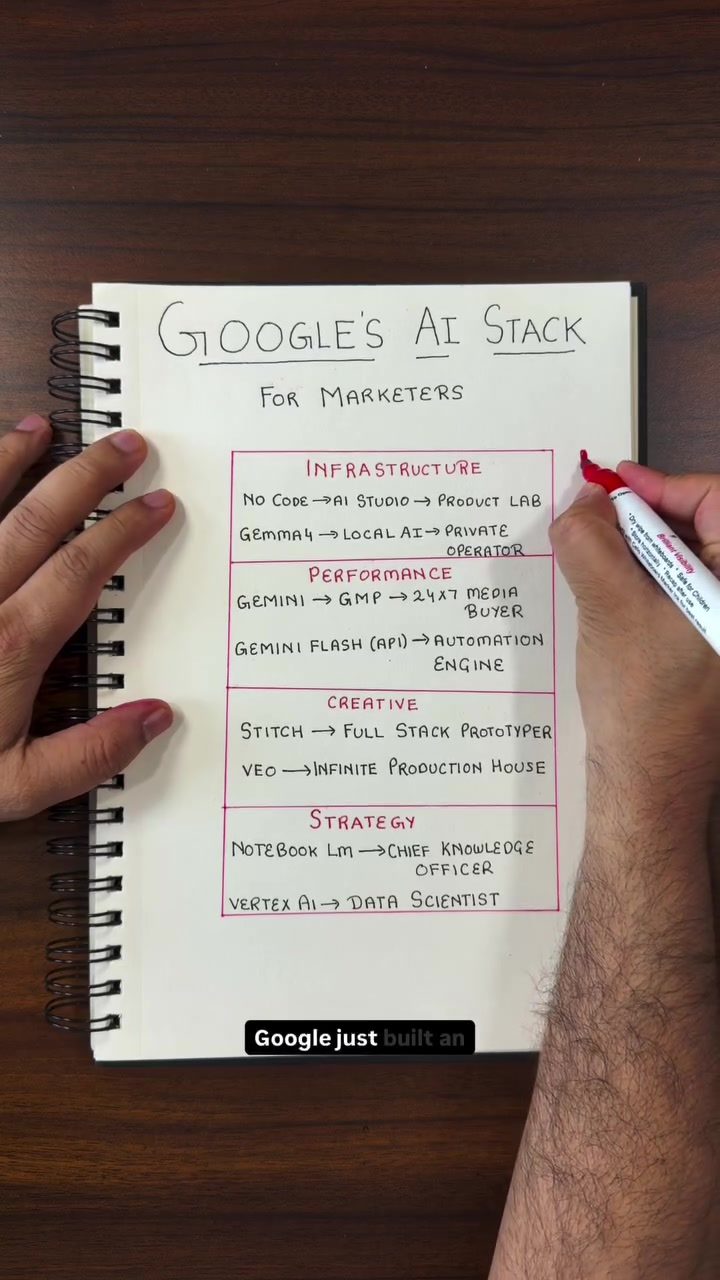
Google has developed an AI stack that is transforming the way marketers approach their strategies. This integrated system of AI tools streamlines workflows, making it easier to manage various aspects of marketing. The stack is composed of eight interconnected tools, divided into four layers: strategy, creative, performance, and infrastructure. Here’s an in-depth look at each layer and how they work together to create a cohesive marketing system.
Context: Why This Matters
Marketers today face a deluge of data and an ever-increasing need for efficiency. Google’s AI stack addresses these challenges by providing a comprehensive suite of tools that automate tasks, enhance creativity, and optimize performance. The integration of these tools allows marketers to create workflows that are not only efficient but also difficult for competitors to replicate.
Main Discussion
Strategy: The Foundation of Marketing
The strategy layer is the bedrock of the AI stack, providing tools that help marketers develop and refine their plans. Two key tools in this layer are NotebookLM and Vertex AI.
-
NotebookLM: This tool acts as your chief knowledge officer, allowing you to consolidate all your research, transcripts, and reports in one place. You can ask specific questions and get answers based solely on the content within your notebook, ensuring that your strategy is grounded in the data you have gathered. This tool is particularly useful for synthesizing information and generating insights that can inform your marketing decisions.
-
Vertex AI: This tool functions as your data scientist, helping you integrate AI into your CRM. Vertex AI can predict which customers are most likely to make a purchase and estimate their value, thereby optimizing your customer relationship management. This predictive capability allows for more targeted and effective marketing efforts.
Creative: Innovating Marketing Content
The creative layer focuses on generating high-quality, engaging content without the need for extensive design or development resources. Two core tools in this layer are Stitch and Vio.
-
Stitch: This tool is a full-stack prototyper, enabling you to describe a landing page in plain English and receive production-ready code. This means you can develop landing pages without needing a designer or developer, speeding up the creative process and reducing costs.
-
Vio: This tool acts as an infinite production house, allowing you to generate multiple ad variations with ease. Instead of investing in a single, expensive photoshoot, you can create 50 different ad variations, helping to mitigate ad fatigue. Vio is already integrated into Google Ads, making it a valuable tool for marketers looking to enhance their ad campaigns.
Performance: Maximizing Campaign Effectiveness
The performance layer is dedicated to optimizing your marketing campaigns. Two key tools in this layer are Gemini and Gemini Flash API.
-
Gemini: Integrated into Google’s marketing platform, Gemini functions as a 24/7 media buyer. It can read your media plan and build campaigns for you, ensuring that your marketing efforts are always optimized. Gemini’s ability to automate campaign creation and management saves time and improves efficiency.
-
Gemini Flash API: This tool acts as an automation engine, handling tasks such as programmatic SEO, personalized emails, and chatbots. Whether you need to execute 10,000 tasks at once or manage smaller, repetitive tasks, Gemini Flash API can automate the process, freeing up your time to focus on more strategic activities.
Infrastructure: The Backbone of the Stack
The infrastructure layer supports the entire AI stack, providing the tools necessary to build and run your own AI applications. Two essential tools in this layer are Google AI Studio and Gemma.
-
Google AI Studio: This tool acts as a product lab, allowing you to build your own AI tools. Whether you need a performance analyzer or any other custom tool, Google AI Studio provides the resources to create it. This flexibility enables marketers to tailor their AI tools to their specific needs, enhancing their overall marketing capabilities.
-
Gemma: This is a local AI tool that can run on your own system or server. It acts as a private operator, ideal for brands with sensitive data. Gemma ensures that your data remains secure while still benefiting from AI capabilities, providing a balance of security and performance.
Practical Tips
-
Start with NotebookLM: Use this tool to consolidate your strategy documents, competitor research, and other relevant information. Begin by asking synthesis questions to get insights from your data. This will help you build the habit of using AI as a thinking partner.
-
Explore Google AI Studio: Try building a simple tool, like an ad copy grader or a brief-to-headline generator, to understand how prompt-as-a-tool works. This will give you a practical understanding of how to leverage AI in your marketing efforts.
-
Leverage Gemini in Google Ads: Use the Ads Advisor feature to compare Gemini’s suggestions with your manual planning. This will help you build judgment on when to trust AI recommendations and when to override them.
-
Automate Weekly Tasks with Gemini Flash API: Identify one repetitive weekly task and automate it using Gemini Flash API. This will give you a taste of how 10x output can be achieved through automation.
-
Enhance Creativity with Veo and Stitch: Use these tools to generate ad variations and prototype landing pages. Focus on creative direction rather than production details to maximize their effectiveness.
Important Takeaways
-
Integrated System: Google’s AI stack is designed to be a connected system, not a collection of isolated tools. Data from your ads can feed into Vertex predictions, which in turn inform Gemini campaigns, and the results can loop back into NotebookLM for review.
-
Efficiency and Effectiveness: By using these tools, marketers can build workflows that are not only efficient but also difficult for competitors to replicate. The integration of these tools allows for a seamless, end-to-end marketing process.
-
Learning Path: Start with the strategy layer (NotebookLM) and gradually move up through the layers (Google AI Studio, Gemini, Gemini Flash API, Veo, and Stitch). This bottom-up approach will help you understand and utilize the stack effectively.
Conclusion
Google’s AI stack for marketers represents a significant shift from tools you use to infrastructure that runs your marketing. By adopting this integrated system, marketers can automate repetitive tasks, generate creative content, and optimize performance, all while maintaining control over their data. As the marketing landscape continues to evolve, tools like Google’s AI stack will become increasingly important for staying competitive and efficient.
Watch the Reel
Questions readers ask
What are the four layers of Google's AI stack for marketing?
Google's AI stack is organized into four layers: strategy, creative, performance, and infrastructure. Each layer contains specific tools designed to address different aspects of marketing, from high-level planning to the technical infrastructure that supports it.
How does Google's AI stack enhance marketing strategies?
The integrated AI tools in Google's stack improve marketing strategies by automating routine tasks, providing data-driven insights, and enhancing creative processes. This enables marketers to focus on strategic initiatives rather than mundane tasks.
What is the role of Vertex AI in Google's marketing toolkit?
Vertex AI is a key component in Google's AI stack, offering a comprehensive platform for building, deploying, and managing machine learning models. It helps marketers leverage advanced AI capabilities to optimize campaigns and gain deeper insights from data.
How does Google's AI stack simplify marketing workflows?
By integrating eight interconnected tools, Google's AI stack streamlines marketing workflows. These tools work together to automate processes, reduce manual efforts, and ensure that various marketing tasks, from content creation to performance analysis, are seamlessly coordinated.
What are some examples of Google's creative AI tools for marketing?
Google's AI stack includes tools that enhance creativity in marketing by providing advanced features for content generation, design, and personalization. These tools help marketers create more engaging and relevant content tailored to their audience's preferences.
Can Google’s AI tools help improve the performance of marketing campaigns?
Yes, Google's AI stack includes performance-focused tools that optimize marketing campaigns by analyzing data in real-time, predicting trends, and making data-driven recommendations. This helps marketers achieve better results and higher ROI from their campaigns.
Related deep dives
Similar reads based on topic and creator.




Recent articles
Fresh deep dives from the latest Reels we unpacked.




Comments
Be the first to comment.