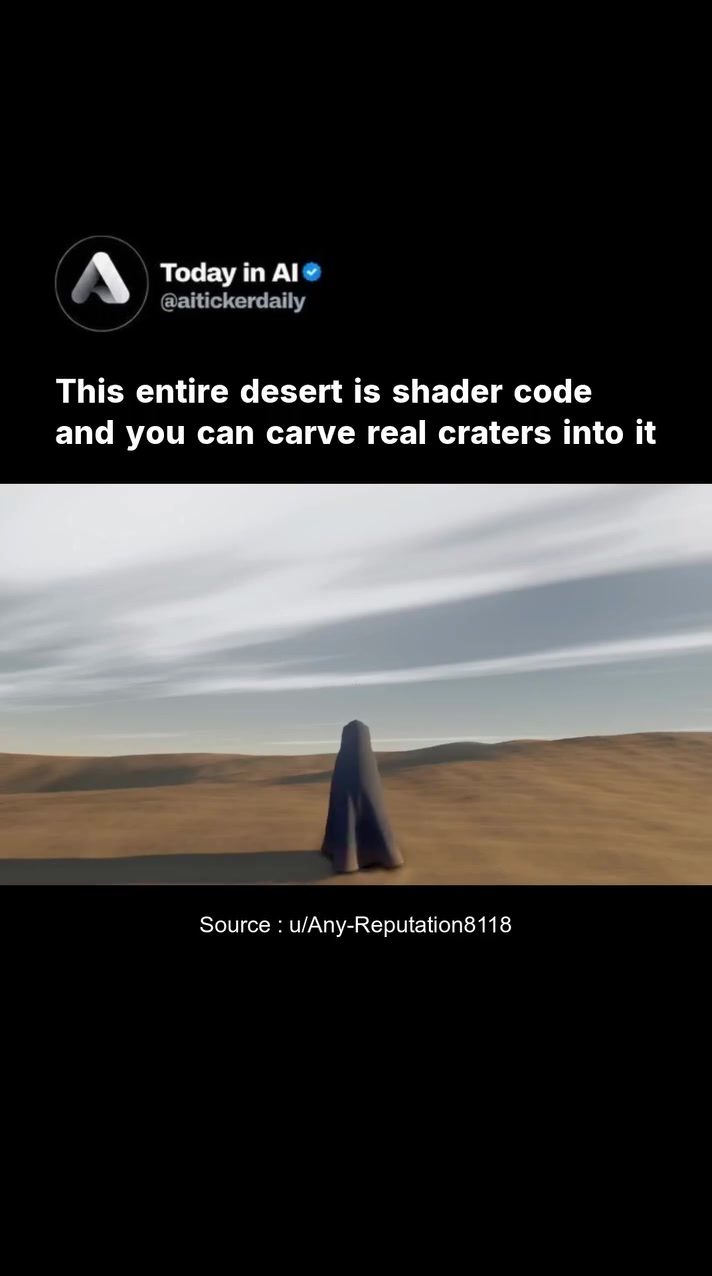
AI-Generated Desert Landscapes
AI-generated desert landscapes are a fascinating example of how technology can create immersive and interactive environments. These landscapes are not just static images but dynamic environments that react to user interactions in real-time. The entire desert is generated using shader code, which allows for detailed and realistic textures without the need for traditional meshes or textures.
Context / Why this matters
AI-generated landscapes are more than just a display of technological prowess; they represent a significant leap in how we can interact with digital environments. By using shader code, developers can create highly detailed and responsive landscapes that adapt to user actions, making for a more immersive experience. This technology has applications beyond just gaming and entertainment. It can be used in architectural visualizations, educational simulations, and even in virtual reality experiences.
Main discussion
The Technology Behind AI-Generated Landscapes
AI-generated landscapes, such as the desert example, are created using advanced shader code and GPU (Graphics Processing Unit) simulation. Shader code allows for real-time rendering of complex graphics, enabling the creation of intricate details like dunes, grains of sand, and even cloth simulation. This technology leverages the power of GPUs to handle the heavy computational tasks involved in generating and rendering these landscapes.
Real-Time Interaction and Dynamics
One of the standout features of AI-generated desert landscapes is the ability to interact with the environment in real-time. For instance, as a figure walks through the desert, the sand deforms and erodes back over time, creating a dynamic and ever-changing landscape. This level of detail and interactivity is made possible by GPU simulation, which ensures that the landscape responds fluidly to user actions. Each movement, such as walking or casting a spell, has a tangible effect on the environment, making the experience more engaging and lifelike.
Shader Code and GPU Simulation
Shader code is at the heart of these AI-generated deserts. It allows for the creation of highly detailed, procedurally generated environments without the need for pre-rendered elements. This means that every dune, grain of sand, and even the fabric of a robe can be generated on the fly, providing a level of realism that traditional methods cannot match. The GPU simulation enhances this by enabling real-time interactions, such as the ability to carve craters and raise dunes, adding an interactive element to the environment.
Procedural Generation and Real-Time Interaction
The procedural generation of these environments ensures that they are not only visually stunning but also highly interactive. The desert explorer, for example, is built entirely with Claude Code and Opus 5, allowing for a wide range of dynamic features. Not only does the sand deform underfoot, but the robed figure also interacts with the environment through spells that dig craters and raise dunes. This level of interactivity creates a more immersive and engaging experience, making the user feel as though they are truly part of the environment.
Practical tips
Exploring AI-Generated Environments
To experience AI-generated desert landscapes firsthand, you can visit the desert explorer, where you can walk through the desert, see the sand deform under your feet, and interact with the environment using various spells. This hands-on experience will give you a better understanding of how shader code and GPU simulation work together to create such detailed and interactive environments.
Staying Updated with AI Developments
If you're interested in staying updated with the latest developments in AI-generated environments, consider subscribing to newsletters that focus on AI technology, like the one mentioned in the original post. These newsletters provide daily updates on new advancements, ensuring you're always in the loop. A service like this is particularly useful for those who want to keep up with rapid technological advancements in the field.
Engaging with the AI Community
Being part of the AI community, especially on platforms like Reddit (r/ClaudeAIComment), can provide valuable insights and inspiration. Engaging with discussions, sharing your own experiences, and learning from others' projects can enhance your understanding and appreciation of AI-generated landscapes. The community is a rich source of knowledge and inspiration, offering a wealth of resources and support for enthusiasts and professionals alike.
Important takeaways
The Power of Shader Code
Shader code is a powerful tool that enables the creation of highly detailed and interactive environments. By leveraging this technology, developers can generate landscapes that are not only visually stunning but also highly dynamic and responsive to user interactions.
GPU Simulation for Real-Time Interactivity
GPU simulation is essential for creating real-time interactive environments. It allows for the seamless rendering of dynamic elements, such as sand deformation and cloth simulation, making the experience more immersive and engaging.
The Future of AI-Generated Environments
AI-generated environments represent the future of digital experiences. As technology continues to advance, we can expect to see even more realistic and interactive environments, pushing the boundaries of what is possible in the digital world. The potential for these environments extends beyond gaming and entertainment, with applications in various industries.
Conclusion
AI-generated desert landscapes are a testament to the incredible capabilities of modern technology. By leveraging shader code and GPU simulation, developers can create highly detailed, interactive, and immersive environments. This technology has far-reaching applications, from entertainment and education to architectural visualizations and virtual reality. As AI continues to evolve, the possibilities for creating even more realistic and interactive digital environments are endless. Dive into the world of AI-generated landscapes and experience the future of digital exploration.
Watch the Reel
Questions readers ask
What is shader code and how does it contribute to AI-generated desert landscapes?
Shader code is a type of program that runs on the GPU to generate graphics. In the context of AI-generated desert landscapes, shader code enables real-time adjustments to the environment. This means that as users interact with the landscape, the shader code can dynamically alter textures, lighting, and other visual elements to create a more immersive experience.
How do AI-generated desert landscapes differ from traditional digital environments?
AI-generated desert landscapes are dynamic and interactive, responding to user actions in real-time. Unlike traditional digital environments that rely on pre-rendered textures and meshes, AI-generated landscapes use shader code to create detailed and realistic textures on the fly, allowing for a more immersive and adaptable experience.
What are the benefits of using shader code for creating desert environments in gaming and VR?
Using shader code for desert environments in gaming and VR allows for highly detailed and responsive landscapes. This technology can adapt to user actions, providing a more immersive experience. Additionally, shader code can reduce the need for extensive pre-rendered assets, making development more efficient and allowing for larger, more complex environments.
Can AI-generated desert landscapes be used in fields beyond gaming and VR?
Yes, the technology behind AI-generated desert landscapes has applications in various fields. For instance, it can be used in simulation and training scenarios, urban planning, and even in artistic and creative projects. Any field that requires realistic, interactive digital environments can benefit from this technology.
What are some examples of real-time interactions in AI-generated desert landscapes?
Real-time interactions in AI-generated desert landscapes can include changes in lighting, weather effects, and terrain modifications. For example, users might see shadows shift as they move, or watch as a virtual sunrise or sunset dynamically changes the scene. Wind effects could alter the appearance of sand dunes, or users could even interact with virtual objects that leave temporary marks on the landscape.
How does procedural terrain generation enhance the creation of AI desert landscapes?
Procedural terrain generation allows for the creation of vast, detailed landscapes without the need for manual design. By using algorithms to generate terrain features like dunes, canyons, and rock formations, developers can create vast desert environments quickly and efficiently. This process can also be integrated with shader code to ensure that the generated terrain is not only detailed but also interactive and responsive to user inputs.
What role does GPU acceleration play in the performance of AI-generated desert landscapes?
GPU acceleration is crucial for the performance of AI-generated desert landscapes. Since shader code runs on the GPU, leveraging its power allows for real-time rendering and interactions. This means that complex visual effects, like detailed textures and dynamic lighting, can be processed quickly, ensuring a smooth and immersive experience for users.
Related deep dives
Similar reads based on topic and creator.

Recent articles
Fresh deep dives from the latest Reels we unpacked.




Comments
Be the first to comment.