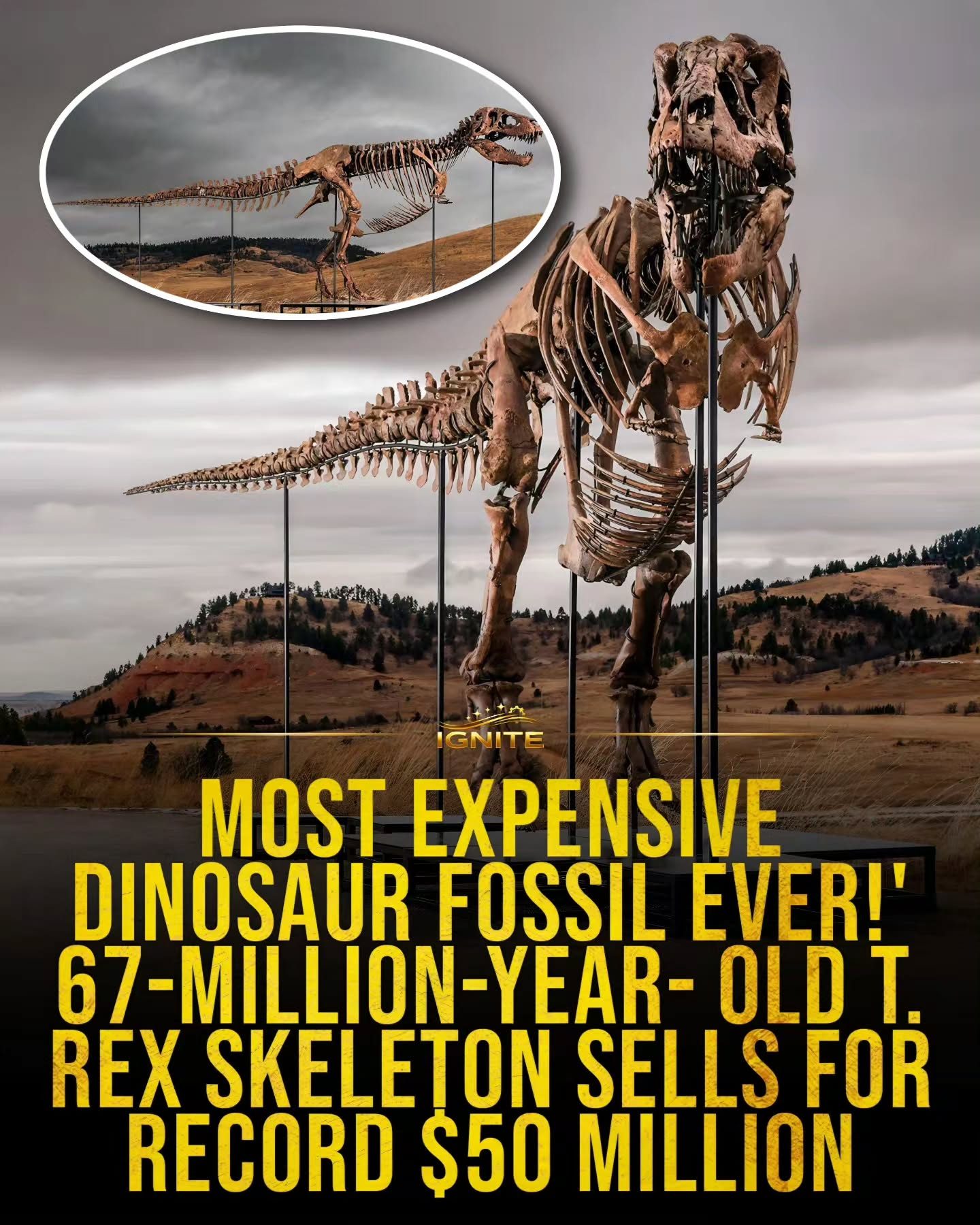
Dinosaur Fossils — A Market for Prehistoric Artifacts
Dinosaur fossils hold a unique allure for both scientists and enthusiasts, but the market for these prehistoric artifacts is also a fascinating study in high-stakes auctions and record-breaking sales. Recently, a 67 million-year-old Tyrannosaurus Rex (T. rex) skeleton commanded a record price of $50 million, making it the most expensive dinosaur fossil ever sold. This remarkable sale wasn't just a financial milestone; it was a testament to the enduring fascination with dinosaurs and the value placed on these ancient relics.
Why Fossils Matter
Dinosaur fossils are more than just curiosities; they are windows into the Earth's distant past. Scientists use fossils to study the evolution of life, the environment, and even the geological history of our planet. Fossils provide direct evidence of past life forms, their adaptations, and the ecosystems they inhabited. They have also been a source of inspiration for countless books, movies, and educational materials. In essence, dinosaur fossils are priceless tools for unlocking the mysteries of our world.
The Most Expensive Fossil: A T. Rex Record
The recent sale of a 67 million-year-old T. rex skeleton for $50 million is a significant milestone in the world of paleontology. The fossil was sold by IGNITE, a company known for its involvement in high-profile auctions of rare and valuable items. This particular skeleton holds a special place in the fossil record. Tyrannosaurus Rex itself was one of the most formidable predators of the late Cretaceous period, and its fossils are always in high demand.
What Makes This T. Rex Unique?
The 67 million-year-old T. rex is exceptional for several reasons. Its size and completeness make it one of the most impressive specimens ever discovered. T. rex fossils are relatively rare, and a well-preserved skeleton is even more so. The high price reflects the rarity, historical significance, and scientific value of this particular specimen.
The Auction Process
Auctions like these are a testament to the interest and investment in paleontological artifacts. The process involves meticulous preparation, expert authentication, and extensive marketing to attract high-profile buyers. The sale of this T. rex skeleton was likely a complex process, coordinated by specialists to ensure the fossil's value was realized on the global stage.
The Buyers: Who Are They?
Buyers of such expensive fossils can vary widely. They may include museums, private collectors, and even corporations looking to invest in unique and prestigious items. The sale of a T. rex skeleton is a significant event that can attract international attention and drive competition among bidders.
Practical Tips for Collectors and Enthusiasts
How to Start a Fossil Collection
For those interested in starting a fossil collection, it's important to begin with some grounding in the field. Here are a few tips:
- Education and Research: Understand the basics of paleontology and the legal and ethical considerations surrounding fossil collection. This includes learning about the laws governing fossil collection and owning fossils in your region.
- Start Small: Begin with smaller, more affordable fossils that can still provide valuable insights. Over time, you can expand your collection with more significant and rare specimens.
- Work with Professionals: Collaborate with experts and museums to authenticate and preserve your fossils. This ensures that you have valuable and genuine specimens in your collection.
Preserving and Displaying Fossils
Proper preservation and display are crucial for maintaining the value and integrity of your fossils. Here are some tips:
- Storage: Store fossils in a cool, dry place away from direct sunlight and extreme temperatures. Use acid-free materials to wrap and protect the specimens.
- Display: Use high-quality display cases to showcase your fossils. Consider lighting and environmental conditions to ensure the fossils remain in good condition.
The Legal and Ethical Considerations
Collecting fossils has legal and ethical implications. It's essential to be aware of the regulations and guidelines in your area. Some regions have strict laws regarding the removal and ownership of fossils, especially those found on public lands. Always obtain the necessary permits and follow ethical guidelines to ensure your collection is both legal and responsible.
Buying Fossils: What to Look For
When purchasing fossils, it's important to be informed and cautious. Here are some tips:
- Authenticity: Ensure the fossil is genuine and has been properly authenticated. Look for certificates of authenticity and consult with experts if necessary.
- Provenance: Understand the origin and history of the fossil. Know where it was found and how it was collected to ensure it was obtained legally and ethically.
- Condition: Assess the condition of the fossil. While minor imperfections are normal, significant damage can affect the value and integrity of the specimen.
Important Takeaways
The sale of the 67 million-year-old T. rex skeleton for $50 million underscores the high value placed on dinosaur fossils. Whether you're a scientist, a collector, or an enthusiast, these ancient relics offer a unique connection to the past. They are not only fascinating but also play a crucial role in our understanding of the Earth's history and the evolution of life. Fossils are a tangible link to the prehistoric world, and their significance extends far beyond their monetary value.
Fossil collecting, whether at a professional or hobbyist level, requires dedication, knowledge, and a sense of responsibility. By following best practices in preservation, display, and legal compliance, you can ensure that your collection remains a valuable and meaningful part of your life and the broader scientific community.
Conclusion
Dinosaur fossils, such as the T. rex skeleton that sold for a record $50 million, are more than just artifacts; they are priceless links to our planet's distant past. The market for these rare and valuable items is driven by a deep fascination with prehistory and a desire to preserve and study these ancient relics. Whether you're a seasoned collector or just starting, understanding the value and significance of dinosaur fossils can enhance your appreciation and enjoyment of these extraordinary pieces of history.
Watch the Reel
Questions readers ask
What makes a dinosaur fossil so valuable?
The value of a dinosaur fossil is determined by several factors, including its rarity, completeness, and the story it tells about the prehistoric era. The Tyrannosaurus Rex skeleton sold for $50 million is a prime example, as it is one of the most complete and well-preserved fossils ever discovered.
How were the dinosaurs fossils from the auction discovered and preserved?
Most dinosaur fossils, including the Tyrannosaurus Rex sold for $50 million, are discovered during excavation. Scientists and fossil hunters carefully unearth the bones, then the fossils are preserved using specialized techniques to maintain the integrity of the ancient bones.
Can anyone buy dinosaur fossils, or are they only for museums?
While museums often acquire dinosaur fossils for public display, private collectors also purchase these ancient relics. The $50 million Tyrannosaurus Rex skeleton was bought by an anonymous buyer, though it may eventually be displayed in a museum or a private dinosaur fossil showcase.
What can we learn from expensive dinosaur fossils like the $50 million T. rex?
Expensive dinosaur fossils offer unique insights into the Earth's distant past. The $50 million T. rex fossil, for instance, provides valuable data on the behavior, evolution and environment of the late Cretaceous period. Such fossils help map the landscape of the prehistoric world.
Where are dinosaur fossils typically displayed?
Dinosaur fossils are typically displayed in museums, universities, and private collections. These displays allow the public to engage with these ancient relics and often include detailed information about the fossil's history and significance. For instance, the fossil auctioned for $50 million will be showcased in a fossil display landscape.
What is the process for auctioning a rare dinosaur fossil?
Auctioning a rare dinosaur fossil involves meticulous preparation. The fossil is authenticated, appraised, and often transported to auction houses. It is then showcased and sold to the highest bidder, often for tens of millions. The $50 million T. rex fossil auction is a shining example.
What other dinosaur fossils have made significant headlines in auctions?
Some notable dinosaur fossils that have made headlines in auctions include a Triceratops fossil that sold for $7.7 million, and a Velociraptor fossil, known as the 'Dragon Lord', sold for $1.5 million. However, these sales are eclipsed by the record-breaking $50 million T. rex fossil sale.
Related deep dives
Similar reads based on topic and creator.



Recent articles
Fresh deep dives from the latest Reels we unpacked.




Comments
Be the first to comment.