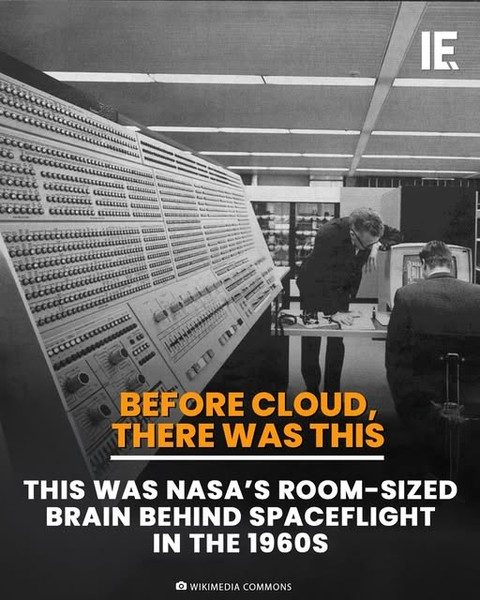
NASA's IBM System/360 Model 91: The Room-Sized Powerhouse
In the 1960s, NASA relied on a technological marvel that today seems almost unimaginable: a room-sized computer called the IBM System/360 Model 91. This machine was a powerhouse, instrumental in the early days of space exploration. The computer's primary function was to crunch vast amounts of numerical data, which was crucial for the complex calculations needed to propel rockets beyond Earth's atmosphere.
Why This Matters
The IBM System/360 Model 91 was more than just a computer; it was the brain behind some of the most significant space missions of the 20th century. Before the advent of cloud computing and modern digital infrastructure, this mainframe computer handled the intricate calculations necessary for spaceflight. Its role in propelling rockets beyond Earth underscores the importance of early computing technology in the space race.
The IBM System/360 Model 91: A Deep Dive
The Architecture and Design
The IBM System/360 was a groundbreaking series of mainframe computer systems introduced in 1964. The Model 91, in particular, was known for its advanced capabilities and was one of the most powerful models in the series. It featured a large, robust design, which was necessary to house the extensive hardware required for its operations. The machine was designed to handle complex mathematical computations, making it ideal for NASA's needs.
Capabilities and Performance
The IBM System/360 Model 91 was equipped with advanced features that made it a standout in its time. It had a high-speed memory capacity and could perform millions of calculations per second. This processing power was essential for the complex tasks involved in spaceflight, including trajectory calculations, launch sequences, and mission simulations.
The Role in Space Exploration
NASA relied heavily on the IBM System/360 Model 91 for various missions, including the Apollo program. The computer was used to process data from various sensors and instruments onboard spacecraft, ensuring that missions were executed with precision. Its ability to handle large datasets and perform intricate calculations was crucial for the success of early space missions.
Practical Tips for Understanding Mainframe Computing
While the IBM System/360 Model 91 is a relic of the past, understanding its role and capabilities can provide valuable insights into the evolution of computing technology. Here are some practical tips for gaining a deeper appreciation of mainframe computing:
Explore Historical Archives
Many historical documents and archives provide detailed information about mainframe computers like the IBM System/360 Model 91. These resources can help you understand the technological advancements and challenges of the era.
Visit Museums and Exhibitions
Museums and exhibitions often feature exhibits on early computing technology. These displays can provide a hands-on experience and a visual understanding of how these machines operated.
Read Technical Literature
Technical literature and manuals from the 1960s can offer detailed specifications and operational insights into the IBM System/360 Model 91. These resources can help you understand the intricacies of mainframe computing.
Important Takeaways
The IBM System/360 Model 91 was a pivotal piece of technology in the history of space exploration. Its room-sized design and powerful computing capabilities made it an essential tool for NASA in the 1960s. The computer's role in early space missions highlights the importance of early computing technology and the foundations it laid for modern digital infrastructure.
Conclusion
The IBM System/360 Model 91 stands as a testament to the technological advancements of the 1960s. Its role in space exploration and mainframe computing serves as a reminder of how far technology has come and the groundbreaking innovations that paved the way for modern computing. Understanding the capabilities and historical significance of this room-sized computer provides a deeper appreciation for the evolution of technology and its impact on space exploration.
Watch the Reel
Questions readers ask
What role did the IBM System/360 Model 91 play in NASA's 1960s space missions?
The IBM System/360 Model 91 was crucial for NASA's space missions in the 1960s. It performed complex calculations and handled vast amounts of data necessary for launching and navigating rockets beyond Earth's atmosphere. This room-sized computer was instrumental in the success of early space missions.
Why was the IBM System/360 Model 91 considered a technological marvel in the 1960s?
The IBM System/360 Model 91 was considered a technological marvel due to its immense computing power and ability to process complex numerical data. In an era before modern digital infrastructure, this mainframe computer was a cutting-edge tool that enabled significant advancements in space exploration.
How did the IBM System/360 Model 91 help in the calculations needed for rocket launches?
The IBM System/360 Model 91 provided the essential calculations for propelling rockets into space. It handled intricate tasks such as orbital calculations, trajectory planning, and tracking. These precise computations were vital for the success of early space missions, ensuring that rockets could safely and accurately reach their destinations.
What made the IBM System/360 Model 91 a key component of NASA's early computing systems?
The IBM System/360 Model 91 was a key component due to its robust processing capabilities and reliability. It served as the backbone of NASA's computing infrastructure, managing a multitude of tasks that required high precision and efficiency. This room-sized computer was indispensable for the complex operations involved in space exploration.
How did NASA's reliance on the IBM System/360 Model 91 impact the success of early space missions?
The reliance on the IBM System/360 Model 91 significantly impacted the success of early space missions by ensuring accurate and timely calculations. The computer's ability to process vast amounts of data with precision was essential for navigating the challenges of spaceflight, from launch to landing.
What are some examples of the tasks handled by the IBM System/360 Model 91 during NASA's space missions?
The IBM System/360 Model 91 handled a range of tasks, including trajectory planning, orbital mechanics, and real-time tracking of spacecraft. It also processed telemetry data, monitored mission parameters, and provided essential support for mission control, ensuring smooth and successful space missions.
How has the computing technology used in space exploration evolved since the 1960s?
Since the 1960s, computing technology in space exploration has evolved significantly. Modern systems have replaced the room-sized mainframes with smaller, more powerful, and energy-efficient computers. Today's digital infrastructure allows for real-time data processing, advanced simulations, and enhanced communication capabilities, making space missions more efficient and reliable.
Related deep dives
Similar reads based on topic and creator.


Recent articles
Fresh deep dives from the latest Reels we unpacked.




Comments
Be the first to comment.