Motorcycle Stunts and Practical Effects in Tokusatsu Series
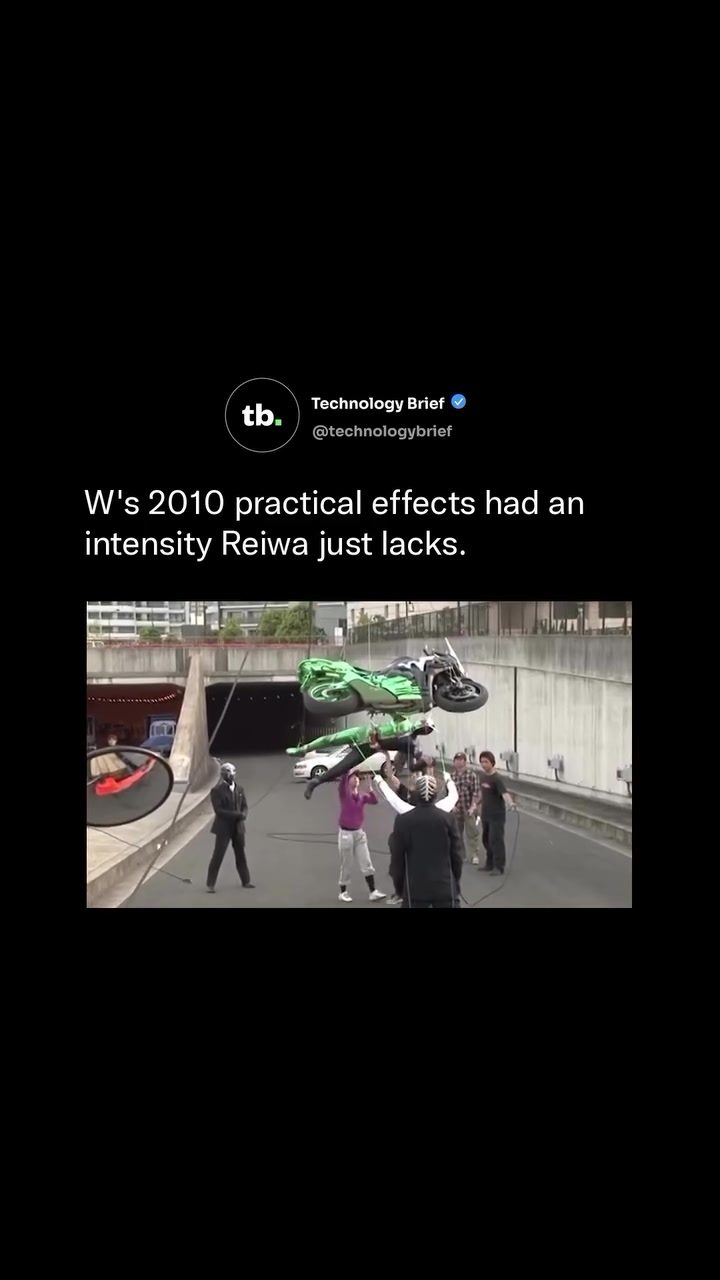
The tokusatsu series Kamen Rider W is renowned for its thrilling motorcycle stunts, which were executed entirely with physical wire rigs and no CGI. This approach, used between 2009 and 2010, showcased the raw intensity and authenticity of practical effects, contrasting starkly with the current Reiwa era's reliance on digital methods.
Context
Tokusatsu, a genre of Japanese live-action superhero shows, often features elaborate stunts and special effects. The series Kamen Rider W, aired on TV Asahi, stood out by using practical effects to enhance the realism of its motorcycle stunt scenes. This era showcased the skills of performers and crew, who meticulously coordinated each movement by hand, suspending riders in mid-air.
In contrast to these traditional methods, the current Reiwa era relies heavily on CGI to achieve similar effects. This shift has sparked discussions about the trade-offs between realism and convenience.
The Art of Practical Effects in Tokusatsu
Understanding Wire Rigs
Wire rigs form the backbone of the wire-based special effects used in the Kamen Rider W series. The ground crew manually controlled the wires, positioning the performers in mid-air. This technique required extensive rehearsals, with crew members calling out cues in real-time to synchronize the movements of the actors and the motorcycle. It was a labor-intensive process, but the result was a level of realism that CGI often struggles to replicate.
The Role of the Suit Actor
Seiji Takaiwa, the suit actor who portrayed Kamen Rider Double, played a pivotal role in the series. His performance, combined with the meticulous work of the crew, brought the motorcycle stunts to life. The suit actor's agility and precision, coupled with the crew's coordination, created the illusion of superhuman abilities.
The Transition to Modern Effects
The intensity of the practical effects used in Kamen Rider W highlights a significant shift in the production of tokusatsu series. In 2010, the series epitomized the use of physical effects, relying on wire rigs for all flying motorcycle scenes. The current Reiwa era, however, has seen a transition towards CGI, which offers greater flexibility but often lacks the raw, tangible realism of practical effects.
The Challenges of Practical Effects
Practical effects, while visually impressive, come with a set of challenges. The use of wire rigs requires extensive physical preparation and coordination among the crew. The slightest mistake can compromise the entire scene, making the process highly demanding. However, the authenticity and intensity achieved through practical effects are hard to match with digital methods.
The Rise of CGI in Tokusatsu
Modern tokusatsu series often opt for CGI to achieve similar stunts. This method provides more control over the final product, allowing for seamless edits and adjustments. However, the transition to CGI has led to debates about the loss of the raw, tangible quality that practical effects offer. While CGI can create visually stunning scenes, it often lacks the same level of realism and intensity that practical effects bring to the screen.
Practical Tips for Stunt Work
Creating realistic motorcycle stunt scenes, whether through practical effects or CGI, requires a blend of skill, precision, and creativity. Here are some practical tips for achieving high-quality stunt work.
Invest in High-Quality Equipment
High-quality equipment is essential for both practical effects and CGI. For wire rigs, durable and flexible wires are crucial. Additionally, investing in advanced CGI software can significantly enhance the realism of digital effects.
Practice Makes Perfect
Extensive rehearsals are crucial for successful stunt work. Whether using physical wire rigs or digital techniques, practice ensures that all movements are synchronized and flawless. Coordination among the crew, the stunt performers, and the directors is vital for achieving the desired outcomes.
Utilize Real-Time Communication
Real-time communication is key in coordinating complex stunt scenes. Clear cues and prompts help ensure that every movement is executed perfectly. This is particularly important when using wire rigs, where the slightest misstep can compromise the entire scene.
Balance Practical Effects and CGI
While practical effects offer a level of realism that CGI often struggles to replicate, CGI provides greater flexibility and control. The best results often come from a blend of both techniques, leveraging the strengths of each to create visually stunning and realistic scenes.
Important Takeaways
Practical effects, as showcased in Kamen Rider W, offer a unique level of realism and intensity that CGI often cannot replicate. The use of wire rigs and the meticulous work of the crew and performers create a tangible quality that enhances the viewing experience. However, the shift towards CGI in the current Reiwa era highlights the need for a balanced approach, leveraging the strengths of both techniques to achieve the best results.
The transition from physical effects to digital methods in tokusatsu series reflects the evolving landscape of special effects in film and television. While CGI offers greater flexibility, the intensity and authenticity of practical effects remain unmatched. Understanding and appreciating both techniques allows for a more nuanced approach to creating visually stunning scenes.
Conclusion
The motorcycle stunts in Kamen Rider W exemplify the art of practical effects in tokusatsu series. The use of wire rigs and the meticulous work of the crew and performers create a level of realism that CGI often struggles to replicate. As the industry evolves, it is essential to appreciate the value of both practical effects and CGI, leveraging their strengths to create visually stunning and authentic scenes.
Watch the Reel
Questions readers ask
What methods were used for motorcycle stunts in Kamen Rider W?
Kamen Rider W, which aired from 2009 to 2010, utilized physical wire rigs to execute its motorcycle stunts. This approach emphasized practical effects and the skills of the performers, creating a sense of authenticity and intensity in the action sequences. No CGI was employed in these stunts, which were executed entirely with physical methods.
How have motorcycle stunts changed in the Reiwa era of tokusatsu series?
In the Reiwa era, tokusatsu series have shifted towards using CGI for motorcycle stunts, moving away from the physical wire rigs used in earlier series like Kamen Rider W. While this change allows for more convenience and flexibility in production, it has sparked debate among fans about the authenticity of the action.
Why did Kamen Rider W rely on practical effects for its stunts?
Kamen Rider W chose to rely on practical effects for its stunts to enhance the realism and intensity of the action sequences. This approach highlighted the skills of the performers and crew, who carefully coordinated each movement by hand. This method also allowed the series to showcase the raw, exhilarating nature of motorcycle stunts, which resonated with the fans.
What is the significance of wire rigs in the evolution of tokusatsu series?
Wire rigs played a crucial role in the evolution of tokusatsu series, particularly in the early 2000s. They allowed for the creation of thrilling and realistic motorcycle stunts, showcasing the physical prowess of stunt performers and the technical expertise of the production crew. This method of executing stunts has since been contrasted with the digital methods of the Reiwa era, sparking discussions about the balance between authenticity and convenience in production.
What are the differences between the stunts in Kamen Rider W and those in the Reiwa era?
The stunts in Kamen Rider W were executed with physical wire rigs, emphasizing the realism and intensity of the action. In contrast, the Reiwa era has seen a shift towards using CGI for motorcycle stunts, which offers more convenience and flexibility. This transition has led to debates among fans about the authenticity of the action sequences and the importance of practical effects in tokusatsu series.
What impact has CGI had on motorcycle stunts in tokusatsu series?
The use of CGI in tokusatsu series has significantly altered the production of motorcycle stunts. While it allows for more flexibility and convenience, it has also sparked debate among fans about the authenticity of the action. This shift has led to discussions about the balance between practical effects and digital methods in bringing thrilling action sequences to life.
How did the production crew of Kamen Rider W achieve the motorcycle stunts?
The production crew of Kamen Rider W achieved the motorcycle stunts by meticulously coordinating each movement by hand, using physical wire rigs. This method required a high level of skill and precision, as the crew had to carefully plan and execute each stunt. This approach allowed the series to showcase the raw, exhilarating nature of motorcycle stunts, which resonated with the fans.
Related deep dives
Similar reads based on topic and creator.


Recent articles
Fresh deep dives from the latest Reels we unpacked.




Comments
Be the first to comment.